Follow Us on Google
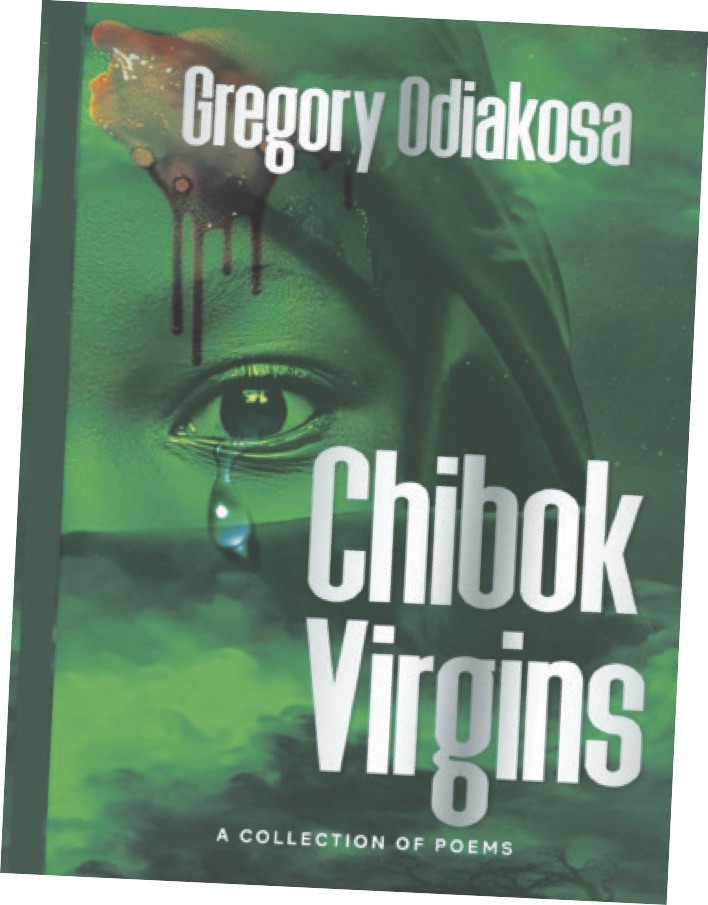
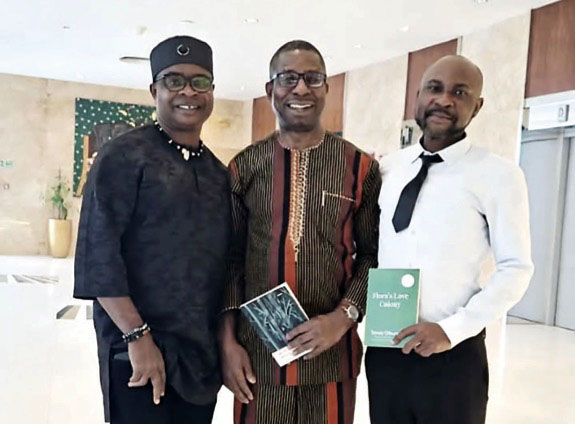
Title: Chibok Virgins
Publisher: Justice Watch, Abuja
year : 2023
Reviewer: Henry Akubuiro
A bizarre news broke out on the night of 14th April, 2014. 276 schoolgirls, majorly Christians with some Muslims, aged from 16 to 18, were kidnapped by the Boko Haram terrorist group from the Government Girls’ Secondary School, Chibok, in Borno State, Northeast, Nigeria. It was the culmination of a security threat that saw the school closed for four weeks before the eventual attack. At that period, the students were writing their Waec exams, hoping for a brighter future, but the future appeared mired in the dust of history.
In a twist of fate, however, 57 of the schoolgirls, soon after, escaped from the kidnappers by jumping from the trucks conveying them to the forest, while the Nigerian military rescued some others. The blight, however, is that some of the Chibok girls are yet to be accounted for, missing for more than eleven years. Considering the age range of the kidnapped schoolgirls and the religious demands of chastity, Gregory Odiakosa, the author of the poetry volume, Chibok Virgins, categorises the young women as virgins.
Virgins, here, could also take double significance – innocence. For long, African societies have orchestrated the protection and valorisation of virgins. In allowing them to be kidnapped in contemporary times, Odiakosa’s Chibok Virgins pokes a finger at the authorities that this major failure can’t be wished away with the passage of time. Yes, the poet can function as a timekeeper who reminds us that yesterday and today are interrelated by the aftermath of deep wounds. This is what Odiakosa is doing here partially.
This collection teems with scores of poems divided in five sections vis: Letdown, Feminine Wounds, Terror in the Forest, Identity Crisis, and Cautious Hope. The poet, in the first section, depicts a nation under siege, where lions gaze drowsily and dogs snarl, killing their offspring. Sadly, the rampaging hostage takers go scot-free; hence the lamentation: “marauders neither captured/ nor sacked”. The poet speaker in “Deaf Ears and Dead Hearts at Aso” is a bitter man. He cuts the image of a patriot with noble visions for his country – one that, at the moment, is threatened by a hackney of problems. He criticises the powers that be for playing deaf to the pangs of the citizens: “Wish the throne at Aso/ Had some wide ears/ Large enough to eavesdrop/ On our miserable slave cells/ To hear the endless screams / Punctuating every five minutes / Of our daily lives, dreary/At every corner of this cursed camp”.
The enraged poet speaker laments that a hundred maiden’s pride has been sacrificed heartlessly in the “Sambisa rival palace.” The poet inuits that the terrorist haven, the Sambisa Forest, is a rival government. He cannot accept the seemingly legitimacy conferred on the Sambisa miscreants that makes government cower to dislodge them. Another poem in this section that captures the helplessness of the situation is “Souls Still in Sambisa”, where the voice recounts her kidnap by terrorists dressed regally and surrounded by trainers guards right before her helpless parents. Yet hundreds of days after, she is still living in torture as a captive.
It might sound whingeing, but Odiakosa’s shrill poetic voice is a conscious response to an insouciant shrug from the authorities responsible for citizen’s safety first. It is a rejection of political indifference to a mountain of security woes besetting the nation. Continuing in the second section of the poetry volume, the poet remonstrates rather than declaims about Feminine Wounds. In poems like “A Day to Forget”, Snake Finger” and “Orgasm Never”, we come to terms with an irreligious episteme that governs the universe of the Belzebubs as they seek to undo chastity and rape their captives, turning them to sex slaves. The agonies of the Chibok maidens, as recounted by the poet, makes reading Odiakosa’s collection a near lachrymal experience revisiting man’s bestiality.
Echoes of Terror from the Forest, in the third section of the poetry volume, depicts the paraphernalia of of the monsters tormenting lives our precious maidens. In the poem, “Ammunition Dump”, the voice, an eye witness, speaks of guns of divers shapes, and sizes, grenades, machetes, axes, daggers, AK 47, and rocket launchers in the possession of these terrorists, who also display savagery before the Chibok virgins. For the latter, it is a steady diet of mental torture, which is harrowing to digest, even from far range, where most of the readers are likely situated. Moreso, the use of captured civilians as human shields by the hirelings is a matter of grave concern to us. Odiakosa is miffed about it in “Shot”, while the air of despondency air hovers in “Crushed Roses”, a metaphor for angels marinated on the altar of devilish archetypes. “Homesickness” echoes the reflecting of every concerned Nigerian on the unending saga – “When will they come back home?”
Even if the remaining Chibok girls return some day, there are worries that they won’t be the same again. Thick is captured in the last poem in the collection, “If I Ever Become Free”.
Here, a Chibok virgins questions: “Will I be able to face the world,/ the shame and the questions? She asks again: Can I have a new face/ To travel incognito?” The poet is echoing the issue stigmatisation at the end of the day. Apparently, Odiakosa is battling the conspiracy of silence in this collection. As we know, silence plays the enemy’s game. Chibok Virgins, therefore, boldly calls for an unfettered society, where no free citizens is manacled by none state actors with no sign of rescue.