Follow Us on Google
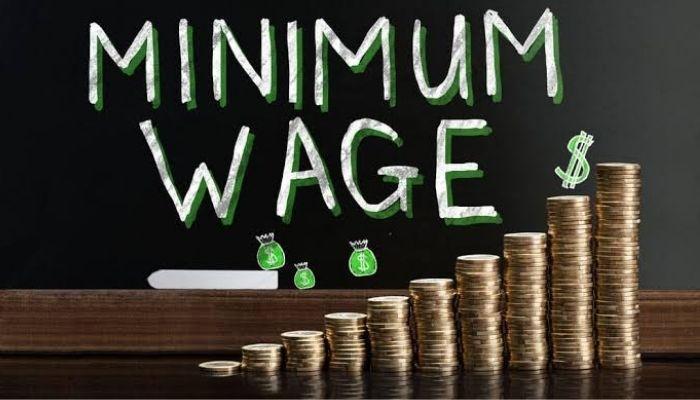
Due to the prevailing economic hardship in the country, dwindling value of the naira and other factors, members of organised labour are warming up for another round of negotiations for a new minimum wage. This is coming less than two years after the present N70,000 minimum wage was approved by the current administration. Before President Bola Tinubu, the minimum wage was N30,000 per month. Leaders of the Nigeria Labour Congress (NLC) and the Trade Union Congress (TUC), who spoke at the recent 114th International Labour Congress (ILC) in Geneva, Switzerland, maintained that the current national minimum wage does not reflect the economic realities in the country.
The labour leaders believe that without the negotiation of a new minimum wage, millions of Nigerian workers will further sink into poverty. They said the next wage review must go beyond political promises and deliver a “genuine living wage” which is capable of restoring dignity to Nigerian workers whose incomes have been ravaged by inflation and economic hardship.
The President of NLC, Comrade Joe Ajaero, and Deputy President of TUC, Comrade Jimoh Oyibo, asserted that “the current Act expires exactly next year; and we have announced that negotiations will commence by July 2026 to avoid the painful delays of the past.” The labour leaders also stated: “We once again demand immediate relief measures by governments at all levels until the new minimum wage is signed into law. We also reject outright any attempt to tax the new minimum wage or to levy further burdens on the poor.”
Before labour’s new move, the Chairman of the Nigeria Governors’ Forum, AbdulRahman AbdulRazaq, had revealed that governors were talking with the federal government to review the minimum wage to N100,000 per month. The Kwara State governor, who stated this in Lagos during the Sallah celebration, further disclosed that state governments were engaging the federal government and organised labour to agree on a wage structure that would balance workers’ welfare and fiscal sustainability. “State governments recognise the urgent need to improve workers’ welfare in response to the current economic realities facing Nigerians,” AbdulRazaq stated. However, the proposed N100,000 minimum wage did not go down well with organised labour, hence they rejected it and described it as a “starving wage.”
During last May Day celebration, Nigerian workers bemoaned the nation’s worsening cost of living crisis. They equally demanded wage review and palliatives to cushion the effects of inflation and rising cost of petrol. They made a case for early preparation for a review of the minimum wage ahead of 2027. They had insisted that the national wage of N70,000 could hardly take care of any worker in a month. Also, during the Democracy Day celebration, the government admitted the challenges facing Nigerians and promised to improve the welfare of all citizens, including Nigerian workers.
Other News
The economic hardship in the country reflects in rising prices of goods. For instance, a 50kg bag of rice, which was sold less than N50,000 before this administration now sells for N80,000 and above depending on the brand and the location. Prices of other staples, like beans, garri and yams, have risen astronomically beyond the reach of poor masses. A litre of fuel has risen from N780 to N1,400. The exchange rate between the naira and the US dollar has remained at almost N1,362/$. This has further weakened the value of the naira before other international currencies.
In a country where political class live in opulence and the masses live in abject poverty, the Nigerian workers’ quest for a living wage is not misplaced. In an era when there are more federal allocations to the state and local governments, the welfare of the workers should be guaranteed. While there is need for a living wage for Nigerian workers in line with the socioeconomic realities in the country, there is need for caution for all the parties that would negotiate the next new minimum wage to avoid the errors of past negotiations.
The government must work hard to shore up the value of the naira. The poor value of the naira before other international currencies is part of the reason organised labour is always asking for wage increase. Enhancing the value of the naira will curb the recurring demand for new minimum wage. To make naira more valuable, the nation should produce more, export more and import less. The present practice where we import virtually everything we need is not in favour of the naira and the economy.
In revamping the economy, the government should emphasise production and manufacturing over unbridled importation of goods, including those we actually need and those we don’t need. It has also become necessary to cut the cost of governance across the country. If the value of the naira should improve, the development of the non-oil sector must be given priority attention. The current emphasis on oil and gas, while other sectors are neglected, does not help the naira and the economy.