Follow Us on Google
By Bianca Iboma-Emefu
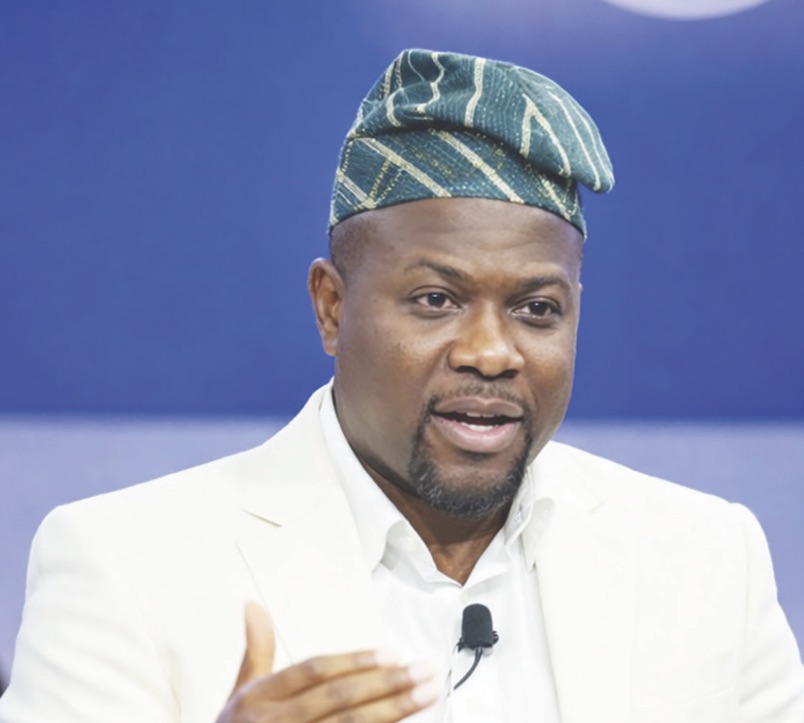
Chaste Inegbedion is the Head of Happiness at ConcordeApp, where he applies intelligent storytelling and product operations to turn complex, high-stakes initiatives into measurable business outcomes. A respected voice in global development, innovation, and social impact, he has received recognition from the United Nations, World Bank, and Marquis Who’s Who for his leadership across technology, advocacy, and entrepreneurship.
In this wide-ranging interview, Inegbedion reflects on a demanding year of global convenings and an unusual, deliberately low-profile experience at the World Economic Forum Annual Meeting in Davos.
What motivated you to attend the World Economic Forum (WEF) in Davos this year?
Davos was the final checkbox in an exceptionally demanding year. Before that, I had moved through the UN General Assembly, the UN Commission on the Status of Women, COP30, CES, and countless policy rooms across continents. Each of these spaces has its own rhythm, its own language, and its own version of power.
By the time I boarded the train leaving Davos, watching the Alps disappear behind a curtain of snow, my body was finally catching up with me. Blood had been drawn days earlier. I had X-rays on my knees. Flights were delayed, rerouted, or canceled, layered on top of altitude sickness, and I was heading home to a winter storm. And yet, God is good. The clarity I gained was worth every discomfort.
How did this trip fit into your wider year of global engagements?
The goal was to gain a clearer understanding of the mechanisms behind decision-making among global leaders and influencers. I wanted to experience the World Economic Forum Annual Meeting not as a spectator, but embedded enough to observe how access, influence, and execution actually work when the world’s decision-makers converge. I went undercover as an “important person”—someone with enough access to move through rooms, navigate badges, and listen carefully without being an official delegate or a high-ranking executive. This position was deliberately chosen to strike a balance: not important enough to command a motorcade, but visible enough to avoid being dismissed. This approach allowed me to observe the interactions, proximity-based power dynamics, and informal exchanges that often go unnoticed by outsiders.
You’ve described going “undercover” as an important person. What does that mean in practical terms?
It means occupying a very specific middle ground. I wasn’t important enough to command a motorcade or have doors thrown open automatically. But I also wasn’t invisible. I was just important enough to move through rooms, navigate badges, catch shuttles, and listen carefully.
That position, somewhere between access and anonymity, turned out to be incredibly revealing. It stripped away the performance that often accompanies official roles and allowed me to observe the mechanics beneath: who moves easily between rooms; who is introduced without asking; who is carried from one conversation to the next by trust rather than title. Those patterns tell you more about how power actually functions than any panel discussion ever could.
Davos is often framed as secretive or conspiratorial. Did your experience support that view?
Not at all. Davos is not a conspiracy. It is compression. Once a year, a small Swiss mountain town becomes the densest concentration of decision-makers on the planet. Heads of State, CEOs, founders, artists, civil society leaders, and journalists are all in one place. They are not there to secretly decide the future of the world. They are there to compare notes at extraordinary speed. Ten conversations in one day can replace a year of emails and formal meetings. That compression accelerates alignment, exposes contradictions, and sometimes forces uncomfortable truths into the open. Power in Davos is revealed less by secrecy and more by proximity.
What is the significance of describing Davos as not a conspiracy but compression?
The phrase emphasizes that Davos isn’t about secret plots or hidden agendas; rather, it’s a concentrated gathering where decision-makers from various sectors come together in a condensed timeframe. In just a few days, a year’s worth of conversations, negotiations, and ideas are compressed into intense, rapid exchanges. This environment reveals how power and influence are exercised through proximity, trust, and the ability to move seamlessly between conversations and rooms.
How does the environment of Davos affect participants, regardless of their status?
The experience tends to humble everyone equally. “Altitude sickness” becomes a metaphor for the humbling effect of the environment. No matter one’s stature, the intense pace, high stakes, and proximity to global power centres create an equalizing sense of challenge and opportunity. The physical and social environment strips away some formalities, revealing underlying human infrastructure—acts of kindness, community, and shared vulnerability.
Can you share an example from your experience that illustrates this human infrastructure?
Early in the week, I lost my bag, which could have been a major setback given the importance of badges for access. Instead of being stranded or dismissed, Jennifer de Broglie offered a bunk bed so that I could rest and reset. Additionally, my birthday was celebrated by housemates I met just days earlier. These moments of kindness and community grounded me amid the power-driven atmosphere.
Food became a form of diplomacy, with different cultural cuisines acting as bridges. I enjoyed jollof rice at the Nigerian House and the vibrant Nigerian House Party showed that culture travels faster than policy. These shared meals and cultural exchanges fostered trust, connection, and informal dialogue that often lead to deeper collaboration.
What opportunities, key discussions and networks were you able to access?
I was able to gain access through a hotel badge courtesy of the Davos FinTech and AI Salon, which opened doors to conversations at the intersection of finance, artificial intelligence, and governance. Invitations to events like the inDrive and Global Creative Economy Institute Gala, and participation in Semafor Davos discussions on capital flows and technology, allowed deep engagement with influential leaders and emerging ideas.
How would you describe the role of AI at Davos?
AI was omnipresent—so much so that it was rarely explicitly announced. It had become the operating layer of discussions and initiatives. AI is no longer a topic for debate but is embedded in the infrastructure of decision-making, innovation, and influence across sectors. This pervasive presence highlights how deeply AI has integrated into the fabric of global conversations about future development.
What insights did you gain from the engagement with the Mindero Foundation and Andrew Forrest?
I learned that challenges do not require more resolutions but urgent action. At Davos, this insight felt practical: moving from promises to tangible performance. The conversation centred around institutionalizing agentic AI as infrastructure—making it a system that fosters catalytic capital for forest protection and other ecological initiatives. The goal is to shift from static commitments to continuous, auditable performance, integrating public finance, private capital, and accountability systems in real time.
What are the key lessons you took away from the week at Davos?
The five main lessons are: urgency has replaced rhetoric—action now takes precedence over words. Unlikely alliances are essential—they drive progress across sectors and borders. Youth voices must hold real power, not just symbolic positions, to ensure meaningful change. Business is ready to act if frameworks and clarity are provided. Grounded pragmatism fuels hope—it remains a renewable resource when rooted in realistic expectations.
How do you perceive the divide in AI development—technical or relational?
The real divide in AI isn’t technical but relational. This means that the challenge lies in how people and institutions relate to AI, trust it, and integrate it into their systems. Building relationships, trust, and shared understanding are crucial to harness AI’s potential effectively and ethically.
What is your overall takeaway from Davos?
I came home with more than just business cards and sore knees. I took away with me clarity. I realized that progress isn’t made in isolated rooms, summits, or single weeks. It’s built through connected, purposeful actions—one executed connection at a time. The experience reinforced the importance of moving beyond rhetoric to tangible, collaborative efforts grounded in pragmatism.
How do you plan to approach your work after this experience?
With renewed purpose, I intend to focus on building and executing meaningful connections, leveraging the insights gained about urgency, alliances, youth power, clear frameworks, and pragmatic hope. I recognise that real progress depends on sustained, deliberate action—transforming ideas into tangible outcomes through continuous engagement and collaboration.
What do you mean by proximity as a form of power?
Proximity determines who can move seamlessly between conversations and who remains stuck on the margins. It’s about who gets introduced without having to ask, who can bridge rooms and sectors, and who carries enough trust to connect people who might not otherwise meet.
Interestingly, Davos has a way of humbling everyone equally. Altitude sickness does not care whether you are a head of state or a startup founder. In that sense, the mountain itself levels the playing field, at least physically.
You mentioned losing your bag early in the week. Why did that moment stand out?
In Davos, logistics are everything. Your badge determines access. Your schedule determines survival. Losing my bag early in the week could have derailed the entire experience.
Instead, it revealed the human infrastructure that no one talks about. Jennifer de Broglie didn’t hesitate to offer me a bunk bed so I could rest and reset. Housemates I had just met celebrated my birthday on my very first night in the village. In a place built around power, it was kindness that grounded me. That mattered more than any credential.
Informal spaces often matter as much as formal ones. How did culture and community shape your Davos experience?
Food became a form of diplomacy. Working dinners, late-night receptions, and hurried lunches filled the week, but nothing matched the comfort of jollof rice at the Nigerian House or the energy of the Nigerian House Party itself. Culture travels faster than policy ever could.
Those spaces created room for honest conversations and unexpected connections. People relaxed. Titles softened. Diaspora Nigerians working across sectors—including within Swiss financial institutions—shared insights that rarely make it onto official agendas. That sense of shared identity cut through formality.
Access seems to have flowed through a network of invitations. How did that shape the conversations you were part of?
Access in Davos is communal. A hotel badge courtesy of Alexa Karpova’s Davos FinTech and AI Salon opened doors where finance, artificial intelligence, and governance collided. Anna of Astra Group extended an invitation to the inDrive and Global Creative Economy Institute Gala, where creative industries met mobility and technology. Conversations deepened at Semafor Davos, a space known for candor around capital flows, emerging markets, and technology. These were not scripted panels. They were frank exchanges where people tested ideas in real time.
One of the most notable gatherings you attended was the Accra Reset at Davos. Why was it significant?
The Accra Reset stood out because it centred on execution rather than aspiration. I reconnected with Chido Munyati, Member of the Executive Committee and Head of Africa at the World Economic Forum, in the company of Ghana’s President, John Dramani Mahama, former President of Nigeria Olusegun Obasanjo, World Health Organization Director-General Tedros Adhanom Ghebreyesus, and former Vice President of Nigeria Yemi Osinbajo.
The gathering opened with a call for a New Bandung Spirit—the idea that progress happens when countries act together at the right scale, at the right moment, with the right balance of incentives. It was a reminder that alignment, not ideology, often determines outcomes.
That theme of execution keeps coming up. How did it manifest across the week?
Over and over, the message was the same: urgency has replaced rhetoric. The world does not need more declarations. It needs systems that work. This emphasis echoed at the Nigerian House Party, where I shared a moment with Joanna Liantsoa from the Forum of Young Global Leaders, and with Wyclef Jean, who spoke about his upcoming docuseries with TIME Studios and Circle, The Culture of Currency. Alongside Temitope Atiba, Special Adviser on Policy at Nigeria’s Ministry of Foreign Affairs, and a remarkable mix of Global Shapers and Young Global Leaders, the conversation kept returning to one question: how do we move from promise to performance?
Artificial intelligence was clearly a major undercurrent. How visible was AI at Davos?
AI was everywhere, though rarely announced. It is no longer a topic. It is the operating layer. That reality crystallized during my time with the Mindero Foundation, where I engaged directly with its founder, Andrew Forrest. He once observed that the challenges in front of us do not need more resolutions; they need action. In Davos, that insight felt less philosophical and more operational.
How does that operational view of AI translate into concrete proposals, particularly around climate and forests?
As we move from pledges to performance on the Amazon and global forest protection, the opportunity before us is to institutionalize agentic AI as infrastructure for catalytic capital. Not as an experiment, but as a system.
By anchoring the Mindero Foundation and the Tropical Forests Forever Facility as core outcomes of COP30, we can move beyond static commitments toward continuous, auditable implementation. This means aligning public finance, private capital, and sovereign accountability in real time. The question is no longer whether capital exists. It is how it is deployed, governed, and measured.
You’ve spoken about lessons learned. What stood out most clearly as you left Davos?
As the snow melted and the WhatsApp groups finally quieted, five lessons became impossible to ignore. First, urgency has replaced rhetoric. Second, unlikely alliances now drive progress. Third, youth voices must hold real power, not symbolic seats. Fourth, business is ready—if frameworks are clear. Perhaps most importantly, the real divide in AI is not technical. It is relational. It is about who trusts whom, who collaborates across differences, and who is willing to share both risk and reward.
After everything you witnessed, how do you define progress now?
Progress is not built in one room, one summit, or one week. It is built by one executed connection at a time. I came home with more than business cards and sore knees. I came home with clarity. I am back to work with purpose.