Follow Us on Google
By Chinwendu Obienyi
Nigeria’s economic environment has become increasingly challenging for households and businesses alike. Inflation has remained stubbornly high, the naira has experienced significant volatility and the cost of living continues to rise faster than incomes. For millions of Nigerians, simply saving money in a bank account is no longer enough to preserve wealth, as inflation steadily erodes the purchasing power of cash.
Against this backdrop, the conversation around personal finance is changing. Financial experts are increasingly encouraging Nigerians to think beyond savings and embrace investments that can generate long-term value. The real question is no longer whether people should save, but how they should invest their money in assets capable of growing despite economic uncertainty.
One of the most effective ways to achieve this is through ownership. Instead of remaining consumers who spend money on products every day, individuals can become shareholders in the companies that manufacture and distribute those products. In doing so, they participate in the profits, growth and expansion of those businesses.
This philosophy lies at the heart of wealth creation across the world. Those who own productive assets generally build wealth faster than those who simply earn and spend income.
Stock market as a wealth-creation platform
Despite its importance, the Nigerian capital market is still misunderstood by many retail investors. Some view the stock market as unpredictable or believe it is reserved for wealthy individuals and institutional investors. In reality, the Nigerian Exchange provides ordinary Nigerians with an opportunity to own shares in some of the country’s biggest and most successful companies.
Buying shares is far more than purchasing a piece of paper or a digital certificate. It means owning a fraction of a company’s factories, equipment, warehouses, distribution networks, brands and future earnings. As these businesses grow, investors benefit through rising share prices and dividend payments.
Companies that produce essential goods often enjoy an added advantage during periods of inflation. Products such as cement, sugar, salt and other household necessities remain in demand regardless of economic conditions. Businesses operating in these sectors are therefore often better positioned to adjust prices, protect revenues and maintain profitability.
This makes ownership of well-managed industrial companies a practical strategy for preserving purchasing power over time.
The Dangote investment story
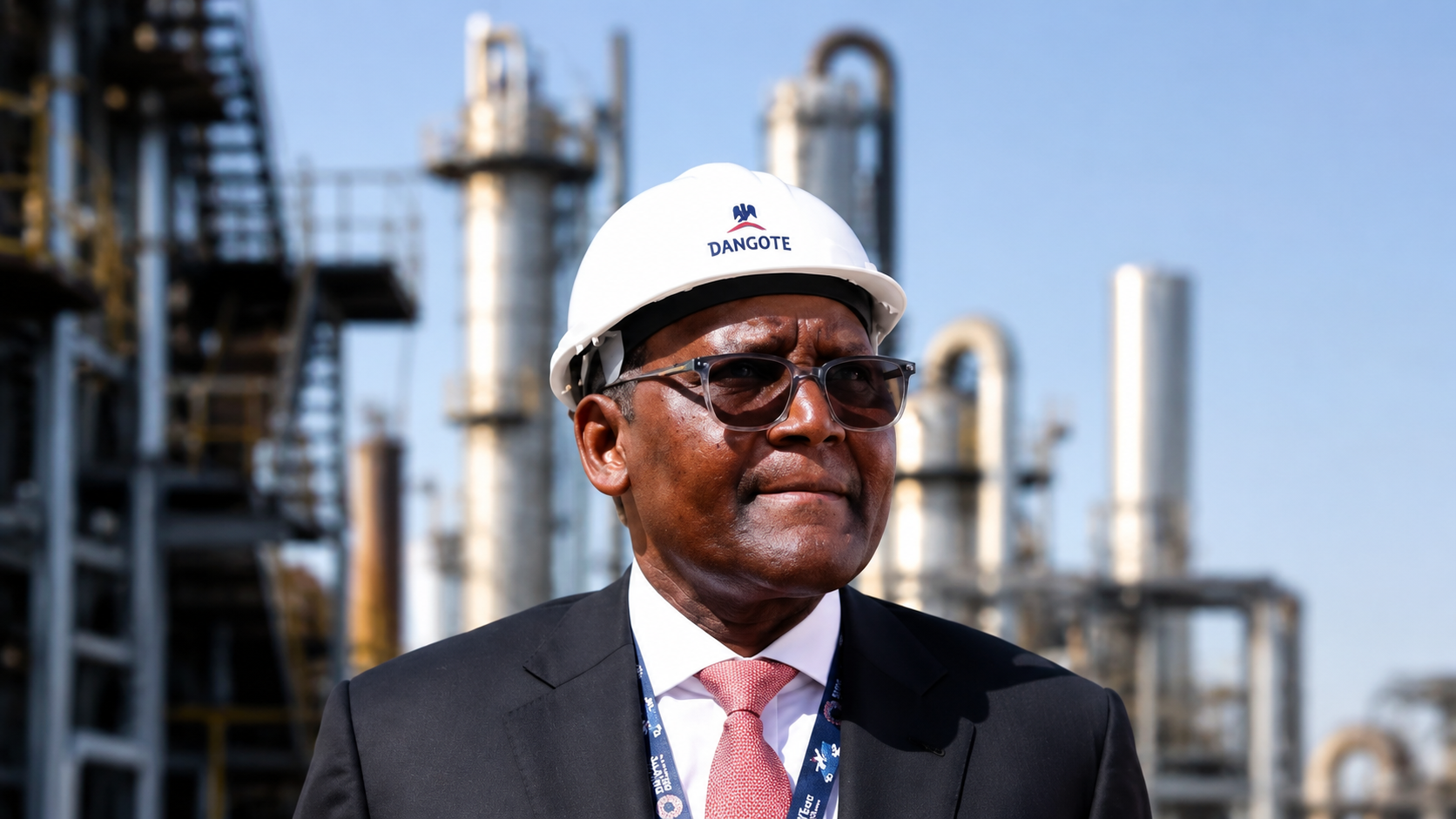
Among Nigeria’s listed companies, few illustrate the power of long-term ownership better than the Dangote Group.
Over several decades, the group has transformed itself into one of Africa’s largest industrial conglomerates through investments in manufacturing, infrastructure and value-added production. More importantly, it has allowed Nigerians to participate in that growth by listing major subsidiaries on the Nigerian Exchange.
Today, Dangote Cement Plc, Dangote Sugar Refinery Plc and NASCON Allied Industries Plc rank among the country’s most recognised industrial companies. Together, they represent businesses that serve millions of consumers daily while creating value for shareholders.
Their first-quarter 2026 financial performance reinforces this position. Collectively, the three companies reported profit before tax of N456.68 billion, representing a 52 per cent increase over the N300.61 billion recorded during the same period in 2025.
Dangote Cement accounted for the largest share with N421.10 billion in profit before tax, reflecting a 35 per cent year-on-year increase. Dangote Sugar returned to profitability with N20.60 billion after overcoming previous operational challenges, while NASCON Allied Industries posted N14.98 billion, representing a 32.45 per cent improvement.
These results demonstrate more than strong earnings. They reflect businesses capable of adapting to changing economic conditions while continuing to deliver value to investors.
Resilience during economic headwinds
Every economy experiences cycles of expansion and slowdown. The companies that consistently outperform are usually those with strong brands, efficient operations and experienced management teams.
The Dangote companies have repeatedly demonstrated these qualities. Despite inflationary pressures, higher energy costs, exchange-rate fluctuations and rising production expenses, they have continued to strengthen operational efficiency and improve financial performance.
Their extensive manufacturing capacity, integrated supply chains and nationwide distribution networks have enabled them to maintain market leadership even during periods of uncertainty.
For investors, resilience matters as much as profitability. Businesses that can withstand economic shocks are more likely to deliver sustainable returns over the long term.
Execution and Corporate Governance
Another factor that distinguishes the Dangote Group is its reputation for execution.
Many businesses have ambitious expansion plans, but relatively few successfully deliver large-scale industrial projects. Over the years, the Dangote brand has built credibility by consistently executing complex manufacturing investments, expanding production capacity and establishing operations across several African countries.
This proven execution capability has become an important source of investor confidence.
Equally significant is the corporate governance framework under which its listed subsidiaries operate. As companies quoted on the Nigerian Exchange Main Board, they comply with stringent reporting requirements, publish audited financial statements and provide regular disclosures to shareholders.
This level of transparency gives both retail and institutional investors confidence that management remains accountable and that business performance can be independently assessed.
Lesson for Nigerian investors
The broader lesson from the Dangote story extends beyond one business group.
Building wealth rarely comes from chasing quick profits or speculative opportunities. Sustainable financial success is usually achieved through patient investment in productive enterprises that generate earnings year after year.
As Nigeria continues to industrialise and deepen its capital market, ownership will become increasingly important for individuals seeking long-term financial security. Investing in resilient companies allows ordinary citizens to participate directly in the country’s economic growth while protecting their own purchasing power.
The Dangote experience demonstrates that industrial development and shareholder wealth creation can go hand in hand. As factories expand, jobs are created, production increases and economic activity grows, investors also benefit from the value generated by those enterprises.
For Nigerians looking to build lasting wealth, the message is clear. Saving remains important, but ownership is what creates enduring prosperity. By investing in fundamentally strong companies with proven records of execution, resilience and corporate governance, individuals position themselves to benefit from the power of long-term compounding.
In an economy where inflation continues to challenge traditional savings, ownership is no longer just an investment strategy—it is becoming a financial necessity. The Dangote investment story offers one of the strongest examples of how disciplined, long-term participation in the capital market can help transform ordinary savings into lasting wealth.