Follow Us on Google
• Residents of Ogun/Lagos border communities lament pain of navigating deplorable roads
• Communities deserted as landlords, tenants abandon homes
By Olakunle Olafioye
These are perhaps the most fitting descriptions of the state of roads in many communities in Ogun State, especially those bordering Lagos.
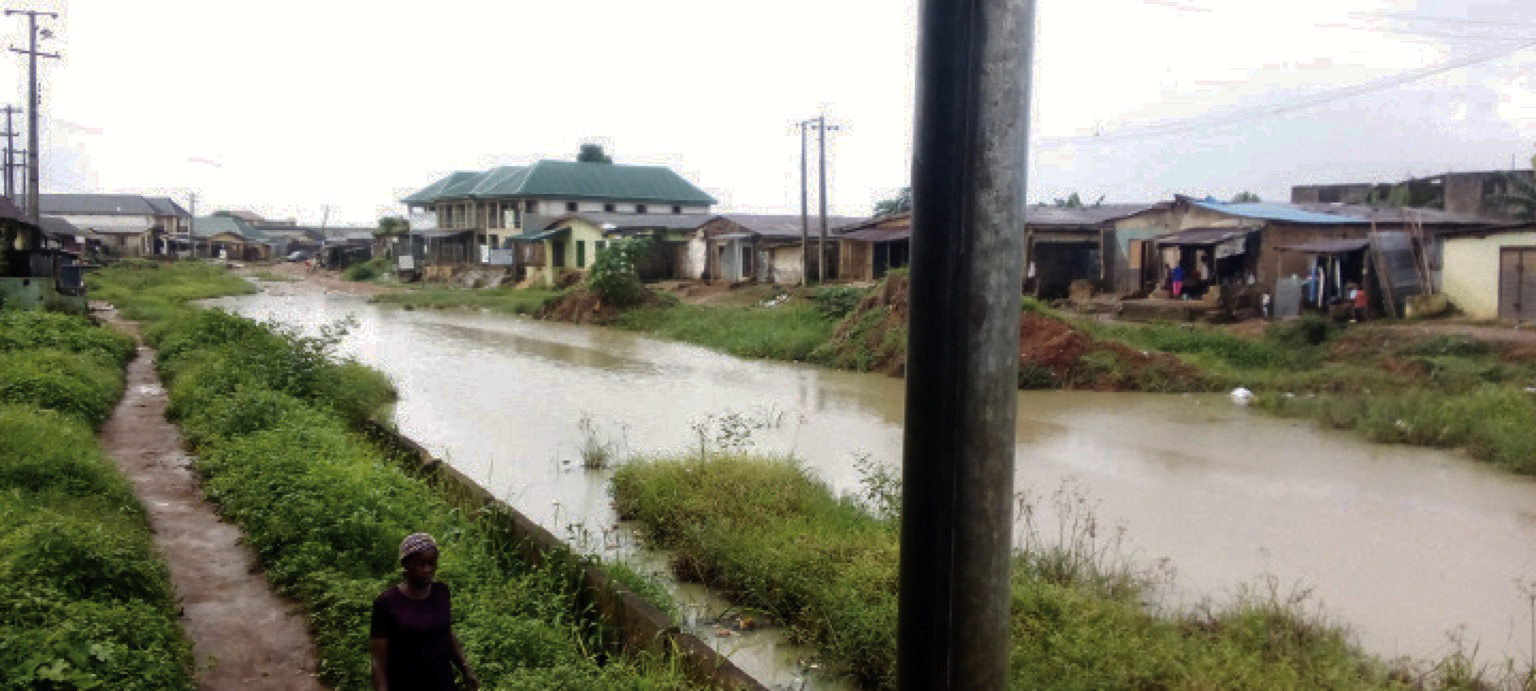
For many Nigerians, the rainy season offers a welcome relief from the blistering heat of the dry months. In many parts of Ogun State, however, every rainfall signals the beginning of another round of hardship, as dilapidated roads become waterlogged, riddled with potholes and craters, and in some cases, completely impassable.
From Ifo to Ado-Odo/Ota, Abeokuta North to Obafemi-Owode and other major Ogun communities bordering Lagos, residents say years of neglected road infrastructure have combined with the heavy rains to isolate communities, disrupt businesses and inflate transportation costs.
Residents claim that the poor condition of major roads in the state has become more than an inconvenience. According to them, the troubling state of the roads now poses a serious threat to economic activities, access to healthcare and education, and the daily livelihoods of thousands of residents. Across the state, roads scarred by deep potholes, erosion and flooding have left motorists stranded, damaged vehicles and forced commuters to spend hours navigating alternative routes. In some areas, Sunday Sun gathered that commercial transport operators have abandoned several roads altogether, leaving residents with few transportation options.
Tale of abandoned road project
Among the worst affected are communities in Ifo Local Government Area, where residents of Agbado, Abule Ijoko, Itoki, Opeilu and Oke Aro continue to lament the collapse of the 13-kilometre Agbado-Ijoko Road, which they claimed has remained largely impassable for years. The situation is hardly different in Akute, Lambe and Alagbole along the Ogun-Lagos border, where deteriorating roads have significantly hampered the movement of people and goods.
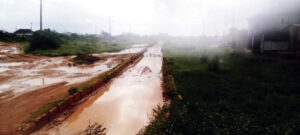
Residents said living in these communities has become a daily struggle. The poor state of the roads has made commuting both difficult and dangerous for motorists, commercial motorcyclists and pedestrians, while many commercial bus operators have abandoned the routes altogether.
For most residents, commercial motorcycles remain the only dependable means of transportation. A resident, Pastor David Akinfenwa, said leaving or returning home after heavy rainfall has become a daunting task because transport operators often avoid the area.
“Leaving or returning home whenever it rains, especially after a heavy downpour, is always a nightmare because commercial bus and motorcycle operators simply abandon the route due to the risks involved. The few who are willing to operate charge exorbitant fares, leaving many intending passengers stranded and at the mercy of inclement weather,” he said.
Communities cut off
In Ado-Odo/Ota Local Government Area, the Sango-Ota corridor, Ayetoro-Itele (via Mopol Junction) and Ajegunle-Agbede (via Ita-Oluwo) rank among the worst affected roads, with residents calling for urgent government intervention.
Despite repeated assurances by Governor Dapo Abiodun to rehabilitate roads in the axis, residents and motorists said there has been little noticeable improvement. During a visit to the area last week, Sunday Sun observed that some of the roads had virtually been abandoned by motorists, many of whom now make lengthy detours through adjoining streets to reach their destinations.
For instance, the Obasanjo-Ijagba-Lafenwa Road has become impassable following the persistent rainfall. A commercial motorcycle operator said many riders had stopped using the road because of its deteriorating condition.
“The road is no longer passable. People now have to pass through inner streets before connecting to Ijagba and other parts of Lafenwa. Even commuters coming from Atan now prefer to go through Osi instead of using the Obasanjo route,” he said.
A community leader, Yunusa Akerele, said access to several communities within the area has become increasingly difficult because of the poor road network. He appealed to the state government to fulfil its promise to rehabilitate the affected roads.
Governor Abiodun had explained in November last year that road projects within the corridor had been divided into four phases: the Itele-Ayobo Link Road to Lagos, the Ayobo Mopol-Lafenwa Junction Boundary Road, the Koro Otun phase and the Itele-Lafenwa Junction section.
Akerele, however, said the promises have yet to translate into meaningful action.
“We have seen some rehabilitation work going on, but the pace is extremely slow. Imagine rehabilitation work covering less than 100 metres taking more than three months. In another three or four months, election campaigns will begin and attention will shift completely to politics while development takes a back seat. Frankly, I don’t see any significant progress on these roads before then,” he lamented.
Decade of neglect
The situation is no different in Obafemi-Owode Local Government Area, where residents along the Arigbawo Road corridor said they have endured years of neglect. They maintained that comprehensive reconstruction of the road has become imperative to restore accessibility, stimulate economic activities and improve their quality of life.
Residents and commuters in the Mowe-Ofada axis are equally lamenting the deplorable state of the road project initiated but not completed during the administration of former Governor Ibikunle Amosun.
Speaking with Sunday Sun, residents said the eight-kilometre road, which links nearly 20 communities to the Lagos-Ibadan Expressway, has remained neglected for more than a decade. According to them, the road should ordinarily serve as a major catalyst for economic development, considering Mowe’s strategic proximity to Lagos and the RCCG Redemption City.
A resident, Ajibola Idowu, recalled that Governor Abiodun promised to rehabilitate the road while campaigning for a second term in 2023. He, however, said little has been done to fulfil that pledge.
Other News
“The governor has less than a year left in office, yet nothing significant has been done. The only intervention so far was a patchwork rehabilitation that failed almost immediately. With the rainy season, the road has become even more difficult to use,” he said.
Idowu urged the governor to ensure that every part of Ogun State enjoys the dividends of democracy, particularly through the provision of quality road infrastructure.
“I read a report where the governor said he had completed 26 road projects in Ijebu-Ode and had several others ongoing in Ogun East. My appeal is that he should not focus solely on Ogun East because of his senatorial ambition. He remains the governor of the entire state and should ensure balanced development across all zones,” he said.
Businesses count losses
Residents and business owners in most areas plagued by deplorable roads including the notorious Sango–Ijoko–Agbado–Akute–Yakoyo Road have continued to decry the deteriorating condition of the roads, saying the development has crippled businesses, increased transportation costs and subjected them to untold hardship.
A business owner, Mrs Joke Odufua of Joklab Venture, said the deplorable state of the Agbado axis of the road has had severe consequences for commercial activities in the area.
According to her, many suppliers are reluctant to deliver goods because of the difficulty of accessing the area, while those who agree to make the trip often charge significantly higher transportation fees.
She recalled a recent incident in which a delivery vehicle conveying goods to her shop was forced to take a lengthy detour through neighbouring communities after heavy rains rendered the main road impassable.
“Just last week, a vehicle bringing goods to my shop had to take a long detour because the rains made access to this area almost impossible. The vehicle eventually broke down on the way, and the supplier sent a mechanic to repair it. However, some hoodlums in the area prevented the mechanic from working and demanded N500,000 before allowing the repairs to proceed. It took the intervention of the Community Development Association leadership before they agreed to reduce the demand to N50,000,” she said.
Odufua, who said she has operated her business in the area for 15 years, blamed the situation on the government’s failure to rehabilitate the road, which she noted has remained in a deplorable condition for nearly a decade. She added that beyond discouraging suppliers, the poor road has also driven away customers, many of whom often complain about the high transportation costs associated with accessing the area. “Most of my customers have stopped patronising me because transporters are unwilling to come here. Those who do charge exorbitant fares. Imagine paying N10,000 to transport goods worth N30,000. That alone raises the cost by more than 30 per cent. How much profit can anyone make after spending such an amount on transportation?” she asked.
Burden on vehicle owners
Another business owner and resident of the Opeilu community, Mr Oladotun Olugbenga, traced the plight of residents to the failure of the administration of former Ogun State Governor, Ibikunle Amosun, to complete the road project before leaving office.
He expressed disappointment that the administration that succeeded Amosun had failed to complete the project, noting that the road has deteriorated significantly over the past eight years.
Although he acknowledged reports that reconstruction had commenced from the Akute end of the road, Olugbenga said the Agbado–Ijoko section remains virtually impassable. “Once you descend from the bridge, there is a massive crater large enough to swallow a bus. That is where movement practically stops. Vehicles cannot go beyond that point unless they divert through inner streets and adjoining communities,” he said.
He added that the situation becomes worse during the rainy season as many internal roads become flooded and impassable.
“Most residents cannot use their vehicles whenever it rains. Even if they drive out in the morning, there is no guarantee they can return home because the roads become impassable. People are often forced to park their vehicles outside their communities. It is frustrating. Many residents have sold their vehicles because of the constant damage caused by the bad roads or because they can no longer use them,” he said.
He appealed to the Ogun State Government to expedite work on the road to ease the suffering of residents and motorists.
Commuters’ declining options
A commercial minibus driver, who identified himself simply as Jamiu, also lamented the impact of the road on transport operators.
According to him, most commercial bus operators on the Agbado Junction–Rafco route have abandoned the corridor because of the damage the road inflicts on their vehicles.
“A few years ago, about 28 minibuses operated on this route. Today, only three remain. Most operators have moved to other routes because maintaining vehicles on this road is no longer sustainable. Vehicles can only move in first or second gear, which puts enormous strain on the engine. The constant potholes and deep craters also damage the suspension, tyres, wheels, alignment and exhaust system,” he said.
The decline in the number of commercial vehicles, residents noted, has triggered a sharp increase in transportation costs.
Commuters complained that commercial motorcycle operators now charge an average of N700 for the roughly two-kilometre journey between Agbado Junction and Rafco, while commercial buses charge about N500 for the same distance. The rising transport fares, they claimed, have placed an additional financial burden on residents already grappling with the challenges posed by the road’s deplorable condition.
Landlords’ headache
Meanwhile, the worsening road infrastructure has begun to reshape the social and economic landscape of many Ogun border communities. What were once thriving residential areas attracting workers seeking affordable accommodation outside Lagos are gradually losing their appeal as residents abandon their homes in search of locations with better access.
Findings by Sunday Sun revealed that several communities plagued by dilapidated roads are witnessing an increasing exodus of tenants, with some landlords also relocating after years of frustration. The daily ordeal of navigating impassable roads, especially during the rainy season, has become unbearable for many residents, forcing them to move back into Lagos despite the higher cost of accommodation. To stem the growing vacancies, some landlords have reportedly reduced rents, while others have been unable to secure new tenants for months.
Among the communities said to be worst affected are Opeilu, Agbado, Gas Line and Ijoko-Abule, where empty apartments are becoming an increasingly common sight. Residents say the deteriorating road network has eroded the main attraction of these communities—their proximity to Lagos—and turned what should have been affordable suburban alternatives into places many prospective tenants now avoid.
For Abraham Shosan, a resident of Itoki, the situation reflects years of neglect. He explained that communities along the abandoned 13-kilometre Akute-Agbado-Ijoko road, including Ijoko-Ogba Ayo and neighbouring settlements, have become some of the least attractive destinations for people seeking cheaper accommodation outside Lagos.
According to him, closeness to Lagos has done little to boost the local property market because poor road access has overshadowed every other advantage.
“The proximity of these communities to Lagos has not translated into higher demand for housing because access remains a major challenge,” he said. “What we keep witnessing is people moving out without others willing to replace them. I know of a house in this neighbourhood with two vacant apartments that have remained empty for almost a year. One of the former occupants was a member of my church. He relocated because he could no longer cope with the daily struggle of getting in and out of the community. Up till today, the apartment is still vacant.”
His account underscores a growing reality across many Ogun border communities, where bad roads are no longer just an infrastructure challenge but a factor driving population movement, weakening the rental market and threatening the economic viability of entire neighbourhoods.