Follow Us on Google
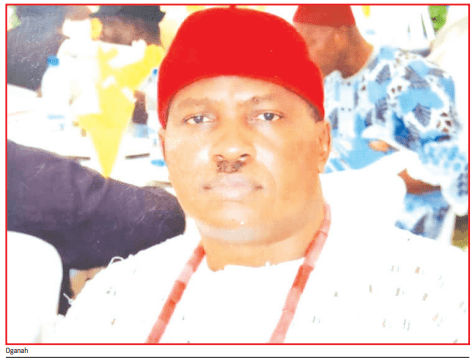
By Chinelo Obogo
The Media Director of the Anioma State Creation Movement, Tonnie Oganah, has said that the proposed Anioma State is Nigeria’s most economically viable state creation option. Speaking on the renewed push for the state, Oganah cited its location along the River Niger, oil and gas deposits, arable land, and human capital as key advantages. He said the proposed state, comprising nine local government areas in Delta North, will address the disadvantage of the South-East, which is the only geopolitical zone with five states.
Why is Anioma State being strongly proposed at this time?
The renewed push for Anioma State is not an emotional reaction; it’s a response to decades of structural imbalance that have placed the South East at a constitutional disadvantage. Today, the South-East remains the only geopolitical zone with five states, while all others have six, and the North-West has seven. This inequality affects federal allocations, political representation, and development planning. It means fewer senators, fewer House of Representatives members, fewer ministries and parastatals, and ultimately, fewer opportunities for our people. Anioma offers the most logical and historically accurate remedy to this imbalance because the people of Delta North are culturally, linguistically, and ethnically Igbo. This is not in dispute. It’s documented in the Willink’s Commission Report of 1958, in colonial administrative mappings, and in the linguistic and anthropological studies conducted before independence. The only reason Anioma wasn’t included in the Eastern Region was the arbitrary decision to use the River Niger as a boundary, something that has never truly reflected the identity of our people. This agitation has therefore resurfaced now because Nigeria is once again discussing constitutional reforms, state creation, and ways to stabilise the federation. If there’s any time to correct this historical oversight, it’s now. Anioma is the only state proposal that gives immediate and measurable value to the South-East while preserving national balance. Beyond equity, the renewed call is driven by the readiness of our people. Senator Ned Nwoko has re-energised a struggle that began in the 1950s, mobilising lawmakers, traditional institutions, and diaspora groups.
What makes Anioma economically viable and sustainable?
Anioma is, without question, one of the most economically viable state proposals before the National Assembly. What sets us apart is the level of value addition already inherent in the region. First, our geography is strategic. We sit on the banks of the River Niger, with existing road and rail corridors that link the South-East and South-South. That alone makes Anioma a natural economic gateway. Second, Anioma is blessed with abundant natural resources. We have proven oil and gas deposits, vast arable land, and thriving sectors in entertainment, commerce, and agriculture. These are not speculative potentials, they are active economic pillars that will instantly sustain a new state. And of course, the greatest asset we have is our human capital. Anioma people are among the most educated, productive, and industrious in the entire Delta region and across Nigeria. This ensures that the state won’t only survive but become a hub of innovation, investment, and enterprise. When you put these together, strategic location, resources, infrastructure, and human capacity, it becomes clear why Anioma stands out as the most viable and sustainable option for state creation today.
How strong is the historical basis?
The demand dates back to pre-independence Nigeria. As far back as 1954, our people protested being placed in the Western Region when the River Niger was used, wrongly, as a boundary. We’ve always been culturally and linguistically Igbo, and rivers shouldn’t be used to divide ethnic nationalities. The Benue doesn’t divide the Tiv, just as the Nile doesn’t divide Egypt. This is why we say Anioma is perhaps the oldest state creation demand still pending. Our case has been consistent for decades, and the historical record supports us fully.
How will the new state support the healing of memories from the civil war?
Our people were among the worst hit, especially with the Asaba Massacre of 1967, where hundreds of unarmed civilians, men and boys, were lined up and executed. Till today, there has been no compensation, no restitution, no memorial backed by the Nigerian government. The pain remains fresh in many families. Creating Anioma State gives practical and symbolic healing. First, it brings the government closer to the communities that suffered. When people have their own state institutions, leaders, and budgets, it becomes easier to address long-neglected areas and honour the memories of those lost. Second, it strengthens the sense of belonging for Delta Igbos. For decades, our people have lived on the margins, culturally Igbo, politically grouped elsewhere, and often treated as strangers. Anioma State restores identity and dignity. Third, it finally opens the door for the long-promised reconstruction and reconciliation.
Other News
Will its creation strengthen the South East politically?
It will serve as a bridge connecting Igbo communities that are currently scattered across Akwa Ibom, Bayelsa, Benue, Cross River, Edo, Kogi, and the South-South. It’ll consolidate our cultural, linguistic, and historical ties and give the Igbo nation a stronger, more cohesive presence in Nigeria. Politically, the benefits are clear. The new state will create additional senatorial and House of Representatives seats for our people, giving us a greater voice in national decision-making. It’ll also generate thousands of public-sector jobs through new ministries, parastatals, and government institutions, opportunities that have long been inaccessible under the current arrangement. Anioma State is therefore not just symbolic; it’s a practical tool for empowerment, representation, and political strengthening of the Igbo nation.
How do key figures within Anioma view Senator Ned Nwoko’s role?
His commitment, personal resources, and political influence have revived the push for Anioma State, a cause that dates back to the 1950s. He has mobilised support not only from lawmakers but also from traditional institutions, civil society, and the diaspora. Our people see his efforts as a blessing.
What specific areas will make up the proposed state?
It is expected to be carved out of Delta North Senatorial District, encompassing nine local government areas: Aniocha North, Aniocha South, Oshimili North, Oshimili South, Ika North-East, Ika South, Ndokwa East, Ndokwa West, and Ukwuani. These communities are united by shared language, customs, traditional institutions, and deep historical ties with the Igbo nation. They’re culturally and socially cohesive, making them the natural foundation for a new state.
Some argue that it should remain outside the South-East zone. From your perspective, what drives this opposition, and how valid are their claims?
Certain individuals benefit from Anioma remaining in Delta State. They hold political positions, economic advantages, or influence that could diminish if Anioma were integrated into the South-East. Others are simply resistant to change, even when that change promises social, economic, and political progress.
The claims about cultural misalignment are largely unfounded. Anioma people share language, customs, marriage rites, and worldviews with Igbo communities in Abia, Imo, and Anambra States etc. Historically, Anioma communities have been part of the broader Igbo socio-cultural network, and their inclusion in the South-East corrects a long-standing political anomaly.
We expect the Federal Government and the National Assembly to take decisive steps to make Anioma State a reality. This includes fast-tracking public hearings, allowing a referendum so that affected communities can freely express their will, and ensuring Anioma is included among the new states being considered in the ongoing constitutional review. Our goal is to finally seal this long-standing national demand with broad, bipartisan support. We also commend President Bola Tinubu and the leadership of the National Assembly for their openness to discussions on restructuring. Their cooperation gives us confidence that Anioma State can be achieved in a fair and transparent manner.