Follow Us on Google
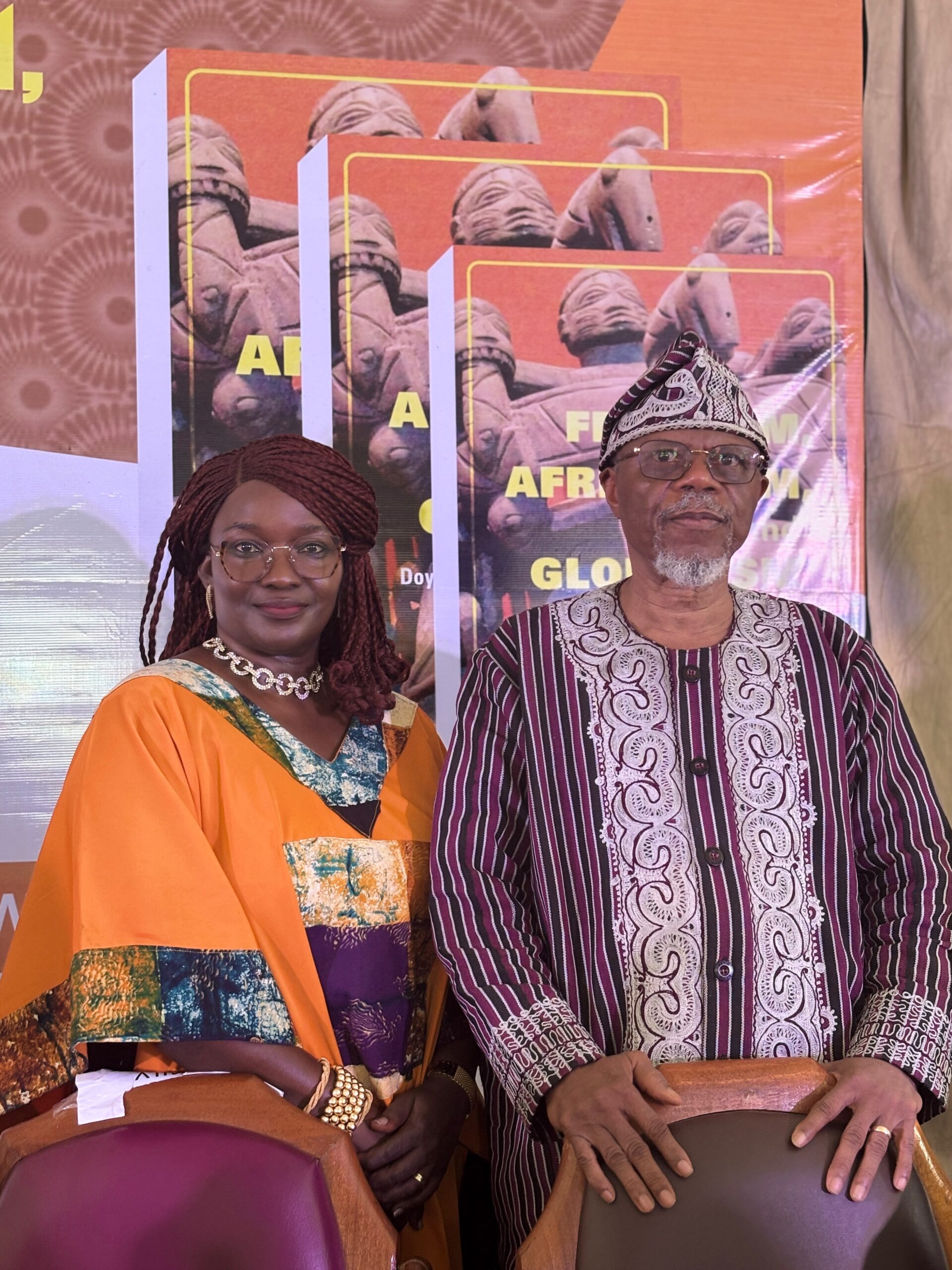
Senior academics across Nigeria and Africa have been challenged to make the recognition and development of younger scholars a central part of their academic legacy.
The charge came from renowned historian and Africanist, Professor Toyin Falola, during the presentation of his latest book, Feminism, Africanism, and Globalism: Doyin Aguoru’s Voices through Drama, held on Wednesday at the Senator Abiola Ajimobi Resource Centre, University of Ibadan.
Rather than reserving academic recognition for retirement or old age, Falola urged established scholars to deliberately identify emerging intellectuals, engage critically with their work and bring deserving researchers into national and international scholarly conversations.
Speaking with journalists after the event, the distinguished scholar explained that his decision to devote an entire book to the scholarship of Professor Doyin Aguoru was intended to challenge entrenched traditions within African academia.
“I believe that scholarship must not become a hierarchy of silence in which established academics receive endless recognition while younger intellectuals are expected to wait indefinitely for validation. The greatness of a senior scholar should not be measured only by the number of books written, honours received, or students supervised, but also by the capacity to identify emerging excellence, nurture it, and bring it to wider attention. Academic maturity should produce generosity rather than insecurity.”
According to Falola, too much value is still attached to academic rank and years of service, while originality and innovation often receive delayed recognition.
He argued that many younger academics are producing groundbreaking scholarship but remain largely unnoticed because recognition is frequently tied to titles and seniority instead of intellectual merit.
“Knowledge does not always announce itself through seniority. A younger scholar may ask questions that an older generation overlooked, introduce new methods, recover neglected voices, and open fresh directions of inquiry. When this occurs, established scholars have a responsibility to acknowledge it.”
Explaining why Aguoru became the focus of his latest publication, Falola said he found in her work an exceptional combination of intellectual originality and interdisciplinary scholarship deserving far more than ceremonial commendation.
“My decision to write a book on the scholarship of a younger colleague was therefore both intellectual and ethical. It was intellectual because I encountered a body of work that deserved sustained analysis rather than a passing compliment.
The scholarship revealed coherence, originality, courage, and an ability to connect feminism, Africanism, performance, identity, social justice, and global concerns.”
He maintained that universities would strengthen their research culture by celebrating scholars while they are still making significant contributions to knowledge.
“Scholars should be celebrated while they are alive, active, and still capable of extending their contributions. Too often, we wait until retirement, death, or institutional elevation before acknowledging the value of a colleague’s work.”
Falola also cautioned against what he described as unhealthy competition among academics, insisting that recognising another scholar’s achievements enhances rather than diminishes one’s own intellectual standing.
Other News
“Knowledge expands through acknowledgement, collaboration, criticism, and intergenerational exchange. A secure scholar does not fear the rise of another mind. On the contrary, one of the highest achievements of an established academic is to help create the conditions in which others can become visible, influential, and even greater.”
Calling for a redefinition of mentorship, Falola said senior academics should move beyond administrative support to genuine intellectual engagement with younger colleagues.
“Mentorship should go beyond writing recommendation letters, supervising dissertations, or helping younger colleagues obtain appointments. It should include serious engagement with their ideas.”
He expressed optimism that the publication would encourage a healthier academic culture where scholars from different generations engage one another through constructive criticism, collaboration and mutual respect.
“I hope the book will inspire a new culture in which generations of African scholars study, critique, and celebrate one another without jealousy or condescension.”
The renowned scholar concluded by urging senior academics to see themselves as facilitators of future excellence rather than custodians of academic recognition.
“If African academia is to grow, senior scholars must not stand at the gate of recognition; they must open it. We must transform intellectual authority into intellectual responsibility. The true legacy of a scholar is not only the knowledge one produces, but also the voices one helps the world to hear.”
The presentation of the book attracted a distinguished audience of traditional rulers, university administrators, literary scholars, researchers and students.
The event, hosted by the Vice-Chancellor of the University of Ibadan, Professor Kayode Adebowale, featured goodwill messages, a musical performance by the University’s Department of Music, the formal presentation of the book by Professor Falola, a theatrical performance of Stolen Seeds by Dr. Oreofe Williams and City of Talents, an extensive scholarly review session, and the official unveiling of the publication before Professor Aguoru delivered her response.
In her remarks, Professor Doyin Aguoru described the publication as one of the defining moments of her academic career, saying Falola had demonstrated a rare commitment to intergenerational scholarship.
“I am deeply honoured by this extraordinary recognition. Professor Toyin Falola has shown that true mentorship is not simply about offering guidance; it is about believing in another scholar’s work enough to study it, critique it and present it to the world.”
She expressed hope that the recognition would inspire younger academics across Africa to remain committed to rigorous scholarship despite the challenges of academic life.
“I dedicate this honour to younger scholars across Africa. Let this remind us that scholarship built on integrity, originality and hard work will always find its place. I also hope it encourages established academics to continue opening doors for the next generation of researchers and thinkers.”