Follow Us on Google
From Ogunniyi Joseph Taiwo
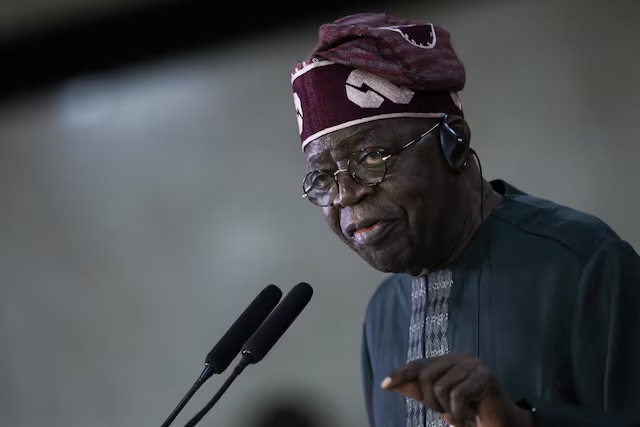
President Bola Ahmed Tinubu has challenged Nigerian universities to abandon a predominantly certificate-driven approach and produce job creators, innovators and problem-solvers capable of driving the country’s economic transformation.
Tinubu, represented by the Minister of State for Education, Professor Suwaiba Said Ahmad, gave the charge on Tuesday at the 37th Annual Conference and General Assembly of the Committee of Vice-Chancellors of Nigerian Universities (CVCNU), held at the University of Ilorin, Kwara State.
The four-day conference, which began on August 17 and ends on August 20, is themed “Building Resilient Universities for Nigeria” and brings together vice-chancellors, academics, regulators, policymakers and other stakeholders to examine the future of university education amid rapid technological and economic changes.
The President said the emergence of artificial intelligence, automation, biotechnology, renewable energy and data science had made it imperative for universities to fundamentally rethink how they educate and prepare graduates.
“Universities are more than institutions where degrees are awarded. They are centres of knowledge creation, innovation, critical thinking, entrepreneurship, cultural development and national transformation,” Tinubu said.
He challenged university leaders to focus less on the number of graduates produced and more on the quality, relevance and capacity of those graduates to create value.
“The critical question facing the university system is no longer whether institutions are producing graduates, but what kind of graduates are we producing?” he asked.
According to him, graduates must be “innovative, ethical, digitally competent, entrepreneurial, adaptable and capable of solving real-world problems.”
Tinubu also called for stronger links between universities and industry, insisting that research should no longer end in academic publications but should be converted into products, services, technologies, policies and practical solutions to national challenges.
“We must move from a situation where research findings remain largely within academic publications to one where research is translated into products, services, policies, technologies and solutions to national problems,” he said.
He identified agriculture, healthcare, education, energy, transportation, security, manufacturing and environmental sustainability as sectors where university research should deliver measurable impact.
The President said his administration was implementing reforms aimed at improving the quality, relevance, accessibility, affordability and accountability of tertiary education, with institutional governance, quality assurance, research and innovation, digital transformation, skills development and industry partnerships identified as key priorities.
He disclosed that the Federal Government was reviewing university curricula to strengthen practical learning and graduate employability.
Using agricultural education as an example, Tinubu said the government was working to move the training model from 70 per cent theory and 30 per cent practical to 80 per cent practical and 20 per cent theory.
He said accreditation requirements would also encourage universities and faculties of agriculture to partner with relevant industries and expose students to practical industrial experience throughout their programmes.
On student welfare, the President reaffirmed the government’s commitment to reducing financial barriers to tertiary education through initiatives such as the Nigerian Education Loan Fund, stressing that no talented Nigerian should be denied education because of economic circumstances.
He, however, said financial support must be matched by quality programmes, adequate infrastructure, effective student support and conducive learning environments.
Tinubu further charged vice-chancellors to strengthen accountability, improve planning, deploy resources prudently and regularly evaluate their programmes.
“Vice-chancellors are not only academic leaders but also managers, employers, financial stewards, community leaders and strategic partners of government,” he said.
Other News
The Chairman of the CVCNU, Professor Lawrence Ikechukwu Ezemonye, said the university system must redefine resilience beyond merely surviving recurring crises to developing institutions capable of remaining relevant in a rapidly changing world.
Ezemonye, who is also Vice-Chancellor of Igbinedion University, Okada, said Nigerian universities were facing a critical test of their relevance to a young and increasingly demanding population.
“We meet at an hour when the Nigerian university is being tested as it has seldom been tested since the years immediately after independence. The test is not of our survival, for we have survived much. It is of our relevance to a young, restless and expectant nation,” he said.
He identified governance, university autonomy, financial sustainability, development of AI-ready institutions, stronger partnerships among universities, government, regulators, industry and labour, as well as human capital development and staff and student welfare as priorities.
Ezemonye warned that artificial intelligence, demographic expansion and global economic competition were rapidly transforming the environment in which universities operate.
He urged university leaders to confront the weaknesses of the system honestly and ensure that resolutions reached at the conference translated into concrete reforms.
“The challenges before us are too grave and too urgent to be obscured by politeness or deference. We must speak plainly about the failures of the past and the demands of the future,” he said.
Meanwhile, the Executive Secretary of the National Universities Commission, Professor Abdullahi Ribadu, warned universities against violating new regulatory guidelines, particularly those governing honorary doctorate degrees.
Ribadu said universities must comply with regulations governing convocations and honorary degrees, stressing that individuals without first degrees should not be considered for honorary doctorates.
He also cautioned against conferring such honours on serving public office holders.
“It has been bastardised in the past. So, for now, we say, please, you are doing well. When you leave office, the university will honour you,” he said.
Also speaking, Chairman of the Committee of Pro-Chancellors of Nigerian Federal Universities, Professor Ahmed Yayale Ahmed, called for stronger cooperation between governing councils and university management.
He urged councils and vice-chancellors to replace rivalry with trust, transparency and shared responsibility in the administration of universities.
The Kwara State Government, host of the conference, said the transformation of tertiary education must begin with strengthening the lower levels of the education system.
Representing Governor AbdulRahman AbdulRazaq, the Commissioner for Education and Human Capital Development, Dr Lawal Olalekan Olohungbebe, said the state was investing across the education chain because strong universities could not be built on weak foundations.
He highlighted community development, service learning, community engagement and local impact with international relevance as essential elements of a resilient university system.
Olohungbebe also cited the state’s KwaraLEARN initiative, which uses technology to monitor teacher attendance and classroom activities in basic schools.
“With KwaraLEARN, we are able to supervise every teacher in the class, who is in the class and who is not in the class. And not just being in the class; what are you doing in the class?” he said.
He urged participants to ensure that the conference produced outcomes that would translate into programmes and policies with measurable impact rather than resolutions that end up on shelves.
The convergence of the Federal Government’s call for job-creating graduates, the CVCNU’s push for AI-ready institutions and Kwara State’s emphasis on strong educational foundations underscored the central message of the conference: Nigeria’s universities must evolve from certificate-producing institutions into engines of innovation, entrepreneurship, skills development and national economic transformation.