Follow Us on Google
• Why Tinubu can’t depend on defecting governors for victory
From Noah Ebije, Kaduna
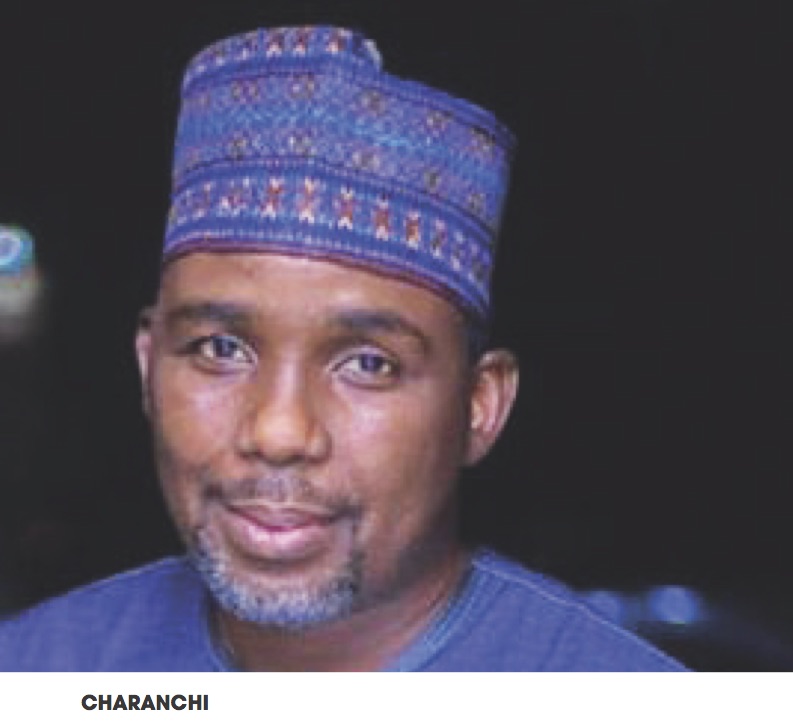
The National Coordinator of Coalition of Northern Groups (CNG), Jamilu Aliyu Charanchi, has said that the 2027 general elections may pull surprises to the disadvantage of the ruling All Progressives Congress (APC) in the North.
In this interview with our correspondent, Charanchi noted that despite the impressive number of sitting governors that have defected to the APC ahead of the general elections next year, it may not guarantee victory for the party, particularly in the Northern region. He also spoke on other burning national issues.
Some stakeholders in the North are worried that both the Arewa Consultative Forum (ACF) and the Northern Elders Forum (NEF) are not doing enough to pull the people together and make them speak with one voice as the 2027 election approaches. How worried are you about this situation?
This is deeply unfortunate and exposes a growing weakness in regional coordination. Bodies like Arewa Consultative Forum and Northern Elders Forum, once respected voices of Northern interest, now appear increasingly ineffective, barking without real influence or direction. The real worry is not just their decline, but the absence of a united, decisive, and people-driven leadership to articulate the region’s collective interest. Without that, the North risks fragmentation, political irrelevance, and continued manipulation by more organised interests.
We do not endorse their current trajectory but we want them as they still have roles to play. They must rise up to the challenge, reinvent and win public trust back through relevance, credibility, and alignment with the aspirations of the people. The real concern should be working together with all stakeholders to address issues like insecurity, poverty, and underdevelopment affecting our people. At CNG, we believe the North must prioritise unity of purpose, not uniformity of voice, and that purpose must be centred on justice, development, and the wellbeing of all citizens.
Northern governors held a meeting in Abuja on Monday, saying that security has improved in the North. Do you agree with their submission?
I think they are simply being delusional. We are with the people, we monitor the situation and I can tell you it is even getting worse. We have the data. Take for instance in January 2026, 481 people were killed in Nigeria. In February, 624 Nigerians were killed. In just one week, from March 10 to 17, about 80 people were killed. This is not for the month. Then we have the killings across Borno, Kwara, Katsina, Kaduna and Plateau – all in March. How does that translate to improvement? Calling it “improved security” is an insult to the daily reality of our people. This is not leadership; it is denial. Many of these governors have become major political liabilities to the region. They neither care about the people nor the future of the North. Their focus is painfully obvious: win elections, hold power, and enrich themselves, while communities remain unsafe and abandoned. History will not be kind to them. Power is temporary, but the suffering of the people and the legacies of failed leadership will endure. So, their claim simply implies they are disconnected from the reality. Across many parts of the North, communities are still being killed, abducted and displaced. For citizens on the ground, security is measured by their ability to live, farm, travel, and conduct daily activities without fear. And that reality remains fragile.
What do you think should be the solution to insecurity generally in the country?
The solution is simple but uncomfortable: real political will and sincere leadership, something that is clearly lacking. We believe that the persistent insecurity is a result of systemic failures that require a comprehensive, coordinated, and sustained response and not isolated or reactionary measures. Government at all levels must recognise that the primary responsibility of the state is the protection of lives and property. This duty must be carried out decisively through improved intelligence gathering, proactive security operations, and better coordination among all security agencies. The current reactive approach has proven inadequate. Also, for long, we have been engaging with all stakeholders at all levels. We developed what is called multidimensional approach to tackling insecurity in the North because we believe that for the problem to be addressed, we need to address some pertinent issues such as poverty, education, unemployment and of course strategic monopolisation of violence by the government. Technology must also be deployed to enhance surveillance and response capabilities. Unfortunately, the insecurity persists because those in power treat it as a talking point, not a priority. No seriousness, no accountability, no urgency. Just empty promises while lives are lost. Until leaders put the people above politics and act with honesty and courage, nothing will change. Without sincerity of purpose, every so-called solution is just noise.
There are strong indications that 2027 general elections may spring surprises in the North, where the opposition parties may have the upper hands against the ruling party. What do you have to say on this?
As a non-partisan political advocacy platform, the CNG does not operate as a political party and does not align itself with any particular party. However, we closely observe political developments, especially as they affect the North and the country at large. The suggestion that the 2027 general elections may produce surprises in the North is not entirely unexpected. What we are witnessing is a growing political consciousness among citizens, driven largely by current realities like economic hardship, insecurity, and governance challenges. The people are becoming more aware, more engaged, and more willing to hold leaders accountable, regardless of party affiliation. So, yes 2027 may indeed bring surprises, but only if the people turn frustration into action. The North is weary of empty leadership; if the opposition offers credibility and sincerity, the tide can shift. So, democracy thrives when citizens are informed, active, and willing to make choices based on performance rather than sentiment, identity, or historical loyalty. If the electorate in the North chooses to reassess its political preferences in 2027, it will simply reflect a natural democratic process. That said, our position is clear: the focus should not be on which party wins, but on which leadership can genuinely address the pressing challenges facing the region and the nation. Issues such as insecurity, poverty, unemployment, education, and social cohesion must take centre stage in political discourse. Ultimately, 2027 should be about people-oriented agendas. I am hopeful that our people will not accept empty promises but will do more of scrutiny and demand results. So, the North has the number and power belongs to the people, and it must be exercised responsibly for the collective good.
Other News
There are rumours of parties demanding hundreds of millions of naira for presidential and governorship nomination forms. If true, isn’t that too outrageous for our democracy?
I think if that’s true then it is simply outrageous. It is monetising power and shutting out credible voices. It’s a direct assault on fairness, inclusion, and the integrity of our democracy. In fact, when contesting elections is pushed to such levels, it may shut out competent people who may not have the financial resources. Democracy then becomes a preserve of the wealthy few, not a platform for fair representation. At a time when Nigerians are struggling with poverty and economic hardship, such figures send the wrong signal about our political priorities. Leadership should be about service and ideas not money.
We believe this trend will undermine our democracy, entrench corruption further and erode public trust in the electoral process. Political parties must rethink this approach if we are serious about building a truly participatory and credible democracy.
APC is now controlling 31 states across the country. Are you not seeing the possibility of a one-party state?
Power ultimately belongs to the people, not any party. If citizens stay vigilant, a one-party state cannot take root. The dominance of one party across many states is a development that should concern all lovers of democracy, but it does not automatically translate into a one-party state. What truly defines a one-party state is the absence of credible opposition, suppression of dissent, and lack of electoral integrity. You may recall that at some point in this country, PDP controlled 28 or so states, yet it eventually lost the 2015 election.
So, our position in CNG is democracy must remain competitive, inclusive, and accountable. No party, no matter how widespread, should be allowed to operate without scrutiny. A strong opposition is essential for balance, policy debate, and good governance.
The real issue is not the number of states controlled by a party, but whether governance is delivering results and whether institutions remain independent and functional. Nigerians must remain vigilant to ensure that the democratic space is not weakened. Ultimately, power belongs to the people. If citizens remain active, informed, and willing to hold leaders accountable, the risk of a one-party state can be effectively checked.
Don’t you think that with the majority of the state governors now in the ruling APC, the 2027 election will be a walkover for Tinubu?
Not at all. Their numbers don’t guarantee victory. Power rests with the people, and 2027 will be decided by their verdict, not party dominance. Elections are ultimately decided by the people, not by the number of governors aligned with any party. Yes, as governors, with their political structures, they may offer advantages, but they do not replace public trust. Today, our people are more conscious of their realities – insecurity, economic hardship, and governance outcomes. These factors will weigh heavily on electoral choices in 2027. It would be a mistake for any political actor to assume a walkover. The mood of the people is shifting toward accountability and performance. So, ultimately, credibility, competence, and the ability to respond to the real needs of citizens will determine the 2027 outcome more than just political alignment at the top.
What is your stance on Muslim-Muslim ticket for the presidential election? Do you believe in this one faith ticket for the presidency?
Religion or ethnicity shouldn’t be the focus. Our priority must be competence, capability, capacity, and integrity. Leadership should be about performance, not faith. So, our position is clear in the sense that Nigeria’s leadership should reflect competence, fairness, and national inclusion. While political parties decide what best suit them and their interests, we advise them to consider national stability, diversity and any leadership choices should inspire confidence across religious and regional lines, not deepen perceptions of exclusion. Ultimately, the parties will do their calculations to win and Nigerians should prioritise competence and capacity, but political actors must also be mindful that inclusion strengthens stability and legitimacy.