Follow Us on Google

“Ideas are useless unless used. The proof of their value is in their implementation. Until then, they are in limbo.”
—Theodore levitt
By Omoniyi Salaudeen
For the umpteenth time, a fresh debate on the imperative of total removal of subsidy on petroleum products is in the air. As usual, people have been arguing back and forth as to whether or not the time is actually auspicious for the Federal Government that promised to lift 10 million Nigerians out of poverty could take the bold initiative without creating another social problem. Both the lettered and unlettered, the real and imaginary economists have had one argument or the other to latch on to in support of or against the new reform measure that is sure to inflict more pain on the ordinary people even if it is going to be temporary.
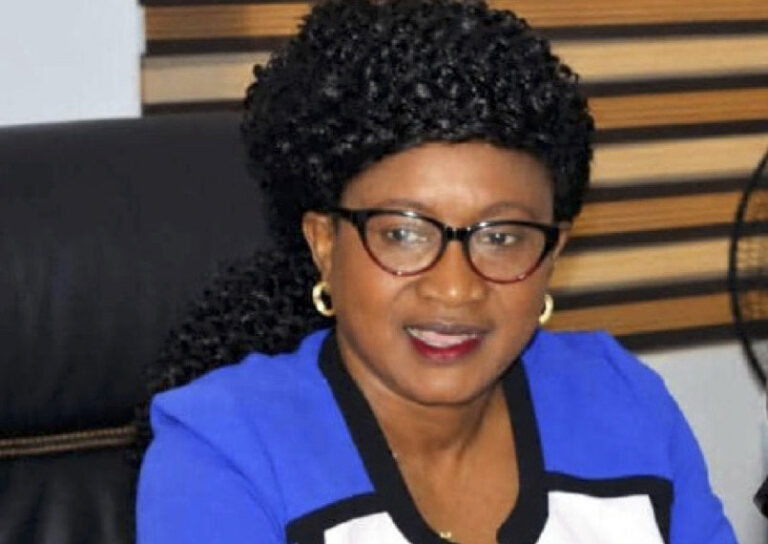
It is one debate too many, through and through. Now, the only person who could provide the right answer to the puzzle is the Minister of Finance, Budget, and National Planning, Zainab Ahmed, on whose table the responsibility of providing a safety net for the vulnerable poor stops. Though the task appears to be a hard nut to crack given the current state of the nation’s economy that is just tottering out of the COVID-19 pandemic and its devastation effects globally, the soft-spoken minister seems to be taking it in her stride. She disclosed that arrangement had been made by the Federal Government to pay a token of N5,000 per month for 40 million Nigerians on the lowest rung of the ladder. Whether or not the quantum of money that would be needed to implement the policy will not knock off whatever gain that is meant to be realized from the subsidy removal is a different ballgame entirely. But the impression out there especially among the social media freaks is that Madam might not have done her proper calculations very well before she declared the policy initiative. Maybe yes, maybe no; after all, many a good number of those platforms could hardly be taken seriously for deliberate mischief.
The Group Managing Director of Nigerian National Petroleum Company (NNPC), Malam Mele Kyari, had thrown the fresh charge at the recent presentation of the World Bank Nigeria Development Update, in Abuja, declaring that fuel subsidy removal would definitely be achieved in 2022 since it already had the full backing of the law.
According to him, a litre of fuel may sell between N320 and N340 in 2022.
“There will be no provision for it legally in our system, but I am also sure you will appreciate that government has a bigger social responsibility to cater for the ordinary and, therefore, engage in a process that will ensure that we exit in the most subtle and easy manner,” he said.
Interestingly, this is coming at a time when the World Bank has warned that six million Nigerians may go into poverty if the trend of rising food prices is not checked.
In a quick assurance against the bleak prognosis, Zainab explained that “the subsidies regime in the oil sector remains unsustainable and economically disingenuous.”
She probably knows better. What is not in doubt, however, is the fact that the politics behind subsidy removal has been on for too long. And successive administrations had created a huge level of distrust among the populace so much that it would now be difficult to make people buy into the idea even with the best of intention. Once bitten, they say, twice shy.
Nigerians have gone through the thick and thin of politics of subsidy, disappointment they got all through even way back to the era of the military.
The government finally lost public confidence when Hon. Ndudi Elumelu-led House of Representatives Committee charged to probe into the alleged shoddy practices by the beneficiaries of subsidy went awry with the startling revelations of bribe allegations that characterized the investigative procedure. How a key actor in the bribery scandal, Lawan Farouk, the pint-sized lawmaker, from Kano State, who led the committee landed in prison is already a familiar story.
It nevertheless robbed off the government of the necessary confidence that is needed to rally the people around the idea of a total subsidy removal without resistance. To that extent, the Federal Government should be prepared to face public resistance to the renewed policy initiative. This is even more so, coming on the eve of an election year when the people would be ready to take their own pound of the flesh for all disappointments they have suffered since the inception of the present administration.
Whatever the motive behind the idea of N5,000 dole-out to the vulnerable segment of the society, it still falls within the precept of deceptive politics because it is unsustainable. Ex-President Olusegun Obasanjo did it when he ordered the demolition of toll gates on the highways across the country as a palliative for subsidy removal. Now, the government is back in the campaign for reconstruction with tax payer’s money. The same experience is certainly going to repeat itself with the payment of stipend to the poor masses. Since it is an unearned income, one day, any succeeding government will have good reasons to rise against it and stop the payment. And so the beneficiaries would be back to square one.
Without a doubt, there is a sense in which an end to subsidy is seen as a panacea to the endemic corruption in the downstream sector of the petroleum industry. This may be the last battle the Buhari administration would fight before its exit in 2023.
Zainab Shamsuna Ahmed succeeded the immediate past Minister of Finance, Kemi Adeosun, who resigned her appointment in a controversial circumstance in 2018. Prior to her appointment by President Buhari, Zainab Ahmed had worked as a senior accountant in the Ministry of Finance, Kaduna State.
For years, subsidy removal has remained a dream pipe. Under her watchful eyes, the administration is determined to take the bull by the horns.