Follow Us on Google
By Bimbola Oyesola, [email protected]
Last Thursday, hope rose for Nigerian workers as the new minimum wage discourse officially took off across the country, but with divergent proposals.

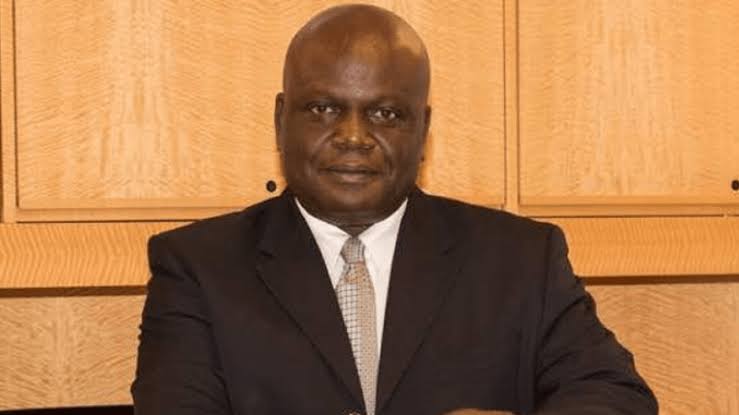
•Usifo
The Tripartite Committee on the National Minimum Wage had commenced public hearing for the new minimum wage across the six geopolitical zones. The public hearing took place in Lagos, Kano, Enugu, Akwa Ibom, Adamawa and Abuja.
Chaired by the chairman of the National Salaries, Incomes and Wages Commission, Ekpo Nta, the committee has called for the active involvement of all stakeholders in the process.
President Bola Tinubu, represented by his deputy, Kashim Shettima, on January 30, 2024, inaugurated a 37-member panel on the new minimum wage at the Council Chambers of the State House in Abuja.
The panel, with membership cutting across the federal and state governments, the private sector and organised labour, is saddled with the responsibility of recommending a new national minimum wage for the country on or before April 1, following the expiration of the current N30,000 minimum wage as provided by the law.
The Vice President, during the inauguration, urged members to “speedily” arrive at a resolution and submit their reports early as the current N30,000 minimum wage expires at the end of March 2024.
Though the tripartite committee had met a few times in Abuja, it has yet to deliberate on any figure for the minimum wage.
Divergent proposals
The publIc hearing has seen labour and some other groups coming up with different proposals that reflect the state of economic decadence and bastardization of workers’ earnings through astronomical inflation.
In the South West, the Nigeria Labour Congress (NLC) has demanded N794,000 as the new national minimum wage for workers in the region’s geopolitical zone.
The chairperson of the Lagos State chapter of the NLC, Funmi Sessi, during her presentation at the public hearing of the Tripartite Committee on National Minimum Wage in Ikeja, Lagos, said the demand was a collective decision made by all members of the union within the South West, “reflecting the consensus on the need for a substantial increase in the minimum wage to meet the economic realities faced by workers in the region.”
According to her, “this call for an increase comes when the cost of living has skyrocketed, pushing many workers into financial hardship.”
The North West leadership of the congress had proposed minimum wage of N485,000.
Labour unions in the North East where the NLC president, Joe Ajaero, chaired the hearing, proposed a monthly national minimum wage of N560,000. Both the NLC and Trade Union Congress branches across the six states in the region jointly recommended the amount.
In contrast, the Adamawa and Bauchi State Governments suggested N45,000.
The NLC chairman in Adamawa State, Emmanuel Fashe, presented the joint recommendation, advocating for a biennial review of the minimum wage instead of the current five-year cycle.
The Christian Association of Nigeria in Adamawa State similarly recommended N486,000 per month, considering various family expenditures.
Other groups, including the Nigeria Medical Association and the National Council of Women Societies, aligned with the NLC’s position.
The hearing addressed diverse recommendations from different stakeholders, with differing amounts proposed, including N200,000 by NCWS and N75,000 by the Muslim Council of Nigeria.
In the North Central, the NLC chapter in the Federal Capital Territory suggested a revised minimum wage of N709,000.
The FCT chapter chairman of NLC, Dr. Stephen Knabayi, presented the proposal but, in a parallel recommendation, Mr. Amaege Chukwudi, the leader of the TUC, FCT chapter, proposed a monthly minimum wage of N447,000.
From the South-South, the NLC recommended a revised minimum wage of N850,000 for workers across the country.
The NLC and the TUC in the South-East region jointly recommended N540,000 and N447,000, respectively, as the new minimum wage.
Representing the NLC in the region, Fabian Nwigbo, the chairman of the NLC, Enugu State Chapter, emphasised that the purchasing power of the 2019 N30,000 minimum wage has been significantly eroded by inflation.
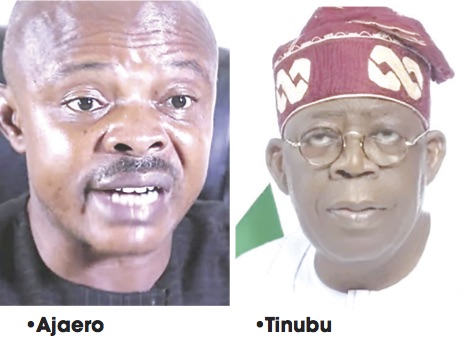
Earlier in February, Ajaero, in an interview on Arise TV, hinted that if the ongoing inflation continued unabated, organised labour might push for a new minimum wage of up to N1 million for Nigerian workers.
Ajaero said the demand from organised labour would be influenced by the cost of living, which has been increasing since President Tinubu assumed office, notably due to the removal of the fuel subsidy and other policies.
“This N1m may be relevant if the value of the naira continues to depreciate; if the inflation continues unchecked because the demand of labour is equally dependent on what is happening in the society,” he said.
Explaining further the congress boss said when labour was contemplating N200,000 (as minimum wage), the exchange rate was about N800/N900 (to a dollar). “As we talk today, the exchange rate is about N1,400 or even more.”
“Those are the issues that determine the demand and it is equally affecting the cost of living. And we have always said that our demand will be based on the cost of living index. You will agree with me today that even a bag of rice is going for about N60,000/N70,000 or more,” he stated.
Adding that a bag of locally produced corn is about N56,000 or more, Ajaero noted that as “foodstuff is getting out of reach, now are we going to get a minimum wage that will not be enough for transportation even for one week?’’
The president of the National Union of Chemical Footwear Rubber Leather and Metallic Products Employees (NUCFRLANMPE), Goke Olatunji, also aligned with the NLC’s president’s wage of N1 million.
“The president of the NLC, Joe Ajaero, has spoken. He said N1 million and that is the position of the NLC, and that is my position. No union leader can say otherwise,” he said.
Olatunji said the N1 million was based on the current high cost of living, which is exacerbated by the soaring prices of food, transportation, rent, medical bill and all that, warning that the money may not be sufficient.
“Though the N1 million that we have proposed is subject to negotiation. The government on their part, particularly state governors, are not doing enough to pay workers even with the current minimum wage of N30,000. Nigerians have literally been turned to beggars just to meet their basic needs,” he lamented.
The NUCFRLANMPE boss reasoned that the way out is to face the truth, “if the governors cannot implement an agreement, especially one as crucial as paying workers minimum wage, they should resign.”
Affordability
President of the Chemical and Non-Metallic Senior Staff Association (CANMPSSAN), Segun David, believes that affordability of the employers, based on the current economic situation, should be considered while fashioning the new minimum wage.
“We are in an economy where it is the dollar that dictates everything. Look at the current exchange rate, Dollar is exchanging for over N1,600.
“Given this, the minimum ideal amount should be at least $100, which is around N160,000. Even that money would go nowhere at meeting basic needs of people. A bag of rice is over N70,000, take that away and you are left with only N90,000. Now you will have to consider other commodities and demands of the average Nigerian; transport, rent and all that.”
He noted that even the N160,000 will not be enough for an average family, bearing in mind that in Nigeria an average worker has about 10 dependents.
“Even when you raise the argument and say; let’s give N300,000 as minimum wage, where do you think the average employers would get the money? It would be gotten from the masses, because they would increase the prices of their goods and services. It is going to be a vicious cycle,” he warned.
David opined that it was the same on the part of government, “if they decide to pay a huge amount as minimum wage, where will they get the money from? It is you and I, because there would be heavy taxes levied on this same people.”
He added that many companies who are unable to pay would have to close down. “What about artisans, tailors, drivers, hairdressers who are not part of the organized labour, who pays them their own minimum wage? And we have more of those people in the nation’s workforce,” he said, calling on the government to give consideration to other categories of workers.
“My suggestion is that the federal government should not be ashamed to correct its mistake of floating the naira and removing subsidy to the level to which it has done. The way forward is a total reversal of these policies,” he stated.
Another labour leader, president of the National Union of Banks, Insurance and Financial Institution Employees (NUBIFIE), Abakpa Anthony, said the minimum wage an average worker should earn could range between N120,000 and N150,000, adding that both high-earning workers and their poorly paid counterparts shop in the same market
The Trade Union Congress had earlier demanded payment of a new minimum wage of N200,000 monthly.
The Director-General of Nigeria Employers Consultative Association (NECA), Adewale-Smatt Oyerinde, the body representing the Organised Private Sector (OPS), equally canvassed for the negotiation of a new wage that is commensurate with the realities of the current situation.
“We think the N30,000 minimum wage is no longer realistic because our current economic situation and inflation rates have eroded the purchasing power of an average worker, and the household also is feeling the pinch,” he said.
Oyerinde said employers will support a realistic minimum wage, noting that within the context of the negotiation, there are other variables beyond inflation rates. “You also look at the ability of businesses to pay, you also look at the economic situation and productivity.”
While he mentioned that there has been a conversation about the concept of a living wage and the reasons why a living wage is desirable, he said globally and even at the high end, there is no framework for arriving at a living wage.
He added that the committee tasked with negotiating a new national minimum wage fixation framework based on the International Labour Organization (ILO)’s Convention 131 would still have to review President Bola Tinubu’s New Year’s speech on the matter.
Oyerinde commended President Tinubu on the move to reduce the entourage of government officials, adding that this is one of the ways to reduce cost of governance.
“It is a good start to say let’s reduce the number of entourage whose function you can not really define in the first place.
“We hope that this will be strictly implemented and more areas where there are leakages will be critically looked at and addressed,” he said
The antecedent
In Nigeria, there have been several minimum wage increases: from N3000 to N7500 in 1990, and N18,000 in 2010 and from N18,000 to N30,000 in 2018.
Minimum Wage in Nigeria has evolved over the years, the first minimum wage declared in Nigeria in 1981 was set at N1,500 per month for public sector employees. This was later increased to N3,000 per month in 1991.
In 2000, the minimum wage in was increased to N5,500 per month. In 2011, the Nigerian government implemented a new minimum wage of N18,000 per month. This was an increase of over 500% from the previous minimum wage of N3,000 per month.
The 2011 minimum wage was also revised to N18,500 in 2013. The present minimum wage of 30,000 backed by law came into effect in 2018, but the implementation began in 2019.
Given the inflation statistics in Nigeria and the recent drastic devaluation of the naira there could be no better time for workers to ask for a wage increase.
Besides, the sharp and continuous rise in food prices owing to a combination of factors like the weakening naira, climate change and escalating insecurity that has led to food production shortfall.
Recently, the National Bureau of Statistics (NBS) Consumer Price Index (CPI) report stated that the constant surge accelerated headline inflation to 28.2 percent in November 2023 and food inflation to 32.8 percent.
The global bank also said the country’s inflation eroded the N30,000 minimum wage by 55 percent, thus reducing household expenditure.
The inflationary pressure shrunk the value of consumers’ disposable income, stretched budgets, and even forced many to cut down on their purchases during the festive season.
In the same vein, the removal of subsidies on petroleum products further worsened the challenges faced by working people.
It unleashed severe pain and contributed to galloping inflation even as it increased inequality and poverty.
This has seen the Organised labour organizing protests and some pockets of strikes to express their frustrations.
However, the Federal Government has assured workers that it is doing everything to ensure payment of a minimum wage that is commensurate with the prevailing cost of living.
Following the removal of fuel subsidy and unification of the naira, President Tinubu promised an upward review of the national minimum wage for Nigerian workers while delivering a speech in July 2023.
Prior to this, the President announced a six-month temporary wage increase for some workers in the country.
The wage increase, which has taken effect, was to help cushion the effects of the fuel subsidy removal, which has led to a surge in the cost of living in the country, but organised labour believed that there has not been sincerity in the payment.
Again, in his New Year speech, he said: “The economic aspirations and the material well-being of the poor, the most vulnerable, and the working people shall not be neglected. It is in this spirit that we are going to implement a new national living wage for our industrious workers this new year. It is not only good economics to do this; it is also a morally and politically correct thing to do,” he said.
Expectation
The NLC President, Joe Ajaero has expressed optimistic that the content of the new minimum wage would approximate a living wage, whereby the government would see it as an opportunity to put in standards that would ameliorate most of the sufferings it foisted on Nigerian workers through removal of subsidy.
The NLC President said government should see the negotiation of a new wage as an opportunity and work with the tripartite committee to quickly deliver a living wage to Nigerian workers.
He said the government should in the first quarter fulfill all its promises to the citizens as contained in the 15 – point agreement signed on Oct 2, 2023, during negotiations with labour and the government to cushion the impact of fuel subsidy on Nigerians.
Part of the agreements, Ajaero explained was the issue around the Compressed Natural Gas (CNG) buses and the conversion kits, calling on the government to implement the agreement.
Ajaero said the buses should be the ones manufactured in the country, as Nigerian manufacturers have demonstrated their capacity to deliver.
According to him, buying them in Nigeria signifies that the internal multipliers would be huge, increase employment and guarantee income for the masses as well as make the economy better.
Putting this in place, Ajaero also said it will make transportation costs cheaper and curtail the challenges of workers sleeping over in their workplaces until the weekend due to the high cost of transportation.
He said the Congress expects the Port Harcourt Refinery to be operational and producing products, even as a committee is set up to allow trade unions to inspect, monitor and report progress to the completion of the refinery.
Furthermore, he said the government must restrain itself and ensure it complies with the tenets of social dialogue.
In his contribution, the Deputy President of the Trade Union Congress of Nigeria (TUC), Dr. Tommy Okon, said that the year would come with a mixed feeling both for workers and the government, stressing that the implementation would either bring stability or industrial unrest to the country.
“It is going to be one of the years where labour will be full of engaging the government both at the federal and state and even local government levels,” he said.
He stated that the government was conscious of industrial peace and harmony.
“The government has to do the needful by encouraging employers of labour to pay the national minimum wage as would be agreed by the tripartite committee, comprising the government, labour and employers.”
Giving further projections in the new year, Okon, said besides the new wage negotiation, organised labour is going to take cognizance of education, health, housing, and transportation.
The public hearing might have seen multifarious contributions and proposals, stakeholders have expressed that it only shows the beauty of democracy and a good step in the right direction towards arriving at a living wage that will put a smile on Nigerian workers’ faces.