Follow Us on Google
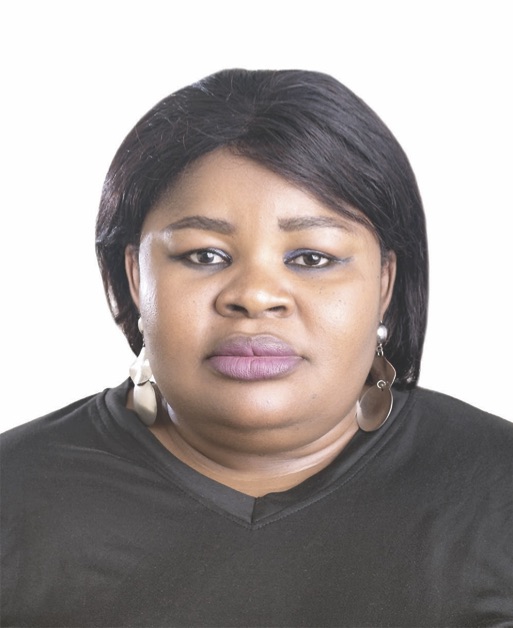
From Idu Jude, Abuja
The Director of the Initiative for Research, Innovation, and Advocacy in Development (IRIAD), also known as The Electoral Hub, Princess Harman-Obels, has advocated for approximately 35-50% of seats to be reserved for women in the legislature. In this interview, she while admonishing the lawmakers, also suggested that the people with disabilities (PWD) bill should get equal consideration, Excerpts.
What is your take on the United Nations’ proposed new bill for reserved seats for women in the legislature?
The Reserved Seats Bill, currently under consideration in Nigeria’s ongoing constitutional amendment process, is a legislative proposal aimed at increasing women’s representation in the National Assembly and State Houses of Assembly. While the Bill has received strong support from the United Nations on multiple occasions, it was not proposed by the UN but formally proposed by the National Assembly.
The Deputy Speaker, Benjamin Kalu sponsored the Bill alongside 12 others and it seeks to create 182 additional legislative seats exclusively reserved for women, 37 seats in the House of Representatives, 37 in the Senate, and three in each State Assembly. This approach draws on successful models from countries such as Rwanda, Tanzania, and South Africa, where reserved seats have significantly increased women’s representation. Currently, Nigeria ranks very low in female political representation, holding less than 5% of seats in the National Assembly, placing it 178th out of 182 countries globally, and the lowest in Africa. The necessity of the Bill lies in addressing systemic barriers, breaking patriarchal exclusion, and ensuring women’s meaningful inclusion in decision-making processes, which is vital not only for justice and democracy but also for leveraging the full potential of Nigeria’s population and promoting inclusive development outcomes. IRIAD fully supports the Reserved Seats for Women Bill as a structural correction to decades of underrepresentation. It is not a token gesture but a constitutional intervention to guarantee fairer participation and a stronger democracy. The Bill ensures women’s voices will contribute to shaping Nigeria’s future policies.
Do you think there should also be a reserved seat for people with disability?
Yes. IRIAD believes inclusion should extend to people with disabilities, in this case, specifically women with disability. PWDs face unique barriers to representation, and reserved seats would guarantee their voices in law-making. This aligns with Nigeria’s commitment to equity and human rights. Reserved seats for people with disabilities are equally imperative for inclusive democracy. The Nigerian Disability Act mandates that at least 5% of public appointments be reserved for PWDs; however, this provision is rarely fulfilled. Nigeria’s total projected population is approximately 237.5 million people as of 2025, and it is estimated that about 11 million Nigerians live with disabilities, about 4-5% of the population. Institutionalizing reserved seats for PWDs in the National Assembly will ensure that their specific needs, such as accessibility, social protection, and discrimination, receive legislative attention and protection. This structural inclusion would guarantee meeting and likely exceeding the 5% representation target mandated by law, ensuring genuine empowerment beyond mere tokenism.
To what degree has the non-inclusion of women affected economic growth in Nigeria?
The exclusion of women from governance hurts Nigeria’s economic growth. Research has shown that there is a direct positive correlation between women’s inclusion in governance and economic growth. Countries have recorded high economic growth with increased women’s representation and participation in governance. When women are systematically marginalised, critical issues such as maternal health, education, gender-based violence, and social welfare receive inadequate attention. Inclusive governance is smart economics, as it yields positive economic performance such as human capital accumulation, higher female labour force participation, and improved market efficiency. It is also directly linked to improved development outcomes such as poverty reduction, better education and health, and equitable resource allocation, all of which are key to sustainable economic progress.
Other News
What ratio do you think is equitable for women in the National Assembly, considering Nigeria’s demography?
Considering Nigeria’s demographic balance, equitable representation for women in the National Assembly should approximate 50%. The Bill proposes to create an additional 182 elective seats in both the National Assembly and State Houses of Assembly solely for women, which moves closer to this ideal, representing a realistic and pragmatic step to increase women’s political presence in the legislature. IRIAD sees the passage of the Bill as a pathway to at least 35–50% representation over time. This addresses urgent action and long-term equity.
Do you hold the opinion that African culture has contributed to the neglect of women’s empowerment and participation in politics?
African cultural norms, heavily influenced by patriarchal traditions, have contributed to the neglect of women’s empowerment and participation in politics. Politics is often viewed as a male domain, and women’s political ambitions are frequently discouraged or devalued.
These cultural barriers, including gender stereotypes and limited educational opportunities, remain significant obstacles to women’s political inclusion. However, legal reforms, advocacy initiatives, and societal shifts are progressively challenging these norms. Additionally, women lawmakers frequently face funding gaps, harassment, limited networks, and isolation within male-dominated assemblies. To address these challenges, IRIAD recommends targeted mentorship, capacity-building training, and security measures to enhance their effectiveness and participation.
What are these challenges that may hamper the performance of women lawmakers?
Women lawmakers face significant challenges that hamper their legislative performance, including gender discrimination, marginalization within male-dominated party structures, limited access to political finance, lack of adequate training and capacity building, and intimidation. These factors diminish their efficacy and ability to advocate for policies that benefit women and broader society.
With the development, how soon do you think a woman can become the President of Nigeria?
This prospect requires dismantling political and societal barriers, promoting robust leadership development for women, garnering political will from the government, and reforming party nomination and election processes to ensure true inclusivity.