Follow Us on Google
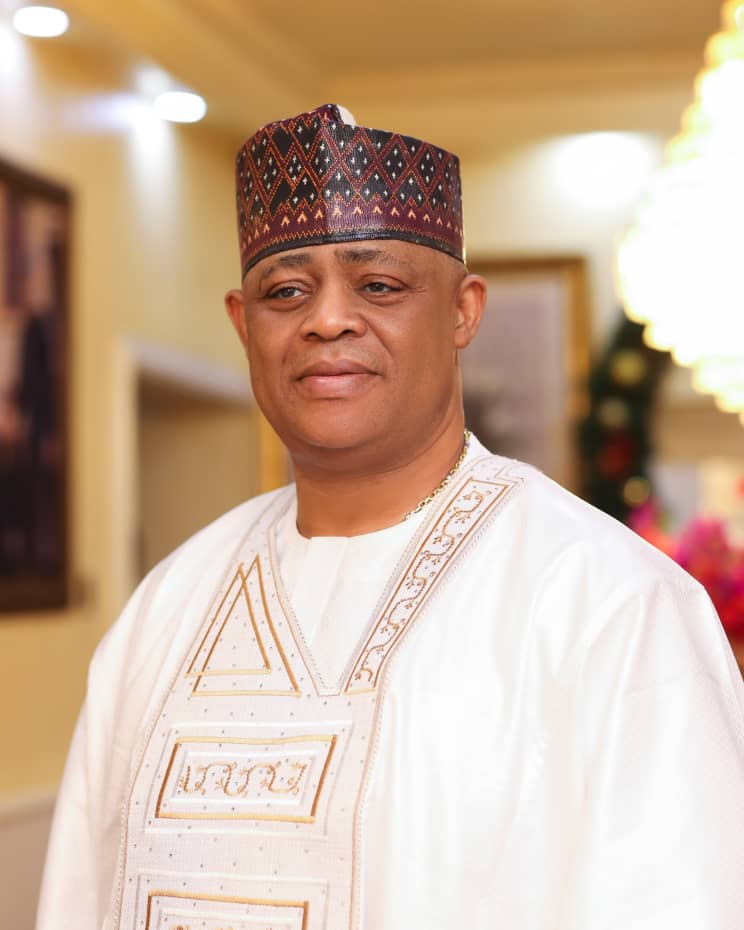
By Chief Femi Fani-Kayode
In 1988, Mr P.W. Botha, who was President of apartheid South Africa from 1984 to 1989, reportedly said the following: “Black people cannot rule themselves because they don’t have the brain and mental capacity to govern a society. Give them guns, they will kill themselves. Give them power, they will steal all the government money. Give them independence and democracy, they will use it to promote tribalism, ethnicity, bigotry, hatred, killings, and wars!”
These words, attributed to this racist Afrikaner and white supremacist, appal me. They have been entrenched in the inner recesses of my spirit and soul ever since I first came across them 33 long years ago. My repugnance and revulsion for such sentiments, and those who harbour them, will never subside.
To be sure, racism has no place in the civilised world or, indeed, in the land of the living. Botha’s mindset seeks to dehumanise us, negate who and what we are as Africans, and turn us into what we are not. It is for this very reason that we have an obligation before God to prove him wrong, and that is precisely why a failure of governance in either post-apartheid South Africa, Nigeria or anywhere else in Africa is not something that we can accept, tolerate or abide.
We must not only get it right, but we must also work closely together in the spirit of Pan-Africanism and solidarity. If we fail to do so, racists like Botha will laugh in their graves as they witness black South Africans killing their fellow black African brothers who reside in their country.
Such behaviour, if unabated, provides clear evidence and a stark confirmation of the self-serving narrative and false gospel that Botha sought to preach, which asserts that black Africans are little better than animals and cannot govern themselves. This is a narrative that we, as Africans, must never give legitimacy or credence to through our words and actions, nor allow to stand.
Ours is to love one another, work together, help and encourage each other, resolve whatever differences we have, and acknowledge the fact that our collective interest and future reside in, and can only be guaranteed by, love, peace, understanding, unity and solidarity among all 54 nations that make up the African continent. Permit me to go deeper.
When you look at the map of Africa and hold it vertically, you will see a pistol. Nigeria is in the position of the trigger and South Africa is at the tip of its barrel. In order for the gun to become a functional, lethal weapon capable of holding its own in today’s challenging, fast-changing and competitive world, both the trigger and the barrel must work closely together and be on the same page. If the two ever fall apart or move in different directions, the gun will lose its functionality and can no longer work. It will, at best, be nothing more than an impotent ornament and a soon-to-be-forgotten relic displayed on a museum shelf or, at worst, a worthless piece of scrap iron discarded in a dustbin.
That must never be allowed to happen to us. We must resolve our differences and be united if we seek to achieve our full potential and fulfil God’s purpose for our respective nations and, indeed, our continent. Without a successful and productive collaboration between its two largest, most powerful and most influential economies, Africa is not going anywhere, and those who believe that black people have no business running the affairs of their own nations, and are incapable of achieving meaningful success in governance, would have been proved right.
This is why the relationship between our two great countries matters and must be nurtured and sustained despite numerous difficulties and challenges.
It is also important to recognise that Nigeria and South Africa must be courageous enough to speak the truth to one another when challenges arise in order to overcome hurdles, remove obstacles, right wrongs, build a stronger partnership and sustain the historical ties of solidarity and fraternity that have always existed between us.
The truth is that ours is a sacred bond, forged in fire and blood and sealed by the collective struggles of our forefathers and heroes past. That bond must never be broken.
We must deploy our best efforts towards normalising the partnership between our respective countries and cultivating a core of leaders on both sides who are committed to this noble cause. Yet despite this, the truth, no matter how bitter, must be spoken. It is in that context, coupled with the concerns of the people and Government of Nigeria, that I have taken the time to pen this series and make this contribution.
Consider the following.
After ruling out the possibility of any form of compensation for our nationals who lost their investments, businesses, chattels, properties and homes, and who were compelled to relocate back to Nigeria as a consequence of the afrophobic attacks taking place in South Africa, Minister Khumbudzo Ntshavheni, a minister in the South African Presidency, said the following:
“We would be interested to know where the drug dens of Nigerians are. They can show us where they have been keeping the drugs so that we can clean up the drug dens in South Africa urgently.”
These words, coming from a high-ranking South African official, are disrespectful and disappointing. They represent a direct attack on the dignity, honour and integrity of our people.
Worse still, the following day she doubled down by writing the following on X: “I hope I was loud and clear on the issue of properties: I mean ALL properties!”
Her message, and its apparent intention to emphasise that Nigerians will not be compensated for the loss of even their lawfully acquired chattels, businesses, properties and homes, and to portray all Nigerians as drug dealers who operate and own “drug dens”, thereby further endangering their lives, is noted.
Permit me to put all this in context.
According to Nigerian Embassy officials in Pretoria, no fewer than six Nigerians have been murdered in South Africa this year alone, while a total of 98 of our nationals have been murdered between 2022 and 2026.
Other News
Yet not one South African has been arrested, detained or brought to justice for any of these murders and extra-judicial killings. In addition, thousands of our nationals have been forced to flee their homes, have had their lawful and legitimate businesses taken from them, and have been forcibly displaced.
Nigerians, whether documented or undocumented, together with their children, have been subjected to all manner of violence and humiliation and are targeted by South African security forces and elements within the community even when they have done no wrong.
This is unacceptable and, when coupled with the hostile rhetoric now coming from South African government officials such as Minister Ntshavheni, gives cause for even greater concern.
The extra-judicial killings of two Nigerian nationals by the South African police in recent weeks, and the cold-blooded murder of a third by “unidentified individuals”, have made matters even worse.
Our Government, through the Ministry of Foreign Affairs, issued a formal statement on this matter and on the unfortunate utterances of Minister Ntshavheni and condemned the killings.
Among other things, the spokesman for the Foreign Ministry said that “these killings raise further questions over the general safety of Nigerians and other foreigners in South Africa” and that “the continuing pattern of such terrible incidents is clear evidence of complicity on the part of security operatives, which raises the question of state responsibility under international law”.
He added: “Nigeria expresses great concern over the recently televised public statement by the spokesperson of the South African Government, asking Nigerians leaving the country due to the ongoing xenophobic protests to show where they hide illegal drugs. The unguarded public statements are unacceptable and are strongly condemned. Such derogatory, unprofessional and uncensored generalised public statements by highly placed government officials constitute hate speech that influences and incites negative and criminal actions against members of the Nigerian community.”
He concluded by saying: “We wish to place the Government of South Africa on notice that if the situation continues to persist, all options remain on the table, some of which will be activated if the uncultured and provocative trend of intolerance and apartheid-style behaviour of South Africa against foreigners is not addressed.”
This statement is loaded. Sadly, despite our concerns, the extra-judicial killings have not abated.
According to the Nigerian Citizens Association (NICASA), a Nigerian national, Chika Ibe, was allegedly “tortured to death” by members of the South African Police Service after a raid on his home in Cape Town on July 23.
During the same raid, another Nigerian, Egwabor Patrick Chucks, was shot in the mouth and severely injured by the South African police.
This is a serious development.
Senator Shehu Sani, a former senator representing Kaduna State, expressed concern by pointing out the malevolent intent and undeniable hostility in Minister Ntshavheni’s remarks on X when he wrote:
“This is from a SENIOR Government official and NOT a thug from the streets.”
Sadly, instead of de-escalating the issue, the minister responded directly to him on X, writing: “I didn’t stutter!”
Clearly, this minister lacks restraint. Yet, stutter or no stutter, we did not mince our words. Our humble appeal is that you stop the killing of Nigerians, treat our people like human beings, show them a modicum of decorum and respect, and pay compensation to all those who were unlawfully deprived of their lawful property.
Thankfully, for every Minister Khumbudzo Ntshavheni in the South African Government who displays disdain and contempt for the Nigerian people, there is a Minister Ronald Lamola, Minister of International Relations and Cooperation, who interacts with us with courtesy and decency and shows us respect and understanding.
To be continued.
_______________________________________________________
• Chief Femi Fani-Kayode is a former Minister of Culture and Tourism, a former Minister of Aviation and the Ambassador-Designate of Nigeria to South Africa