Follow Us on Google
From Scholastica Hir Makurdi
A 15-year-old girl, Victoria Samson has appealed to government authorities and stakeholders to provide toilets and free sanitary pads for girls in schools.
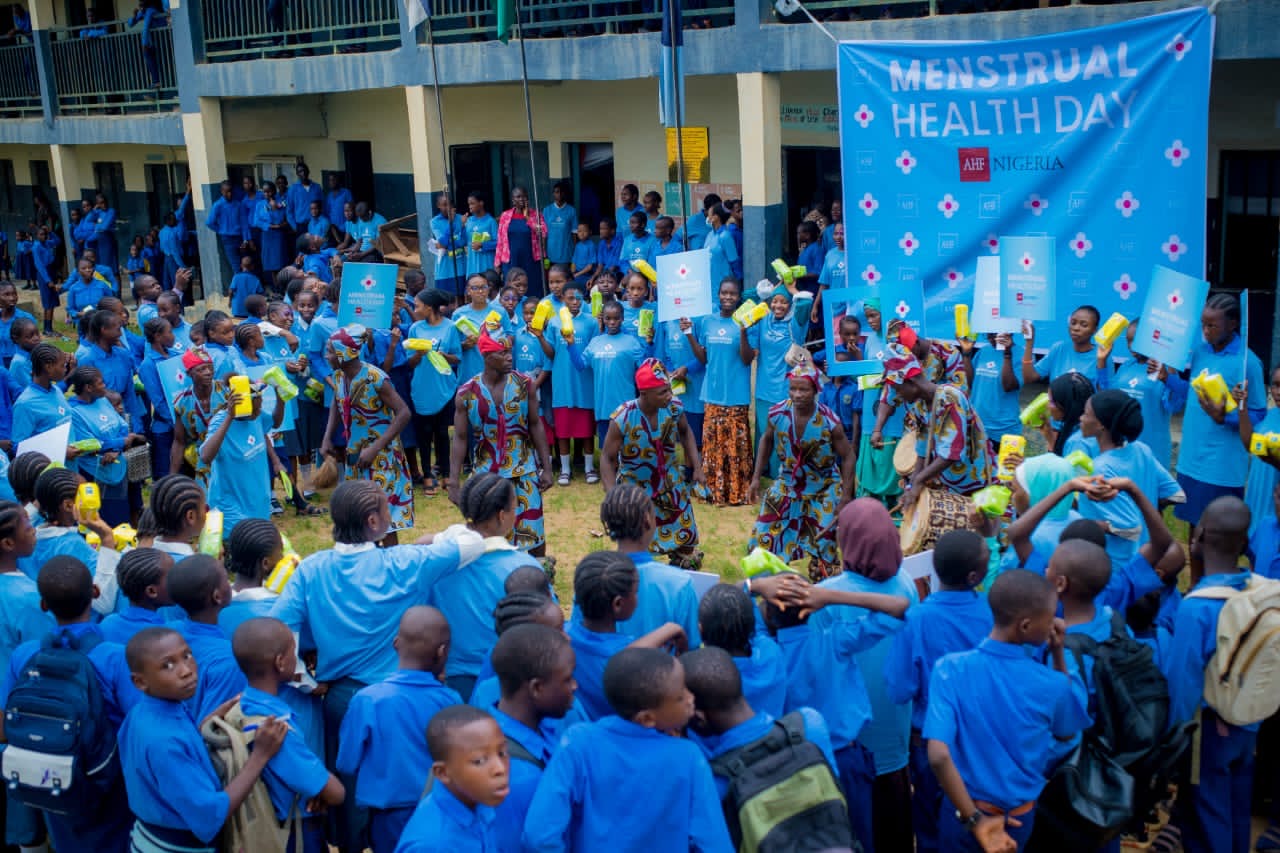
Victoria, who made the appeal during activities marking the 2026 World Menstrual Health Day in Keffi, Nasarawa State, lamented that many girls still struggle to access basic menstrual hygiene materials, making them to skip schools on their menstrual days.
She and other speakers at the event called for action to ensure girls can manage menstruation safely, confidently and without shame, adding that no girl should skip school just because she is menstruating.
The event, organized by AIDS Healthcare Foundation (AHF) Nigeria in partnership with the Nasarawa State Ministry of Women Affairs and Humanitarian Services, focused on raising awareness about menstrual health and improving support for girls.
Stakeholders including students, health workers, educators and government officials used the occasion to discuss menstrual hygiene, stigma and period poverty.
In a statement issued to newsmen by the Senior Advocacy and Marketing Manager, Steve Aborisade in Makurdi, Victoria said the sensitization programme exposed participants to the dangers of poor menstrual hygiene and the risks associated with reusing sanitary pads.
While noting that awareness alone would not solve the challenges many girls face daily Veronica said “Many girls still do not have access to pads or clean toilets in schools. Government should help provide these things so girls can manage their periods safely.”
Another student, Catherine Ogogi, 16, also lent a voice calling for stronger campaigns to tackle myths and misinformation surrounding menstruation and urged authorities to make emergency sanitary pads available in schools.
Other News
Earlier at the event, AHF Nigeria disclosed that nearly 500 million people worldwide still face period poverty, lacking access to sanitary products, hygiene facilities and menstrual health information.
An ART clinician with AHF Nigeria, Dr. Sunday Emmanuel, said the campaign was part of efforts to equip young people with accurate reproductive health information and eliminate harmful misconceptions about menstruation.
He called for stronger collaboration between government agencies, schools and civil society groups to sustain awareness campaigns and improve menstrual hygiene support for girls across communities while Deborah Mamman of AHF Nigeria advised girls to change sanitary pads regularly, wash their hands before and after handling menstrual materials and maintain proper hygiene during their periods.
Speaking at the programme, Halima Aliyu Omaku, Gender Focal Person at the Nasarawa State Ministry of Women Affairs and Humanitarian Services, said harmful cultural beliefs and silence around menstruation have continued to expose girls to discrimination and shame.
She said many girls grow up without adequate menstrual health education, leaving them vulnerable to misinformation and unhealthy practices saying their was need to change harmful attitudes and perceptions.
Omaku also urged boys to support girls rather than stigmatize them, noting that menstrual health education should involve both genders.
Safiya Ibrahim Yahuzu, Gender and Human Rights Focal Person at the Nasarawa State AIDS Control Agency (NASACA), who noted that hygiene is necessary for young girls at all times regretted that many students were learning basic menstrual hygiene practices for the first time. He urged them to properly care for themselves during menstruation.
Speaking on affordability challenge faced by many girls, the Education Area Office, Keffi, Angelina Kigbu announced plans to establish clubs where students would be trained to produce reusable sanitary pads.
She explained that reusable pads would provide cheaper and more sustainable alternatives for girls unable to afford disposable sanitary products. According to her “If girls can make reusable pads themselves, they can teach others and spread awareness.”