Follow Us on Google
History is a patient judge. Unlike human beings, it does not applaud easily. It distrusts excitement, ignores fashion and resists the temptation to mistake noise for significance. It listens. It compares. It remembers. Then, after weighing evidence against memory, promise against performance and aspiration against achievement, it pronounces its verdict. That perhaps explains why every civilisation has always reserved a special place for witnesses. Witnesses are the custodians of memory. They stand at the intersection of time and testimony. They see; they remember; and they speak. Their authority derives neither from eloquence nor from power but from proximity to events and fidelity to truth. When such witnesses speak independently, yet arrive at the same conclusion, wise societies pay attention.
Ancient communities called them oracles. The oracle was not necessarily a prophet. He was a witness, whose testimony carried unusual weight because it proceeded from wisdom, experience and responsibility. In this sense, oracles did not create truth; they merely recognised it when it appeared. The University of Nigeria, Nsukka, witnessed such a moment during its Fifty-Fifth Convocation ceremonies.
Three voices spoke.
The Visitor.
The Chancellor.
The Pro-Chancellor.
Three stations of authority.
Three distinct responsibilities.
Three independent testimonies.
One convergent verdict.
Together, they sketched the outlines of what may fittingly be described as the Ortuanya renaissance.
The first witness spoke from the highest constitutional office connected with the University. President Bola Ahmed Tinubu, Visitor to the University, surveyed the institution not as an administrator but as the custodian of a national vision. His words were deliberate and unambiguous: “I observed that the University of Nigeria has keyed into the Renewed Hope Agenda of the Federal Government. The improvements in infrastructure, research output, global visibility, digital transformation and institutional governance are commendable and worthy of recognition.”
The significance of this testimony lies in its emphasis. The President spoke neither of intentions nor promises. He spoke of outcomes. Roads can be measured. Research output can be verified. Global visibility can be assessed. Digital transformation can be evaluated. Institutional governance can be examined. Leadership eventually escapes rhetoric. Sooner or later, it assumes visible form.
The second witness spoke from memory. His Imperial Majesty, Oba Adeyeye Enitan Babatunde Ogunwusi, the Ooni of Ife and Chancellor of the University, approached the institution from a different vantage point. Eleven years in the Chancellery had transformed him into a custodian of institutional memory. He had observed administrations come and go. He had watched triumphs unfold and disappointments accumulate. His testimony therefore carried the authority of prolonged observation. His words were as remarkable as they were spontaneous: “I came into this University, and I couldn’t recognise it.”
Recognition ordinarily depends upon familiarity. Memory encounters the present and confirms continuity. Still, every genuine renaissance eventually reaches that fascinating threshold where yesterday’s image becomes too small to explain today’s reality. Identity remains intact, but possibility acquires a different appearance. The Ooni continued: “It is indeed the beginning of a new thing, a new dawn for our University.”
The restraint contained in that statement is as significant as its optimism. He did not speak of completion. He spoke of commencement. He did not announce the end of a journey. He recognised the unmistakable direction of travel. Then came the most profound aspect of his testimony. Reflecting on Prof Simon Uchenna Ortuanya’s emergence as the first indigenous son of Nsukka to occupy the office of Vice-Chancellor since the establishment of the University in 1960, the Ooni suggested that the remarkable transformation he had witnessed might justify the age-long aspiration of the Nsukka Cultural Zone to see one of its own entrusted with the stewardship of the institution.
That observation deserves careful consideration. The aspiration was never merely geographical. It was emotional, historical and communal. Over the decades, the University and its host community had become bound together by ties that transcended physical proximity. The fortunes of one became inseparable from the fortunes of the other. The expectation was therefore simple: that a son of the soil would possess an instinctive understanding of the anxieties, hopes and aspirations of the people, and of the significance of the University within the life of the community.
Other News
Such expectations, however, cannot be validated by ancestry alone. Birth confers identity. Stewardship confers legitimacy. Professor Ortuanya did not earn the confidence of the community merely because he is a son of the soil. He earned it because performance gave substance to expectation. That was the bridge between recognition and stewardship.
The third witness entered the conversation from precisely that point. Prof Adegboyega Adebayo Karim, Pro-Chancellor and Chairman of the Governing Council, approached the matter not from the standpoint of memory but from the perspective of oversight and accountability. His concern was not symbolism but governance. His testimony was equally unequivocal: “Within the last eleven months, the University of Nigeria has recorded significant achievements in academic development, infrastructural transformation and institutional reforms. These achievements demonstrate what visionary leadership, dedication and teamwork can accomplish.”
The distinction is illuminating.
The President recognised measurable progress.
The Chancellor recognised visible transformation.
The Pro-Chancellor recognised disciplined stewardship.
Three witnesses.
Three perspectives.
One verdict.
The evidence itself is difficult to ignore. Within eleven months, the University secured increased admission quotas for Medicine and Dentistry, expanded academic programmes, strengthened research collaborations, improved global visibility, accelerated digital transformation, established specialised research facilities, renovated hostels, reconstructed roads and drainage systems, revived abandoned projects, expanded teaching and learning infrastructure, promoted staff welfare and encouraged innovation among students. Nearly two thousand staff members received long-awaited promotions. Thousands of students benefited from various intervention programmes. Laboratories regained vitality. Lecture halls recovered their dignity. Roads rediscovered their purpose. New academic programmes emerged. Abandoned projects returned to life. Confidence, perhaps the most valuable currency in every institution, slowly returned to the academic community.
Then came perhaps the most visible symbol of all: the magnificent new gate of the University. Gates are curious structures. They are more than entrances. They are declarations. They stand at the threshold between memory and expectation, between inheritance and aspiration, between what has been and what may yet become. Long before visitors encounter classrooms, laboratories and libraries, the gate delivers the University’s first message to the world. Perhaps, that explains the Chancellor’s memorable confession: “I came into this University, and I couldn’t recognise it.”
The statement was undoubtedly metaphorical. Yet, it may also have been wonderfully literal. The old landscape had yielded to a new vision. The University was introducing itself to the world in a new language.
Nonetheless, gates, however magnificent, cannot transform universities. Stone may inspire admiration. Steel may command attention. Architecture may awaken curiosity. None of these, by themselves, can produce a renaissance. Institutions are ultimately renewed by ideas translated into systems, by vision disciplined through execution and by leadership that understands that every structure erected upon the landscape must correspond to an equally enduring structure erected within the institutional imagination. The imposing gateway, therefore, was not the achievement. It was the announcement. The message itself lay elsewhere: in the deliberate reforms that reawakened the ancient conviction that excellence remains the most enduring language of universities.
Each accomplishment, considered independently, appears impressive. Taken together, they reveal a governing philosophy. The roads symbolise movement. The laboratories symbolise inquiry. The digital infrastructure symbolises adaptation. The partnerships symbolise openness. The reforms symbolise renewal. The entire undertaking symbolises belief. That, perhaps, is the true meaning of renaissance. A renaissance does not merely repair walls. It repairs confidence. It does not merely reconstruct buildings. It reconstructs possibilities. It does not merely transform institutions. It transforms the assumptions through which institutions understand themselves.
The immortal vision of Dr. Nnamdi Azikiwe actualized sixty-five years ago still echoes across the Egụ Ihe hills of Nsukka: To Restore the Dignity of Man. Three years ago, Governor Peter Ndubuisi Mbah announced, Tomorrow Is Here. Eleven months ago, Prof Simon Uchenna Ortuanya issued his own Nehemiah-inspired summons: Arise! Let us rebuild the University of Nigeria. These are not competing philosophies. They are completing philosophies. Dignity without action gradually becomes nostalgia. Tomorrow without preparation becomes illusion. Rebuilding without vision becomes labour without meaning. Between them stands enlightened leadership: the courage to imagine, the discipline to build, the humility to serve and the wisdom to leave behind institutions rather than impressions.
The final verdict, of course, belongs to history. History is patient. History always is. Yet, history has already received three compelling testimonies. The Visitor has spoken. The Chancellor has spoken. The Pro-Chancellor has spoken. The oracle of evidence has spoken. The oracle of recognition has spoken. The oracle of stewardship has spoken. The witnesses have testified. The verdicts have been entered into the record of time. What remains is the slow, inexorable labour of history itself.
Years from now, the roads will speak. The laboratories will speak. The classrooms, the hostels, the digital infrastructure, the partnerships and the countless lives touched by these transformations will speak. Institutions, after all, possess a language of their own. Their truest testimonies are written not in speeches but in consequences. The oracles have spoken. The witnesses have spoken. The renaissance has begun. And the Lion’s Den has already begun to write the rest of the story.
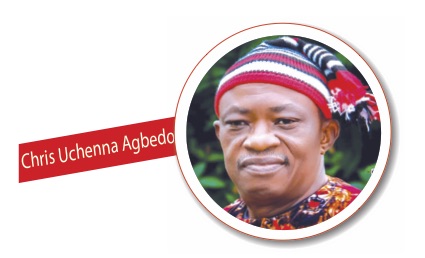
• Prof Agbedo writes from University of Nigeria, Nsukka.