Follow Us on Google

Borrowing means taking or receiving something from someone else with the intention of returning or repaying it. A person will most likely default on repayment if the person borrows more than the person can pay. A person gradually becomes insolvent when the person literally lacks the financial means or assets to pay back what the person owes. A person is delinquent when his payment becomes overdue, and this represents an intermediate step before final default. A borrower becomes drowned in debt when he has taken on more obligations than he can manage. The best test for solvency is whether a person’s revenue is able to finance his cost of borrowing. If not, the person is heading towards slavery.
The deplorable situation of a borrower has been recognised by man and God. In our local parlance, it is said that he who goes a borrowing, goes a sorrowing. God regards insatiable borrowing as a sign of a curse. He declared that a blessed person shall not borrow, but lend, while the rich rules over the poor, and the borrower is servant to the lender. (See Proverbs 22:7). In Deuteronomy 15:6, the scripture states, “For the LORD thy God blesseth thee, as he promised thee: and thou shalt lend unto many nations, but thou shalt not borrow; and thou shalt reign over many nations, but they shall not reign over thee.”
Nigeria is a nation blessed with human and material resources. Large expanse of arable land for agriculture. Oil flowing like water in the South and some discoveries in the North. Solid minerals like gold, lithium, zinc, bitumen, limestone and so on, spread abundantly throughout the country. From the day of independence, Nigeria was nicknamed the giant of Africa. Even the colonial masters submitted that Nigeria was a potential superpower nation.
Unfortunately, Nigeria is buffeted with the problem of bad leadership. The scripture again is clear that “when the righteous are in authority, the people rejoice: but when the wicked beareth rule, the people mourn.” (See Proverbs 29:2). Righteous leaders make their nation to rejoice because through their righteousness their nation is exalted. Bad leaders bring reproach to their nation through their evil deeds. (See Proverbs 14:34).
Nigeria is mourning today, not because it lacks resources, but because it lacks leaders. In the First Republic, Nigeria lent to nations. Middle East princes and kings came to Nigeria for medical vacation. We built four refineries and were net exporters of oil. General Yakubu Gowon confessed publicly that money was not the problem of Nigeria but how to spend it. Nigeria was the big brother of other African countries. We deserved respect and we got it. The people rejoiced because their leaders were not mundanely corrupt.
Our decline started, not because of borrowing, but because of corruption. Any leader who is borrowing in a rich country is borrowing, not because of scarcity, but because of corruption, or incompetence. Subsequent Nigerian leaders who supervised the oil sectors deliberately or incompetently disregarded our refineries until they became dilapidated. The money for turnaround maintenance, meant to repair the refineries, was stolen, until Nigeria started importing 100% of its refined fuel.
During Olusegun Obasanjo and Atiku Abubakar’s regime, they discovered that the corruption in the oil sector was huge and would be very difficult to handle because Obasanjo served as the Minister of Petroleum. He came to the decision that the best policy was to privatise the refineries. He sold one of the refineries to Dangote Group on the eve of the end of his regime. Unfortunately President Umaru Yar’Adua reversed the policy. The option of Yar’Adua to repair the refineries failed because the officials simply stole the money and absconded with it. Subsequent governments couldn’t tame the monster of corruption until Nigeria lost almost $20b to corruption trying to repair the refineries.
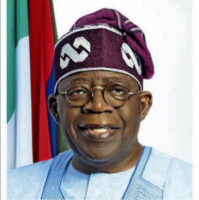
When Tinubu came into office, he inherited a total debt of about N77trn from another APC-led government of President Buhari. A reasonable person would have imagined that his priority would have been how to work hard to reduce the burden of debt on a country like Nigeria whose leaders have inflicted it with poverty. At that time the cost of servicing the debt was already very high.
Other News
Unfortunately, Tinubu, from day one, embarked on a journey intended to increase astronomically the debt, not to reduce it. His policy is even worse than all the previous governments put together. He believes in robbing the poor to pay the rich. He believes in the politics of the elites who have the power to deliver the votes, rather than politics of the people, who have the power to vote. He believes that leadership is for self and not for all.
Tinubu declared on his inauguration ground that “fuel subsidy is gone” without providing any alternative to it and without providing any cushion to the consequences of the removal, which meant, higher fuel price, higher inflation, higher transportation cost, higher school fees, higher food prices, higher rents, and higher everything. One of the arguments put forward by his regime was that fuel subsidy was consuming a lot of our revenue and that fuel subsidy benefits only a few people. The truth is that fuel subsidy benefits all Nigerians but it is only the corruption in the fuel subsidy that benefits a few people.
Another argument against subsidy is that it helps to increase our debt and the government does not have any more money to pay our debt. One would have thought that Tinubu would tailor its regime towards reducing debt since it was one of his reasons to deny us subsidy. But the reverse became the case. Our total debt since Tinubu came in three and half years ago stands at about N166.6trn. The saddest aspect is that Tinubu wants to borrow additional $21.7b (N30.38trn) and €1.04b (N1.58trn) totalling about N31.96trn, when his day of departure from government is about six months.
The consequence of this additional debt is that our total debt is almost N200trn. This terrible situation means that Tinubu has borrowed on behalf of each Nigerian the sum of about N1m. The shock of a nation is that only about 5% of Nigerians have up to N500,000.00 in their bank accounts. Nigerians are not given good roads in Tinubu’s regime. They lack security. They don’t have good pipe borne water. Food is not affordable. Electricity is a scarce commodity. Even the fuel that was affordable before Tinubu came in has become unaffordable now. Yet the government has borrowed, on behalf of each citizen the sum of N1m.
The implication of this malaise is that individually, Nigeria is bankrupt, and collectively Nigeria as a country is bankrupt. Tinubu’s government spent about N7.7trn to service debts for the first half of the year, while our total revenue for the period is N6.2trn. The ratio of our debt service to our revenue is about 124%. This means that we need to borrow about 24% of our total cost of servicing our debt to be able to service it. Our revenue is no longer capable of servicing our debt. Nigeria is bankrupt under Tinubu.
What brought us to this sorry state in Tinubu’s regime are multifaceted. The first is Tinubu’s lavish lifestyle. Tinubu moves with a convoy of more than 100 vehicles. These vehicles have more than 100 drivers. Each vehicle will be fuelled to move. The President had a functioning plane when he assumed office, yet he preferred to purchase another private jet for the office of President costing almost N155b. He decided to change his vehicles and purchased a customized, heavily armoured Cadillac Escalade SUV (frequently referred to locally as Nigeria’s version of “The Beast”) costing billions for his fleet of vehicles.
This government refurbished the Vice-President’s house with more than N20b. It has been exposed that the Vice-President has not slept in the house for one day. What a waste! The decision to award one coastal road from Lagos to Calabar at the cost of more than N15trn to a company in which Tinubu’s family has interest, without going through the procurement process, or verifiable environmental impact assessment, is the most irresponsible act of the Tinubu’s government. For a Tinubu who refused to pay fuel subsidy which would have cost about N15trn in three years, but resort to awarding contract to his family in like sum is unconscionable.
Tinubu embarked on bloated bureaucracy. He hired more than 48 ministers to govern Nigeria with him. This is the highest number of ministers that any government has ever appointed in Nigeria. The poorest government hiring the highest number of ministers to administer the country will surely lead to debts. These ministers have demonstrated the highest level of corruption, according to the spokesperson of the APC presidential campaign council, by paying billions of naira in bribery to facilitate their appointments which they recoup after being appointed into government. With state funds being stolen mindlessly by the government officials under Tinubu, the government is bound to borrow to cover up for the stolen funds.
It is obvious that President Olusegun Obasanjo was right when he lampooned Tinubu for encouraging debt in his regime and defending it that debt is not leprosy. Obasanjo asserted that this is absolute nonsense. He said that debt is worse than leprosy because leprosy destroys only one person but debt destroys generations. If something urgent is not done now by the National Assembly and Nigerians to stop Tinubu from borrowing more money, generations of Nigerians would be destroyed by this additional borrowing. We therefore recommend that the National Assembly should reject this additional borrowing by Tinubu and Nigerians should vote Tinubu out come 2027 to prevent us from going into the slavery of debt.