Follow Us on Google
From Laide Raheem, Abeokuta
The Ogun State Chief Judge, Justice Modupe Dipeolu, has said that judicial officers in the state were trained in Artificial Intelligence (AI) to improve justice delivery, expedite processes, enhance legal research and support judicial decision-making.
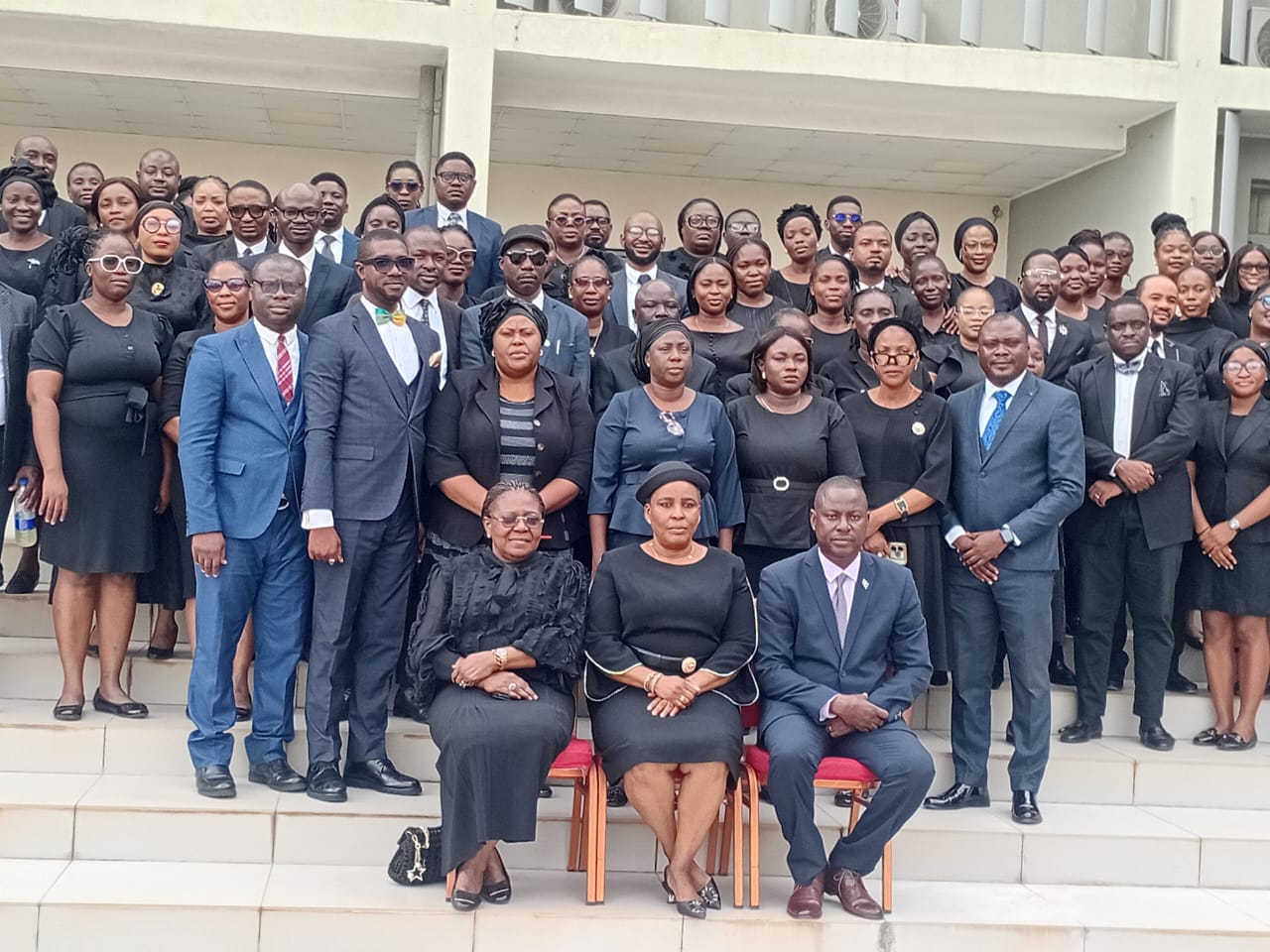
The Chief Judge who stated this in her remarks at a one-day workshop organised for Magistrates, Judicial Research Officers and other top management of the judiciary in the state, at the weekend, added that the training which involved 77 participants, was also a significant step towards equipping law officers with a foundational understanding of AI and its practical applications in judicial workflows.
She explained that the training had been designed to demystify AI, explore its applications, and confront critical questions about its use in the judiciary.
Dipeolu emphasised that the training was part of the judiciary’s commitment to judicial excellence in the 21st century, stressing that by harnessing AI, the judiciary would deliver timely, efficient, fair, and accessible justice.
She explained further that the training was not just a workshop, but a strategic investment in the future of justice delivery in Ogun State and a testament to the Judiciary’s commitment to judicial excellence in the 21st century.
The Chief Judge stated that the judiciary as the bedrock of societal order and the guardian of rights, cannot afford to remain on the sidelines, hence, the training to harness innovative tools, noting : “Artificial Intelligence presents unprecedented opportunities to enhance our capacity to fulfill this sacred duty.”
She, however, acknowledged that AI is not a futuristic fantasy and not a replacement for humans, but rather it would provide data-driven insights while preserving judicial discretion.
The keynote speaker at the workshop, Dr. Abiodun Odusote, an associate professor at the Faculty of Law, University of Lagos, said that the application of AI in the judiciary is to improve legal research, judicial reasoning and other areas to further equip judicial officers with the knowledge and skills to harness the AI potential in their work.
Odusote highlighted that part of the benefits of AI in the judiciary is to improve efficiency, reduce backlogs of cases, and improve the speed of judicial processes.
He added that AI can aid in legal research, providing accurate and relevant information to support judicial decisions.
Odusote, however, cautioned that despite the good sides of AI, there are also limitations to it, which he attributed to wrong citations, breach of privacy, and lack of emotion and empathy.
He urged the users to always be wary of its limitations to prevent them from running into trouble, while also calling on them to harness the potential of AI with optimum human supervision.
“The way machines behave is like human beings; they can analyse things; they can even predict. We want to see the relevance of Artificial Intelligence through legal practice: how can we adopt AI in legal research and judicial reasoning? That is why we are here to explore those things, and as well, we want to explore the benefits, the limitations of AI because as good as AI is, it has its limitations. So, we want to exceed these limitations; we want to seek ethical consideration and legal consideration – these are the things we want to examine at this training.”
He further noted that: “After this training, participants should be able to use AI to improve the work they do, and improve their efficiency. Sometimes, it is alleged that we have backlogs of cases in the judiciary. With the deployment of AI, this would be improved and there is efficiency in the work. Those are the benefits. But, we have limitations as well and we need to explore all of that too,” he stated.
While emphasising the need by the judicial officers to embrace AI, Odusote
stressed that wrong use of AI could be embarrassing and put the users into trouble.
Earlier in her remarks, the President of the Customary Court of Appeal, Justice Femi Segun, encouraged the participants to take advantage of the training to improve on the application of AI in the judicial context.
She also told the magistrates to leverage the Artificial Intelligence for effective delivery, urging them to ask questions whenever the need arises.