Follow Us on Google

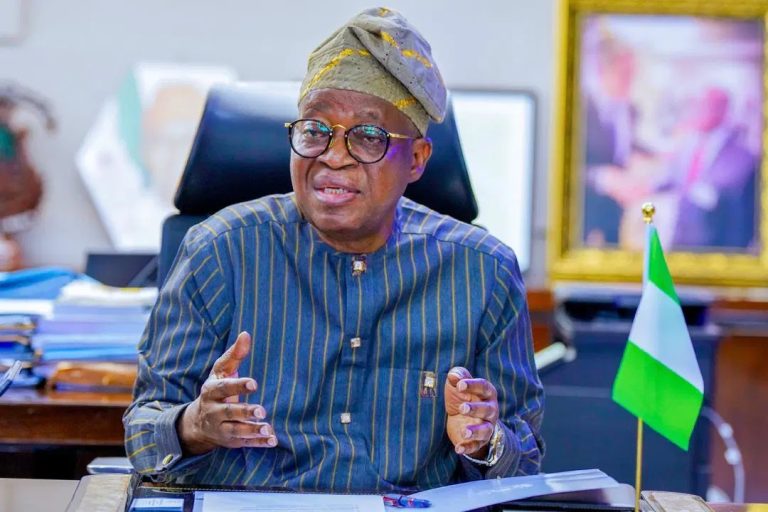
Though not for the first time that the financial distress of many state governments has become public knowledge. It predates the outbreak of the COVID-19 pandemic which has unpended global economy. But many states are hiding under the pandemic as the cause of their present insolvency. Two weeks ago, the Commissioner for Health in Cross River State and acting chairman of Commissioners for Health in Nigeria, Dr. Betta Edu, said state governments were financially overstretched because of Covid-19, and can barely pay salaries and meet other financial obligations.
As a result, they are asking the federal government to give them N67.2billion grant. This is one demand too many in the life of this administration. They are yet to refund the ones already given. Perhaps the governors are pressuring the federal government once again to give them another bailout. Recall few months ago, the Finance minister, Zainab Ahmed announced that the government planned to give the states $1bn loan from the $2.5bn facility from the World Bank. Also, not too long ago, President Buhari approved $150 million for the states from the National Sovereign Wealth Fund (NSWF) to support the Federal Accounts Allocation Committee(FAAC). There’s no doubt that this administration has helped the states more than any previous government , to the point of making some of them them always waiting for ‘feeding bottle’ from Abuja. That’s bad enough.
Yes, many of the states are broke. Some of their financial crises are self-inflected. Last week’s revelation by the Chairman of the Revenue Mobilisation Allocation and Fiscal Commission(RMAFC) Dr. Elias Mbam, that “without the monthly disbursements from the Federation Account, many state governments cannot survive…” looms like some horror movies that keep coming no matter unheeded the previous warnings were.
The RMAFC boss raised the alarm when he received last year’s Annual States Viability Index(ASVI) from the Editor-in-chief, Economic Confidential, Mr. Yushau Shuaib in his office in Abuja. Over the years, Economic Confidential has proved to be an authoritative source of information to the general public concerning the solvency or the opposite, of the subnationals, though sometimes, some states fault the ASVI report when the are categorised as insolvent. Nonetheless, the factual information it provides seems to drive RMAFC on its mandate to encourage state. The reasons are obvious and the consequences are stark and troubling. Every passing day, the insolvency status of most states becomes evident; their Internally Revenues (IGRs) hit a new low level. That means they have become extremely poor. They are like patients in intensive care, living on oxygen support. In economic terms, these states have IGR below 10 percent of their revenues from the Federation Account. This, indeed, is bad news. That’s why there’s at present a state of high anxiety across most states. The Federation Account continues to fall. It feeds on what lies ahead. Apart from the ASVI report, two federal government agencies – Nigeria Extractive Industries Transparency Initiative (NEITI) and National Bureau of Statistics (NBS) – have also expressed deep concerns about the acute financial crisis of most states.
According to NEITI, no fewer than 28 states in the country be unable to fund their budgets last year. Only eight states were able to do so, including payment of workers’ salaries. The states with that financial muscle include Lagos, Ogun, Rivers, Kaduna, Kano, Delta, Nasarawa and Kwara. This was before the outbreak of Convid-19. The situation may have gotten worse for most of the states. The government of Bayelsa has faulted the ASVI report that said the state was insolvent, alongside Katsina, Kebbi and Taraba states. It blamed the financial situation of most states on the present federal structure that gives the federal government the bulk of the revenue realised from the resources of the state. Enugu, Kwara and Zamfara states have joined the league of few states with improved IGR. How did the do it? Creative minds of their state governors.
Figures from the NBS also bring to the fore the serious financial crisis facing most of the the states, largely because of the continued decline in revenue from oil with its consequential effects on the monthly FAAC disbursements in the last two years. In fact, the federal allocations began to decline sharply late in 2017, but took a hefty drop of about 50 percent since 2018. Apart from Lagos state that generates more than what 24 states combined realise as IGR, and Ogun state hot on Lagos’ heels, other states are playing catch up. Both Lagos and Ogun states are reported to have met about 80 percent of their IGR target for 2020. It’s understandable why this is so. The two states are the business hubs in the country right, supported by conducive business environment. But don’t take away the creative minds of the policymakers in these two South west states.
These are the facts to worry about: The three tiers of government – the Federal Government, the states and the local government councils- have lost massive projected revenue which will definitely affect their plans for this financial year, and even beyond. According to figures released recently by the Minister of Finance, Budget and National Planning, Mrs Zainab Ahmed, many states may be unable to meet their critical obligations. This is as a result of huge reductions in their expected revenue inflows from the Federation Account. For instance, the states expect to share about N3.3 trillion this year. Instead, that may come to them may not be more than N2trillion.This represents a massive shortfall of N1.3 trn. According to the Finance Minister, the projected overall inflow into the Federation Account in 2020 is N8.6trn. But more than eight months into the year, what had been realised was not more than half the projected sum. If you are in doubt about the gloomy outlook for the states, hear the Finance Minister’s prediction made early this year:”We expect that from about June, the States might begin to feel the effects of low revenue coming from oil and, therefore, might be having challenges in meeting up with obligations, especially the payment of salaries”. The effects have come earlier than she projected. What does all of this tell you? How can the states walk out of this tightrope?
Are you surprised that many states are in deep financial crisis? Many governors are part of the reasons why their states have found themselves in this insolvency hole. Some are financially imprudent, unimaginative. They control virtually everything without taking responsibility for it. A recent data from the Debt Management Office (DMO) showed that the 36 states of the federation have accumulated a domestic debt of over N5trn as at end of March 2019, with the South west states leading the other geopolitical zones with over N1.2trn, followed by South-South.
One clear message is that the era of over-dependence on federal allocation is coming to an end. It’s time for imaginative minds to be at the helm in the states. Time is of essence to end wastages such as ‘security vote’, and other frivolities. Imagine some governors having over 200 aides, all paid with public Fund. With this, why won’t the states’ finances be overstretched? Even a review of the revenue formula in favour of the states will not help matters much until the state governors stop their financial recklessness and prioritize things according available resources.