Follow Us on Google
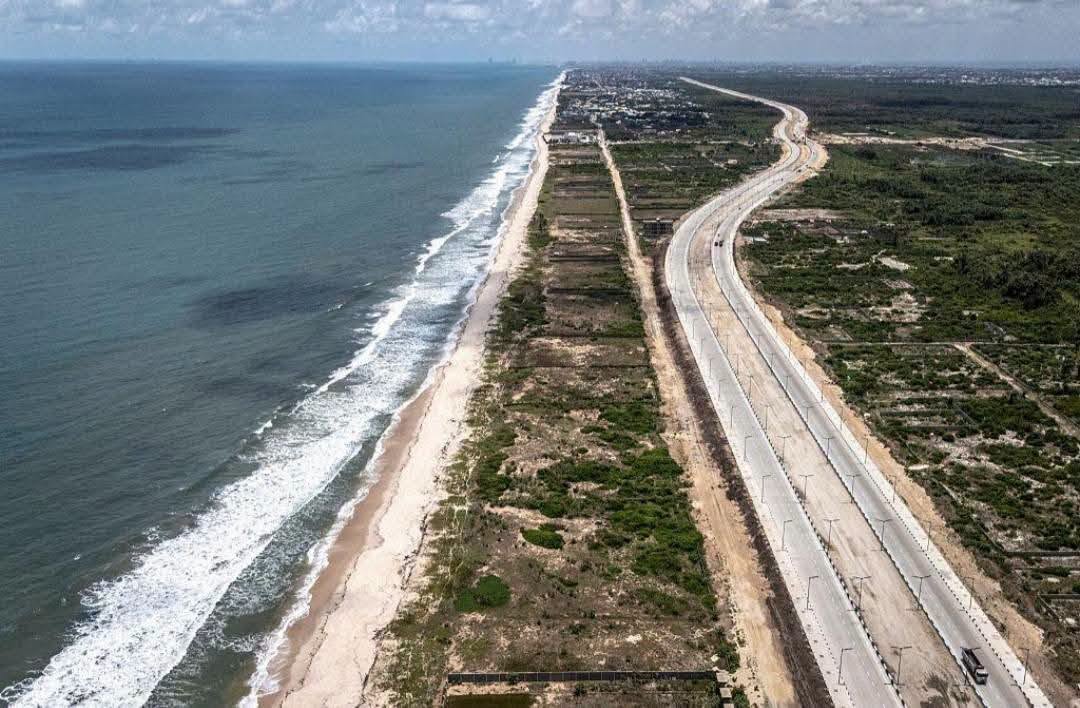
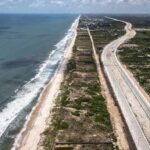
The emergence of the Lagos-Calabar Coastal Road has generated public reactions and may remain an albatross because of ambiguities surrounding the project.
Some earlier argued that it does not serve the immediate economic needs of indigent Nigerians, amid the sufferings introduced by the suffocating oil subsidy policy somersault.
Consequently, the overwhelming apathy continues to generate reactions that Nigerians do not need party monuments but deserve well-prioritised projects that meet economic realities to save dying souls in Nigeria.
In view of the aforementioned, the PCC’s stance, however, may have fallen in line with numerous negative feelings and reactions towards the multi-billion-dollar project.
The party’s Presidential Campaign Council, while reviewing the ongoing project, made its position known with the resolve that the project may not serve the people’s immediate needs because it is already a misplaced priority, too expensive to build a road on top of swamps and mud along the coastline of the Niger Delta.
The party is apt to submit that the Niger Delta has over 700 rivers that flow into the Atlantic Ocean. A coastal road that truly runs along the coastline will require up to 700 bridges. The River Nun and River Akassa in Bayelsa State are too wide to be connected with just a bridge.
The Niger Delta has a vast maritime sector ranging from crude oil and gas, engineering, fishing, boating, docks, jetties and ports.
The PCC noted that one wrong bridge can cut off big ships from coming in to load or offload cargo. That was in 1985. A cargo ship sank in the Sagbama River in Delta State. The ship’s cargo was clothes, shoes and belts. Local divers swam into the wreck to salvage things that they sold. The Sagbama belt became very popular.
It said agricultural activity is critical. Cash crops like cocoa, teak wood, rubber plantations and palm oil all grow along coastal inland towns and villages. Put one wrong bridge, and the export of those cash crops would suffer. Freshwater and saltwater fishing in the Niger Delta is very good. The people need open access to trawl the rivers and the seas. One wrong road or bridge, and local and international fishing will suffer.
Also, it suggested that the existing roads should be repaired. Railway tracks should be built and connect the East and the West, not a new road.
Furthermore, the party’s Presidential Campaign Council (PCC) had argued that even if Nigeria needs this corridor, it must not become a symbol of opacity or a white elephant project remembered only for controversy.
In contrast, the PCC said that under its leadership there shall be a change of narratives as the handling of public funds will be different. It stated that the party would publish the money trail in each contract awarded, commission independent professional inspection, protect communities from verified flooding, recover public funds where the evidence requires it, and decide the future of every segment on engineering and value-for-money grounds, not on loyalty to any contractor.
In addition, it argued that every naira and every barrel committed in the people’s name will be accounted for. “That is the standard of a government that respects its citizens.”
In its executive summary, the party indicated that even if Nigeria needs strategic coastal infrastructure, the Lagos-Calabar Coastal Highway risks becoming a symbol of the Tinubu-era opacity and a legacy white-elephant project remembered more for controversy than for value delivered.
It has resolved that its strategic importance is not a blank cheque. Public money, borrowed money and future oil revenues must be converted into safe, durable assets at a fair price or the project will stand as a monument to poor prioritisation rather than progress.
It said that official announcements report financing closed at US$747 million (Phase 1 Section 1, July 2025) and US$1.126 billion (Phase 1 Section 2, December 2025), a combined US$1.873 billion for roughly 103 km. At prevailing rates of approximately ₦1,330–1,500 per dollar, this is in the order of ₦2.5–2.8 trillion.
Minister of Works David Umahi has publicly stated a unit cost of about ₦4 billion per kilometre (implying ~₦2.8 trillion for a 700 km corridor) and, in other statements, higher figures around ₦7.5 billion per kilometre; he has also described the structure as EPC+F with the Federal Government contributing 30 per cent and lenders 70 per cent. These are the official positions that must be reconciled with budget line items, releases, drawdowns and certified work.
A July 2024 National Assembly budget included between ₦5 billion for the Lagos–Calabar Coastal Road and ₦150 billion, provided under a “Lagos–Port Harcourt” description as a clerical error; the public record must be traced line-by-line. Simultaneously, successive budgets have expanded while debt service has absorbed a growing share of resources, capital implementation has been repeatedly extended, and crude-oil-backed prepayment facilities have committed future Federation receipts. The central gap remains the absence of one reconciled public ledger linking appropriation, release, lender drawdown, contractor payment and certified progress.
The PCC further noted that its course is practical: to preserve evidence; publish contracts and financing agreements subject only to narrow redactions; commission an independent engineering, environmental, social and financial audit led by NSE, COREN, NIA and ARCON; act immediately on verified flood and safety risks; recover overpayments where established; and decide the project’s future on documented value-for-money and public-safety grounds, not on loyalty to any contractor or political personality.
Other News
On Federal Budgets 2023-2026: the Campaign Council outlined that appropriations are authority to spend; they are not cash released or work completed. That their overlapping and revised budgets make simple addition misleading. That capital components of earlier years have been rolled forward, so headline totals overstate the new resources available in any single year.
It, however, posited that in 2023, original (pre-inauguration) + supplementary gulped ₦2.176 trillion, 24.0–24.8 trillion, 23.0 trillion (full-year est.)
In 2024 that initial ₦28.78 trillion amended ₦35.06 trillion later revised ₦43.56 trillion; capital implementation extended 35–43.6 trillion, 34.5 trillion (amended base); capital still executing into 2025
2025, original ₦54.99 trillion revised ₦48.3 trillion; implementation extended to March 2026; capital rolled forward ~48.3–55 trillion H1 16.63 trillion (Budget Office); full-year incomplete
In 2026, presented ~₦58.18 trillion; passed figures higher (~₦68 trillion in some reports); includes rollover of unfinished capital 58–68 trillion in progress as at October 2026.
According to the PCC, a cumulative ₦80 trillion spent seems like the only value of budget implemented by the Tinubu administration since May 2023. Debt service alone absorbs ₦12–15+ trillion per annum. Capital releases have consistently lagged, prompting repeated extensions.
However, it alleged that FAAC flows to FGN and the debt context net FAAC disbursements rose sharply after the 2023 reforms: approximately ₦10.1 trillion (2023), ₦15.3 trillion (2024) and a record ₦21.9 trillion (2025). Federal Government shares of these flows were roughly ₦3.7-4.6 trillion in 2023–24 and higher in 2025. These are Federation Account distributions, not the sole source of FGN revenue (independent revenue, GOEs and borrowing also fund the budget).
Public debt stock rose from ~₦87 trillion (June 2023) to ~₦167 trillion (June 2026). A substantial part of the naira increase is exchange-rate revaluation of existing external debt after the 2023 float. External debt in dollar terms grew more modestly (from ~$43 billion to ~$54–55 billion). New external facilities, Eurobonds, multilateral packages and crude-backed prepayments (Gazelle and successors) have added liquidity while committing future oil receipts. A full inventory of each facility — lender, amount, drawdown, outstanding balance and repayment source — must be published by DMO and the Ministry of Finance.
While re-emphasising the disputed Lagos–Calabar Coastal Highway, the record shows that financing closes total US$1.873 billion for the first two packages (~103 km).
It highlighted that the Minister of Works, David Umahi, has stated FG 30 per cent / lenders 70 per cent under an EPC+F model. Official unit-cost statements have ranged from ₦4 billion/km to higher figures around ₦7.5 billion/km. Advocacy material asserts a total cost of ₦15.6 trillion, zero private-finance contribution, and that only the ₦150 billion “Lagos–Port Harcourt” line (described as a clerical error) was available; these claims must be tested against the financing agreements, payment certificates and the full budget code history, including the ₦150 billion budget provision. All funds spent on the white elephant project were extra-budgetary.
Physical progress: 30 km of Section 1 was temporarily opened; further works continue on Section 2 and other axes. Barely 7.5 per cent of the 770km road has been completed as 3 lanes each, yet over ₦4.6 trillion approved by the FEC has been released for the project, bringing the total to about ₦6.8 trillion if ₦15.6 trillion, which requires revaluation. The videos of flooding, ponding, or uneven surfaces on the Lagos section are discouraging. Lane-configuration changes (reports of reduction from a wider twelve-lane original design toward six lanes) and any associated cost adjustments must be documented in the contract variations register.
The PCC was apt to announce that initial works involved corridor clearance that affected properties and businesses. Public reporting has long noted commercial relationships between Chagoury-linked companies, Eko Atlantic and other Lagos projects. Such relationships warrant transparent beneficial-ownership disclosure and conflict-of-interest scrutiny; they do not, by themselves, prove bribery or that any contractor is a “puppet master.” Nigerians are citizens with a right to accounts, not pawns in anyone’s private arrangement.
The PCC, however, promised to constitute Independent Audit and Immediate Safety Actions within 30 days of taking office. “I will constitute a protected independent review led by NSE, COREN-registered engineers, NIA, ARCON-registered architects, quantity surveyors, hydrologists and forensic auditors with no financial relationship to the contractor or supervising ministry. Terms of reference and methods will be published in advance. Interim safety report in 30 days; engineering and financial baseline in 90 days; final public report in 120 days.”
On core contractual issues: appropriations by project code; Treasury releases and lender drawdowns; private-finance actually injected and its contractual definition; certified progress by chainage; cost per lane-km against independent benchmarks; EIA/ESIA status and consultation records for each package; verified defects and causation; compensation paid versus outstanding; beneficial-ownership and procurement compliance.
On verified flood or safety risk: joint inspection with Lagos State authorities, NSE, COREN, NIA, ARCON, clear blocked drains, temporary protective measures, and contractor rectification under warranty where responsibility is established. No discharge of floodwater onto neighbouring communities without designed outfalls.
PCC said its administration will publish one reconciled public ledger of every budget line, loan, bond, crude prepayment, drawdown, release, payment certificate and certified quantity updated quarterly. Commission an independent professional audit (NSE/COREN/NIA/ARCON and allies) and act on its findings: continue, redesign, re-scope, suspend or terminate by segment only on documented engineering, legal and financial grounds. Where audit establishes payment for unexecuted, defective or overvalued work, issue reasoned recovery demands and pursue refund, set-off or contractual damages. Disclose net cash, barrels committed and opportunity cost of every crude-backed facility; separate refinanced principal from net-new liquidity. Prioritise completion of high-value inherited corridors, port access (Apapa, Lekki, Calabar, Port Harcourt, Onne), rail freight and climate-resilient drainage before committing new large packages without whole-life analysis. Create a public geospatial dashboard of chainage, photos, certified progress, payments, defects and compensation status.
The PCC, however, urged the APC administration to apologise to Nigerians.
The road on the coast is impossible because of the terrain and zero EIA. Call for NCP (National Council on Procurement) for future projects. Pursuant to Section 2 of the Public Procurement Act, the party said it shall endeavour to set up the National Public Procurement Council to review all contracts awarded under the Tinubu administration, especially the Coastal Road.