Follow Us on Google
By Christy Anyanwu
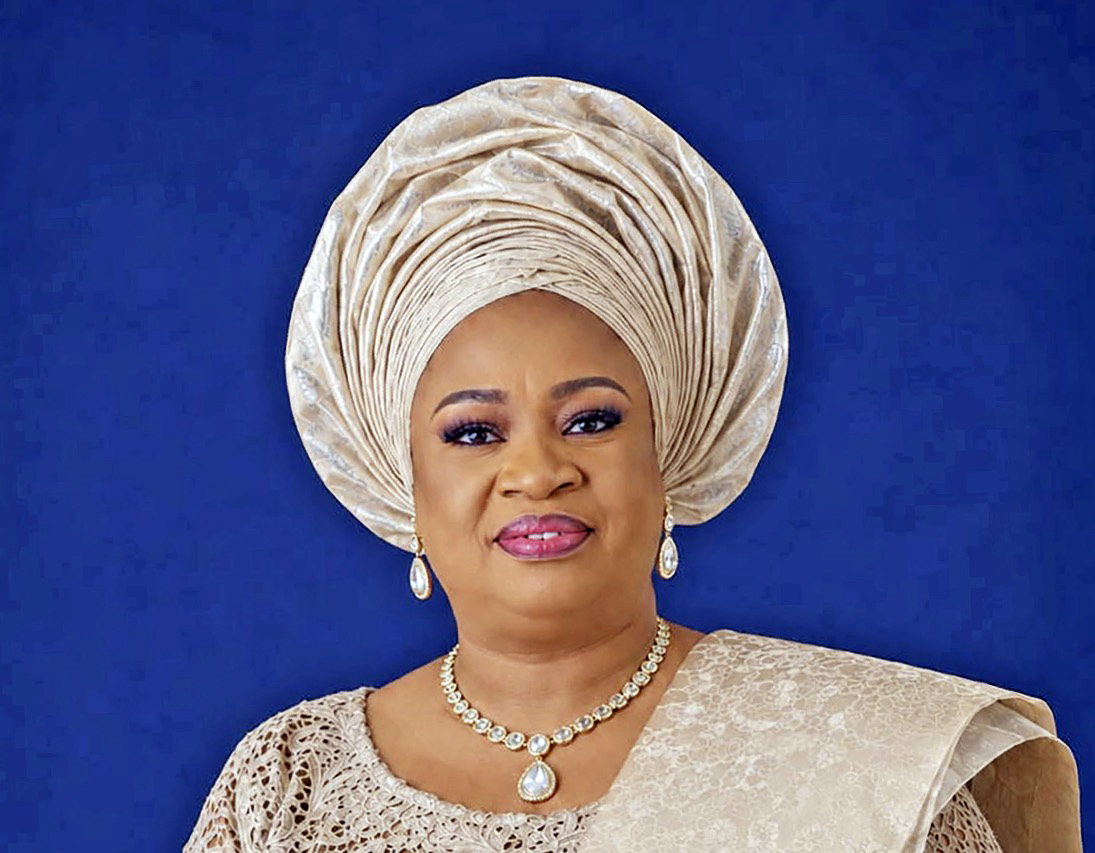
Bukola Olabisi Bakare is the first female District Governor of Rotary International District 9111. She just stepped into office with an ambitious humanitarian roadmap that places healthcare, youth development, mental health, and inclusion at the centre of her 2026–2027 administration.
Bakare outlined a bold ₦1.4 billion impact-driven agenda designed to shift Rotary’s focus from activity to measurable transformation across communities in states like Lagos, Ogun, and beyond.
She says this Rotary year will not be defined by meetings or ceremonies, but by lives changed.
“At the end of the year, success will not be measured by meetings held, but by lives transformed,” she said.
Bakare, who says she’s full of passion to serve, describes her leadership philosophy as one anchored in structured humanitarian delivery, strategic partnerships, and collective action.
In this interview with Saturday Sun, she speaks on her plans as Rotary DG. Asserting that “Rotary remains one of the most powerful platforms for transforming communities through service and partnership.”

Could you tell us about your human story and what drives you?
At my core, I am a woman who believes deeply in service, hard work and human connection.
I was born on June 3, 1966, in Ilisan-Remo, Ogun State, but I grew up primarily in Ibadan, where I attended both primary and secondary school. I often describe myself as a tomboy growing up. I was adventurous, outspoken, curious and always willing to stand up for people who were unable to stand up for themselves.
Professionally, I am the founder and Chief Executive Officer of Around ‘D’ Clock Security Company Limited, a business I established after returning to Nigeria from the United States in 2004. Before then, I worked in journalism, marketing and security management in both the United Kingdom and the United States.
My academic journey reflects my belief in continuous learning and personal development. I hold a Diploma in Mass Communication from the University of Lagos, postgraduate qualifications in Management and Marketing from Greenwich College in the United Kingdom, an MBA (Master of Business Administration) and an MSc in Criminology from the University of Hull, United Kingdom. I believe education is a lifelong journey, and every stage of learning has contributed significantly to my professional and leadership development.
Beyond business and Rotary, I am a wife, mother and grandmother. My husband and I are blessed with five children and six wonderful grandchildren. Family is extremely important to me, and no matter how busy life becomes, family keeps me grounded.
Some of my happiest moments are spent with my family. They remind me that beyond all the titles, responsibilities and achievements, the relationships we build and nurture are what truly matter. Their love, encouragement and support have been an important part of my journey, and I am deeply grateful for them.
What drives me is the desire to make a difference. I have come to realise that life’s greatest fulfilment comes not from what you acquire but from the lives you touch. Whether through business, Rotary or personal relationships, I want to leave people and communities better than I met them.
Being at the apex of your career as a female boss, does that in any way affect your outlook on life—positively or negatively?
It has affected my outlook positively. Leadership has taught me humility more than anything else. Many people assume that success makes life easier. In reality, success often comes with greater responsibility.
The higher you rise, the more people depend on you. Employees depend on you. Family members depend on you. Communities depend on you. Rotary members depend on you. You quickly realise that leadership is not about power; it is about responsibility.
Being a woman in leadership has also taught me resilience. Throughout my career, there were times when I had to work harder to prove myself. There were situations where people underestimated me simply because I was a woman. Instead of allowing that to discourage me, it motivated me to become even better.
I do not see challenges as obstacles anymore. I see them as opportunities to grow.
Perhaps the greatest lesson is that success means very little if it is not used to help others succeed as well.
Why did you join Rotary? What positions have you held, and what made you accept or contest for District Governor?
Interestingly, my husband was a Rotarian before I joined Rotary and remains an active Rotarian today. Through him, I had the opportunity to observe Rotary from a distance and appreciate the values that make the organisation unique.
What attracted me to Rotary was the opportunity to serve. Here was an organisation made up of professionals and business leaders who were committed to improving lives and strengthening communities. That resonated deeply with me.
I joined the Rotary Club of Ikeja GRA on November 14, 2013. Within my first month, I was appointed Club Secretary and quickly became involved in service activities and leadership responsibilities. Over the years, I have been privileged to serve in various capacities within Rotary, including Club Secretary and the first female President of my Club. I also served as Coordinator for three different district training committees over a period of three years while simultaneously serving as Assistant Governor for three consecutive years.
In addition, I served as Chairman of the Committee for Internally Displaced Persons, Chairman of the District Conference Committee and Chairman of the International Convention Committee. Thereafter, I progressed through the district leadership succession process as District Governor Nominee Designate, District Governor Nominee, District Governor-Elect and now District Governor.
Each role taught me something different about leadership, teamwork, planning, service and people. More importantly, each role deepened my understanding of Rotary and prepared me for greater responsibilities.
What kept me in Rotary was not the meetings or the positions. It was the impact. I saw communities transformed, lives changed and opportunities created. I saw firsthand what can happen when people come together with a shared commitment to service.
As for becoming District Governor, it was never about seeking a title. It was about accepting an opportunity to serve at a higher level and create even greater impact.
One personal moment that remains very special to me was when the late Jonathan Babatunde Majiyagbe, the first African President of Rotary International, told me many years ago that I would one day become a District Governor. At the time, I smiled and thanked him, but I honestly did not think much of it. I was simply focused on serving wherever Rotary needed me.
Today, as I assume office, I often reflect on that conversation. Sometimes, people see possibilities in us long before we see them in ourselves. Looking back now, I realise that every Rotary assignment, every leadership role and every act of service was preparing me for this moment.
You are taking over from the past District Governor today. What legacy are you inheriting and what would you do differently?
Every District Governor builds on the work of those who came before. I am fortunate to be inheriting a district with strong clubs, committed Rotarians and a rich history of service. I am also inheriting the goodwill, experience and lessons from past leaders who have worked tirelessly to strengthen Rotary in our district.
One of the beautiful things about Rotary is that it is not about competing with your predecessor. It is about carrying forward the good work and building upon the foundation that has already been laid. Every District Governor contributes a chapter to the district’s story, and each chapter creates opportunities for the next leader to do even more.
Our past District Governors remain one of the district’s greatest assets. They are a valuable reference point, a source of institutional memory and, in many ways, the backbone of the district. Whenever challenges arise or important decisions need to be made, their experience and wisdom are invaluable. I will personally benefit from the guidance and mentorship of many of our Past District Governors, and I deeply appreciate their continued commitment to the growth and success of District 9111.
A good example of Rotary continuity is our Peace Centre at Olabisi Onabanjo University. The project was initiated by PDG Oluwole Kukoyi, who laid the foundation for what has become an important platform for promoting peace and conflict resolution. The District Governor I am succeeding further strengthened that vision by building the Peace Centre at the university.
Other News
As I assume office, I intend to continue that journey by sending and certifying 250 Peace Ambassadors through the programme. To me, that is what Rotary continuity is all about. One leader starts a vision, another strengthens it, and the next expands it. In Rotary, we do not abandon good ideas simply because they were initiated by someone else. We nurture them, build upon them and ensure they achieve their full potential.
Rather than focusing on what I will do differently, I prefer to focus on what I will do additionally.
My focus this year is on creating lasting impact through projects that address critical societal needs. These include our 60-bed Rotary Wellness Centre for Mental Health, our Mega Medical Mission, Mission for Vision, Ability Without Limits Initiative, Economic Empowerment Programmes and our Peace Ambassadors Programme.
I want our year to be remembered not simply for activities or events, but for measurable and sustainable impact. My goal is that when people look back on this Rotary year, they will see lives transformed, communities strengthened and hope restored.
Ultimately, my responsibility is to honour the legacy I have inherited, build upon it and leave the district even stronger for those who will come after me.
Rotary is non-political. How do you operate in Nigeria where everything is political?
That is one of the things I admire most about Rotary. Rotary brings together people from different backgrounds, professions, religions and political affiliations, yet we are united by one common purpose – service.
Politics has its place in society, but Rotary’s focus is different. We are focused on solving problems, improving communities and creating opportunities.
In Rotary, nobody asks which political party you belong before helping you. Nobody asks your ethnicity before providing healthcare. Nobody asks your religion before supporting your education. Service has no political party.
In many ways, Rotary demonstrates what is possible when people focus on common goals rather than differences.
What is your theme or key focus for the year 2026/2027 and how do you wish to achieve that?
Every Rotary year begins with a message from the Rotary International President, and all Rotary districts and clubs around the world align their activities and priorities with that message.
For the 2026–2027 Rotary year, the Rotary International President Rotarian Olayinka Babalola’s message is Create Lasting Impact. It is a powerful call for Rotarians to ensure that our service goes beyond short-term interventions and delivers sustainable, measurable and meaningful change in the lives of the people and communities we serve.
As District Governor of Rotary International District 9111, my focus will be on translating that global message into tangible and sustainable impact across our communities. For us in District 9111, this means creating projects and initiatives that leave lasting benefits long after the Rotary year has ended.
Our key focus areas will include mental health, healthcare delivery, disability inclusion, economic empowerment, education, peace-building and membership growth.
One of our flagship projects is the development of the 60-bed Rotary Wellness Centre for Mental Health at the Federal Neuropsychiatric Hospital, Yaba, with an estimated value of ₦800 million. The project aims to address Nigeria’s growing but often overlooked mental health burden. Mental health remains one of the most under-addressed challenges in our society, and we believe Rotary can play a significant role in creating awareness, reducing stigma and improving access to care.
Other interventions include a ₦200 million mega medical outreach targeting underserved communities in Lagos and Ogun States, offering both surgical and non-surgical care. We will also implement our Mega Medical Mission, Mission for Vision, Ability Without Limits Initiative, Teacher Training Programme, Economic Empowerment Programme and Peace Ambassadors Initiative, through which we intend to train and certify 250 Peace Ambassadors.
Beyond the projects themselves, I want to strengthen collaboration across our district. One of the strategies we are introducing this year is a zonal project approach, where clubs within each of our five zones will work together to execute impactful projects. This ensures that no club is left behind and that we maximise our collective strength and resources.
Ultimately, my goal is simple. At the end of the Rotary year, I want people to see clear evidence that Rotary made a difference. I want communities to be healthier, individuals to be empowered, young people to be inspired and lives to be transformed.
That is how we will bring the Rotary International message, Create Lasting Impact, to life in District 9111.
What lesson has life taught you as a person?
Life has taught me that resilience is one of the most important qualities a person can possess.
Things will not always go according to plan. There will be disappointments, setbacks and unexpected challenges.
I have experienced my share of difficult moments in business, family life and leadership. However, every challenge taught me something valuable.
Life has also taught me that success is never a straight line. Many of the experiences that seemed like setbacks at the time eventually became stepping stones to something greater.
Most importantly, life has taught me the importance of people. At the end of the day, relationships matter more than titles, positions or possessions.
I have also learned that kindness costs very little but can make an enormous difference in someone’s life. The older I get, the more I appreciate that the true measure of success is not what you have, but how many lives are better because you lived.
You have travelled to different countries. Which country is your preferred destination and why?
That is a very difficult question because every country offers something unique. However, Japan remains one of the countries that left a strong impression on me. I admire the discipline, organisation, respect for systems and commitment to excellence that you see in everyday life there.
What fascinates me most is how a society can maintain strong cultural traditions while embracing innovation and modernisation. There is a strong sense of national pride, attention to detail and collective responsibility that is reflected in almost everything they do. That balance between preserving values and pursuing progress is something I find very inspiring.
That said, one of the greatest lessons travel has taught me is that every country has something worth learning from. After visiting 108 countries across six continents, I have come to appreciate diversity even more and to recognise that humanity has far more in common than we often realise.
What is your definition of a stylish woman?
A stylish woman is not defined by the price of her clothes or the label on her handbag. To me, style begins with confidence. A truly stylish woman is comfortable in her own skin. She understands who she is and does not feel the need to imitate others.
Style is also about character. Elegance is not only reflected in what a woman wears but in how she carries herself, how she treats people and how she conducts herself in different situations.
Of course, I appreciate good fashion. I believe looking presentable is important because appearance often creates the first impression. However, true style is the combination of confidence, authenticity, grace and self-respect.
The most stylish women are usually those who are comfortable being themselves. They do not wear clothes for attention, they wear them as an expression of who they are. For me, style is ultimately about confidence, dignity and authenticity.