Follow Us on Google
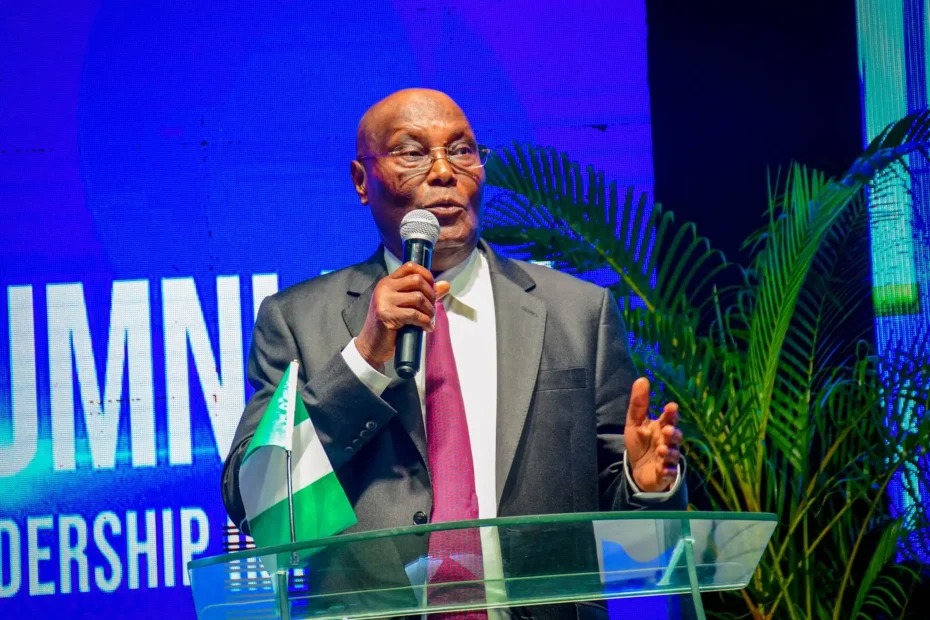
Former Vice President Atiku Abubakar has fired back at President Bola Tinubu over criticism of his proposed intervention in Nigeria’s petroleum sector, insisting that the country’s worsening economic hardship demands a rethink of existing policies.
Atiku, in a statement issued on Friday by his Senior Special Assistant on Public Communication, Phrank Shaibu, rejected Tinubu’s description of his proposal as evidence of “serious ignorance on governance and economy.”
The African Democratic Congress presidential candidate said his proposal was not a return to the former open-ended petrol subsidy regime but a temporary and targeted production-support programme aimed at increasing domestic refining and shielding consumers from severe price shocks.
According to Atiku, the economic conditions Nigerians face today are significantly different from those that existed when Tinubu announced the removal of petrol subsidy in May 2023.
“Economic prescriptions respond to prevailing conditions,” Atiku said. “But other things are no longer equal in Tinubu’s Nigeria.”
He argued that subsidy removal, without sufficient measures to cushion its impact, contributed to sharp increases in petrol prices, transportation costs and food prices, while the naira also lost significant value.
“Atiku is not proposing the resurrection of the corrupt, open-ended subsidy bazaar. He proposes a targeted, capped, budgeted, time-bound and independently audited production-support mechanism tied to domestic production and protected against arbitrage,” the statement said.
Atiku also questioned the Federal Government’s claims of economic gains from the reforms, particularly its emphasis on increased Federation Account allocations to states.
He said higher government revenues should not be presented as proof of economic success while Nigerians were struggling with declining purchasing power and rising living costs.
Other News
“You do not build a federation by impoverishing citizens so that Abuja can send bigger cheques to governors,” he said.
The former vice president further challenged the government to explain what he described as approximately ₦17.5tn in petroleum-related under-recoveries and energy-security costs reportedly recorded in the accounts of the Nigerian National Petroleum Company Limited.
“If subsidy is dead, why are under-recoveries alive?” Atiku asked. “If corruption was eliminated, why has opacity survived?”
He maintained that the success of economic reforms should be judged by their effect on ordinary Nigerians rather than the size of government revenues.
“Economic reform is not measured by how fat government accounts become while citizens grow poorer,” he said.
Atiku’s response followed Tinubu’s criticism of proposals for a new form of petroleum subsidy. The President and his administration have maintained that the removal of petrol subsidy was necessary because it had become financially unsustainable, while arguing that the reform would free resources for development and strengthen government finances.
Atiku, however, insisted that Nigerians had borne the brunt of the reforms and urged the government to address outstanding questions about public finances and petroleum-sector costs.
He concluded by defending his proposed intervention as a mechanism to support domestic production and gradually reduce the need for subsidy, while warning Nigerians against another term of policies he described as worsening economic hardship.