Follow Us on Google

• How Nigerians cope with heat wave as electricity failure persists
By Olakunle Olafioye, Ighomuaye Lucky, Laide Raheem, Scholastica Hir, Timothy Olanrewaju, Jude Chinedu, Tony John, Stanley Uzoaru, Lateef Dada, Okey Sampson, Femi Folaranmi, Ola Muhammad and Noah Ebije
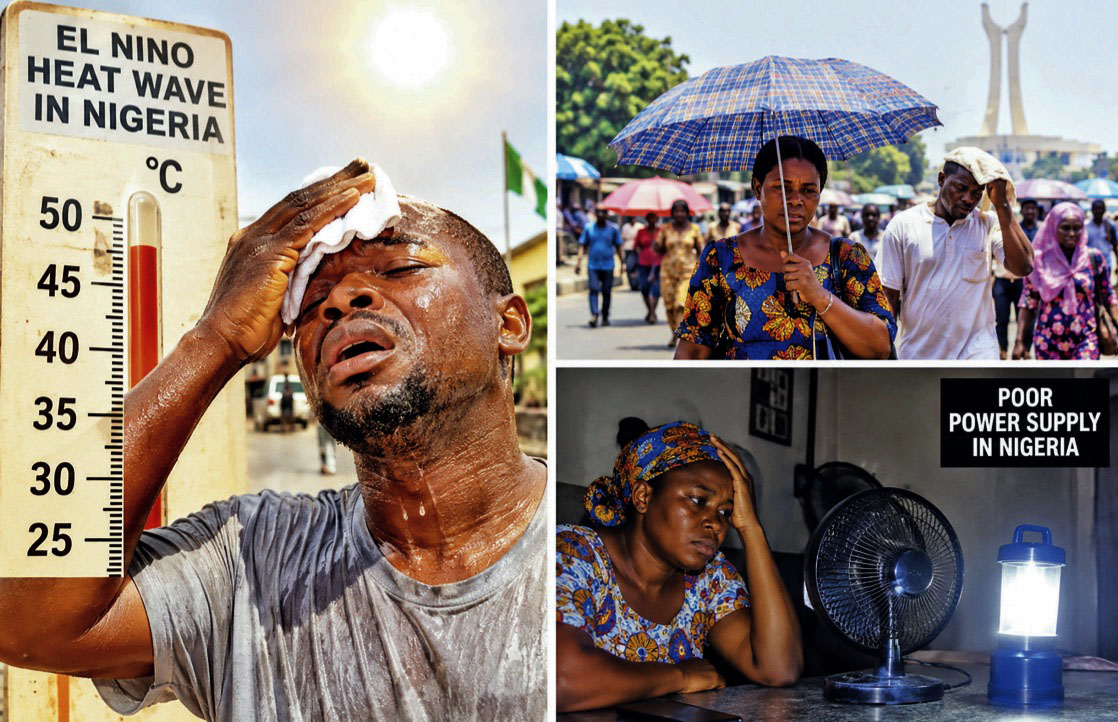
The night is supposed to offer a natural escape from the scorching heat of the day. But for many Nigerians, particularly those living in areas experiencing prolonged electricity outages, nightfall has become another reminder of the discomfort that has taken over their lives.
In many homes, sleep has become a luxury with bedrooms losing their appeal while mattresses are increasingly being abandoned for cold floor tiles. Verandas, balconies and open compounds are also becoming makeshift bedrooms as some families now spend considerable parts of the night outdoors in the hope that whatever breeze nature can offer will provide the relief that electricity-powered fans and air conditioners can no longer guarantee.

For some, the routine is becoming familiar. Take a bath, lie down for a few minutes, begin sweating again, pick up a hand fan, and perhaps take another bath before attempting to sleep.
Across several states in Nigeria, the experience is increasingly similar. From Abeokuta to Maiduguri, Makurdi to Kaduna, Port Harcourt to Owerri, and from Birnin Kebbi to Umuahia, residents are grappling with unusually uncomfortable weather conditions associated with the emerging El Niño pattern. But beyond the rising temperatures, another problem is making life considerably more difficult: the country’s unreliable electricity supply.
At a time when households need electricity most to power fans, air conditioners, refrigerators and other cooling appliances, the national power grid has struggled to meet demand. National electricity generation, which reportedly stood at about 3,659 megawatts on November 5, subsequently plunged to approximately 2,692 megawatts, leaving electricity distribution companies with reduced allocations and forcing load shedding in several parts of the country.
And for residents already struggling with the effects of inflation, the combination of excessive heat and unreliable electricity has become a particularly cruel burden. Running generators has become increasingly expensive because of the high cost of petrol and diesel. Solar-powered alternatives, meanwhile, remain beyond the reach of many low-income households. Consequently, Nigerians are being forced to improvise, sometimes in uncomfortable and potentially dangerous ways, to survive the changing weather.
Edo: Residents improvise as heat bites harder amid worsening power outages
In Edo State, residents are adopting familiar survival strategies to cope with the rising temperatures, relying largely on improvisation to beat the heat. Traders move their stalls into available shades, while commercial motorcyclists and street hawkers begin their activities earlier in the day, taking breaks during the hottest hours.
At home, families throw open their windows to allow fresh air in, retreat to the coolest rooms and keep buckets of water and hand fans within reach, particularly when electricity supply fails. Mothers, in particular, have resorted to bathing their children more frequently, sometimes twice daily, to keep them cool. Rechargeable fans, once considered a luxury, have now become essential household items. The demand for cold water and fruits such as watermelon, oranges and cucumber has also increased as residents seek inexpensive ways to stay hydrated and find relief from the scorching weather.
However, the unreliable electricity supply has compounded the hardship. At a time when residents need fans, refrigerators and air conditioners most, power supply has become increasingly erratic. National electricity generation reportedly fell to 2,692 megawatts on Saturday morning, with several generating plants recording zero output. In parts of Benin City, residents said they receive barely three hours of electricity daily.
The situation has been worsened by the absence of tangible updates from electricity generation and distribution companies, leaving consumers uncertain about when normal supply will be restored. For many residents, each day brings another excuse, while the promise of improved supply remains elusive.
Offering medical advice on how to cope with the extreme temperatures, Dr Bright Oniovokukor of Bricache Medical Resources (BMR) said survival during the heat crisis depends largely on adopting simple but consistent health and safety measures. “I urge residents to drink water regularly and not wait until they are thirsty,” he said.
He advised people to consume water-rich fruits such as watermelon, oranges, cucumber and pineapple, while carrying drinking water whenever they leave their homes. “People should aim to consume at least three litres of water daily. This is approximately six sachets of water, four small bottles of Eva water or two large bottles. They should also take cool baths as often as convenient,” he said.
Oniovokukor further advised residents to avoid prolonged exposure to direct sunlight, particularly between 11am and 4pm, wear light-coloured clothing and seek shade or remain in cooler rooms whenever possible. He stressed the need for particular vigilance in caring for vulnerable people, including children, the elderly and those with existing health challenges, warning that they should not be left unattended in excessively hot rooms.
Identifying dizziness, headaches, excessive sweating and confusion as possible warning signs of heat-related illness, the doctor advised anyone experiencing such symptoms to move immediately to a cooler environment, drink water and seek medical attention if the symptoms persist.
Abeokuta: Heat begins before the day gets going
In Ogun State, the experience is equally disturbing. From Abeokuta to Ilaro, Sagamu and Ijebu-Ode, residents are finding it increasingly difficult to escape the heat, with the discomfort extending well into the night.
In Abeokuta, the intensity of the sunshine becomes noticeable as early as 8 a.m. By about 11:30 a.m., what should ordinarily be regarded as the morning sun has become sufficiently intense to send many people searching for shade. The situation has created opportunities for vendors of cold water and carbonated drinks, whose businesses are recording increased patronage as residents struggle to keep themselves cool.
At Kuto, Sapon and Itoku markets, traders are also adjusting their businesses to the prevailing conditions. Those selling perishable goods now buy and display their products in smaller quantities to reduce losses from spoilage.
Families are increasingly sleeping on verandas and in open compounds, while artisans, commercial motorcycle operators and welders are shifting their activities to early mornings and late evenings. For those who cannot afford generators, the alternatives are far less comfortable. Some charge their phones at commercial charging outlets, purchase blocks of ice and rely on hand fans and wet towels.
Even residents who have installed solar-powered fans are not completely insulated from the heat, as the air circulating inside their homes can remain uncomfortably warm. The situation has also raised health concerns, with reports of people falling ill and requiring hospital treatment.
A Consultant Obstetrician and Gynaecologist based in Abeokuta, Dr Jaiye Oluwafemi, warned that prolonged exposure to excessive heat could have serious implications, particularly for pregnant women. According to him, excessive heat could contribute to hypertension, heatstroke and hormonal changes in pregnant women, while exposing unborn babies to associated risks.
He advised expectant mothers to increase their water intake to prevent dehydration and other complications, including preterm birth and stillbirth. The warning is particularly significant for pregnant women who already have to contend with the physical demands of pregnancy in an environment where adequate ventilation and electricity are increasingly difficult to obtain.
Benue: ‘You will think hell fire is lowered closer to Benue’
In Benue State, where high temperatures are already a familiar feature of the weather, the emerging heat pattern has made an uncomfortable situation considerably worse. With temperatures reaching about 36 degrees Celsius in Makurdi and other locations, residents are struggling to cope, particularly those living in communities with irregular electricity supply.
For households outside Band A electricity service, the situation has become particularly difficult. Mr James Terhundu and Mrs Stella Tondo, residents of Nyon community, said their neighbourhood receives electricity mainly at night, leaving residents to endure the afternoon heat without fans or other cooling appliances.
Mrs Tondo described the experience in particularly graphic terms. “Somehow we manage to sleep well at nights because they would bring the light while we are going to bed and seize it at the early hours of the day. But in the afternoon, you will think hell fire is lowered closer to Benue. The heat is too much,” she said.
To cope, she has increased the frequency of her baths and water consumption. Another resident, Dorathy Ameh, who lives around Ankpa quarters, said electricity supply had become so unreliable that residents sometimes spent almost a week without power. She explained that when the community transformer developed faults, residents were often compelled to contribute money to repair it.
For now, she and other members of her household spend considerable time outdoors, particularly at night, to enjoy whatever fresh air is available. “We also leave the window open to allow for cross ventilation,” she said.
A medical doctor in Makurdi, who requested anonymity, advised residents to take adequate fluids, reduce strenuous physical activities and wear light clothing. He recommended consuming between 200 and 250 millilitres of fluids every three to four hours, while encouraging adequate ventilation in homes and offices.
He also called on relevant authorities to intensify public awareness campaigns. People with underlying health conditions, particularly diabetes, hypertension and asthma, were advised to take extra precautions, while anyone suspected of suffering heatstroke should seek immediate medical attention.
When November comes with fire instead of harmattan
For residents of Maiduguri, the capital of Borno State, the current weather presents an unsettling departure from what November traditionally represents.
In the North-East, November usually announces the arrival of harmattan, a seasonal period characterised by relatively cool weather, dry winds and dusty conditions. For residents who have endured years of insurgency, displacement, economic hardship and environmental challenges, the arrival of harmattan is often welcomed as a natural reprieve.
But this year, the anticipated cool weather has been replaced by intense heat. Since late October, residents had begun enjoying the familiar cool conditions associated with the approaching harmattan season. However, the weather suddenly changed, with the cool air giving way to intense sunshine and rising temperatures.
By noon on a Wednesday last week, Maiduguri appeared unusually deserted. Major roads and streets that ordinarily bustle with vehicles, commercial tricycles and pedestrians were noticeably quieter as residents sought refuge indoors. Most residents have resorted to staying indoors since weekend when the heat started,” Abubakar Adam, a resident, told Saturday Sun.
For him and many others, the sudden change has raised questions about whether the expected harmattan season will still run its course as usual. “Like most residents, I wonder if the harmattan season will still run its course this year with the current climate change,” he said.
The discomfort, however, does not end when residents retreat into their homes. Electricity supply, which residents said was relatively better a few months ago, has deteriorated, leaving some communities without public power for weeks.
Amos Bala, a teacher, said the situation had made the heat almost unbearable. “Electricity supply was better a few months ago but it is very poor now. It’s worsening the impact of the current heat on residents because many can’t even stay indoors. It’s too hot,” he lamented.
It is a particularly difficult situation for residents of a city where temperatures have reportedly climbed to about 42 degrees Celsius. Even the city’s familiar neem trees, which ordinarily provide shade and relief from the afternoon sun, are showing signs of distress. Their broad leaves, once a welcome shelter for pedestrians and residents, are drying up, turning brown and withering.
In Maiduguri, where trees are more than decorative features of the landscape, their deteriorating condition has added another dimension to the discomfort. Between noon and 3 p.m., many streets are almost deserted. Children are encouraged to remain indoors, while elderly residents sit around doorways and verandas, fanning themselves and waiting for the evening breeze.
Hassan Buba, a health worker in the state, described the situation as a double burden: excessive heat outside and inadequate electricity indoors. He urged residents to drink plenty of water and avoid exposure to direct sunlight, particularly between noon and 3 p.m.
Geographer, journalist and climate expert, Mr Njadvara Musa, said the sudden change in weather was a reminder that climatic conditions in the North-East were changing faster than many residents realised. He expressed concern that the intense heat could continue until February next year before the seasonal heat period sets in.
Enugu: The argument over El Niño
In Enugu State, the heat has also created uncomfortable conditions, particularly at night, when residents ordinarily expect some relief from the day’s sunshine. For many households, the absence of electricity has turned bedtime into another struggle.
Residents complain that they can no longer depend on standing fans, ceiling fans and air conditioners to provide the comfort needed for a good night’s sleep. However, not everyone believes the current weather is unusual or necessarily connected to El Niño.
Chika Abugu said she had experienced similar weather conditions in the past and did not consider the current heat particularly extraordinary. “The heat has been so much lately, but I don’t think it is El Niño or anything outside the ordinary. I don’t believe in those things. We have seen this kind of heat before. As you have noticed, it rained the other day and the heat has reduced so much. So, it is normal,” she said.
For Chinyere Okafor, however, the immediate concern is not the scientific explanation for the weather but the absence of electricity in her compound. She said she had initially assumed the heat was normal until the discomfort became increasingly difficult to endure.
“I did not know about El Niño. I was just thinking it was normal. I was wondering why the sun was so much. May God help us o. We were so uncomfortable because there is no light in my compound, so at night, it was difficult to get a good sleep,” she said.
Amaka Nnaji also blamed poor electricity supply for much of the discomfort. She said even residents in areas classified under Band A were not receiving the expected level of electricity. “The problem is not even the heat but the inability of EEDC to give us light. Even though we are in Band A, the amount of light we get is so low. To even sleep at night is a problem,” she lamented.
Meanwhile, Mainpower Electricity Distribution Limited attributed the reduction in electricity supply to a decline in national energy generation and low system frequency. In a public notice signed by its Head of Communications, Emeka Ezeh, on October 26, the company said the situation had compelled the Transmission Company of Nigeria to implement load shedding.
The company said the development had affected its energy allocation and limited its ability to meet daily service-level commitments. It, however, assured customers that it was monitoring the situation and distributing available electricity across its network, expressing hope that normal supply would soon be restored.
Port Harcourt: No light, no relief
In Port Harcourt, Rivers State, the heat has become a daily struggle, with residents describing conditions that make ordinary domestic activities increasingly uncomfortable. Across different neighbourhoods, people complain of sweating even after bathing, sleeping on cold floor tiles and taking several baths daily to obtain temporary relief.
The situation became particularly evident in the Diobu axis of Port Harcourt City Local Government Area, where women recently protested at the Port Harcourt Electricity Distribution Company office over prolonged electricity outages. The protesters said the absence of electricity had made sleeping almost impossible amid the intense heat.
National electricity generation has fallen sharply, with gas shortages and reduced water levels at hydroelectric plants contributing to the difficulties facing the power sector. The resulting reduction in available electricity has affected distribution companies, including the Port Harcourt Electricity Distribution Company.
Recent grid allocations to the company reportedly stood at between 291 and 294 megawatts, considerably below the demand in a city where residents increasingly need electricity to power fans and air conditioners.
The impact extends beyond domestic comfort. Traders, hairdressers and poultry farmers are among those whose businesses are being affected by inadequate electricity. For households that cannot afford generators, inverters or solar-powered fans, the coping strategies are largely basic: hand fans, sachet water, cold baths, open windows and avoiding unnecessary outdoor activities during the hottest hours.
A social media post that captured the mood of many residents read: “El Niño heat no get joy o, no light, no AC.” The statement reflects the frustration of residents who believe that the heat would be considerably easier to manage if electricity were available.
Dr Tony Michael advised residents to drink water regularly, even before they felt thirsty. “By the time you start feeling thirsty, it means some form of dehydration is already going on,” he warned.
He also recommended eating water-rich fruits such as watermelon, oranges, cucumber and pineapple, wearing loose and light cotton clothing and avoiding direct sunlight between 11 a.m. and 4 p.m. He stressed that children, elderly people, pregnant women and outdoor workers required particular protection.
Owerri: When even generators become unaffordable
In Imo State, residents of Owerri and surrounding communities are also struggling with the combination of intense heat and unreliable electricity. Although Owerri recorded about 33 degrees Celsius on a Thursday, the afternoon temperature reportedly felt like between 40 and 41 degrees Celsius because of humidity and poor ventilation.
Residents of Owerri North, Nekede, Ihiagwa, Orji, Naze, Amakohia, Obinze and Eziobodo have complained of prolonged electricity outages, with some communities reportedly experiencing weeks and, in certain cases, months without steady public power. The frustration has spilled onto social media, where residents have repeatedly criticised the electricity distribution company serving the state.
One woman lamented that even the “kingdom of darkness” appeared to have more electricity than her neighbourhood in Owerri North. Another posted a video expressing frustration over the absence of electricity at different times of the day.
The complaints eventually found expression in street protests. On October 31, some youths wearing orange vests staged a protest outside the Transmission Company of Nigeria’s Owerri Work Centre, chanting, “Give us light!”
For residents, the problem is not merely the inconvenience of living without electricity. It is the additional financial burden of finding alternatives. A recent study on Owerri indicated that about 60 per cent of respondents relied on generators as their primary source of electricity, while 25 per cent depended on solar power. Only 10 per cent relied primarily on public electricity. The study also showed significant differences in the hours of electricity available across neighbourhoods.
Residents of Nekede and Akwakuma reportedly receive between zero and five hours daily, while those in Orji, Egbu Road and Amakohia receive between five and eight hours. Residents of Aladinma and New Owerri reportedly enjoy between 11 and 18 hours.
But even those who have generators are finding it increasingly difficult to sustain them. Mr Dike Ocha, a resident, complained that N10,000 worth of petrol no longer lasted until daybreak.
Another resident said some workshops now spend as much as N70,000 on fuel from Monday to Friday. The rising cost of petrol and diesel has therefore made generator ownership a costly survival strategy.
Solar energy, which many residents initially considered a more affordable long-term alternative, is also not accessible to everyone. The cost of installing panels, batteries and inverters remains prohibitive for many households and small businesses.
Even those who have invested in solar systems are not always satisfied. “My solar is off,” Mr Pius Onwuzuruike lamented, highlighting the frustration of residents who have invested in alternative energy but still struggle to obtain adequate relief.
For students and other low-income residents, water has become the most accessible cooling option. One student said he regularly poured water over his head every hour after classes to cope with the heat.
Others pour water on their faces, heads and feet when they begin to feel dizzy. Some wear cotton clothes and hats, while others close their windows during the hottest part of the afternoon and open them early in the morning and evening to allow cross-ventilation.
Other News
For many, sleeping outside has become an increasingly common option. One resident summarised the frustration of the situation: “El Niño is real, but no light has turned a weather problem into a health crisis.”
Kebbi: Solar fans and trees become survival alternatives
In Kebbi State, particularly Birnin Kebbi, residents are also preparing for the effects of the anticipated intense heat. Although the usual hot season has not fully commenced, forecasts of increasing temperatures have already influenced household spending and business activities.
Solar fans, solar refrigerators and other solar-powered appliances are attracting increased attention as residents seek alternatives to unreliable public electricity. Some major shops are also installing solar panels and refrigerators to enable them to sell cold water and soft drinks.
Dr Shittu Oyewale Wasiu, Dean of the School of Surveying and Land Administration at Waziri Umaru Federal Polytechnic, Birnin Kebbi, said the combination of excessive heat and inadequate electricity had compounded the difficulties confronting residents.
“This is a really tough combination, and people in Birnin Kebbi and its environs are feeling it right now. Heat on its own is hard to cope with, but heat without power to run a fan, charge a phone, or keep food and cold water makes one’s health a risk, not just discomfort,” he said.
He explained that weather warnings had raised concerns about higher-than-normal temperatures, increased heat stress, irregular rainfall and prolonged dry spells. He also highlighted the vulnerability of northern communities, where temperatures are already reaching between 42 and 45 degrees Celsius in some locations.
According to him, the effects of the heat could be particularly severe for children, elderly people, outdoor workers and individuals with existing health conditions.
In Birnin Kebbi metropolis, residents of Bayan Kara, Badariya, Gesse and other neighbourhoods are struggling to power their cooling appliances. Dr Shittu said the cost of electricity and the challenges associated with public supply had forced many households to consider solar power, inverters and generators, further increasing their financial burden.
He advised residents to drink water before becoming thirsty, avoid excessive consumption of sugary drinks and caffeine, and minimise exposure to direct sunlight between 11 a.m. and 4 p.m. He also recommended using wet towels around the neck, cooling the wrists with water and taking lukewarm baths.
For households without electricity, he advised opening windows on opposite sides of their homes during the early morning and late evening to encourage cross-ventilation, while keeping curtains closed during peak sunshine.
He also warned against cooking with firewood or kerosene inside enclosed rooms because of the additional heat and smoke generated. The expert emphasised the importance of community support, suggesting that churches, mosques, community centres and shaded verandas could serve as temporary cooling points for residents during the hottest hours.
For Mallam Haruna Aliyu, a resident of Birnin Kebbi, solar fans have become an important alternative. “Since there is no electricity, we are now using solar fans to suppress rising heat temperatures. In the second alternative, we vacate our rooms to under trees to get fresh air and we engage in drinking a lot of water to cool off in order to avoid dehydration,” he said.
At the main market, cold water vendors are enjoying increased patronage. Mallam Hussani Dan-Sokoto, a foodstuff vendor, said he sometimes consumed more than 10 sachets of cold water while working in the market.
Meanwhile, the National Orientation Agency in Kebbi State has urged residents to take precautionary measures against the prevailing weather conditions.
The State Director, Mr Muhammed Nasir Karofi, advised residents to drink clean water, avoid harsh midday sunshine and pay particular attention to children and elderly people. He also urged households to maintain proper hygiene, ensure that drinking water was safely covered and report sudden fever or respiratory symptoms to the nearest health facility.
Kaduna: Sleepless nights from Barnawa to Kawo
In Kaduna metropolis, the situation has also become a source of concern for households and businesses. From Barnawa to Kawo, Sabon Tasha, Tudun Wada and the city centre, residents are adopting different strategies to escape the heat.
Some sleep outdoors, others take repeated baths, while many depend on hand fans and seek refuge under trees or in better-ventilated spaces.Those who can afford generators and rechargeable fans are spending additional money to maintain some level of comfort.
But for many households, the rising cost of living has made such alternatives difficult to sustain. Mrs Victoria Nuhu said the heat had arrived earlier than expected, particularly because residents ordinarily anticipate the harmattan season around this period.
“The heat this year came too early because we are supposed to be expecting harmattan now, but heat is killing us, instead. And lack of constant electricity supply is not helping matters because we cannot power our air conditioners or ceiling fans and standing fans,” she said, appealing to the relevant authorities to ensure more regular electricity supply.
Another resident, Malam Bature Audu, said access to drinking water and the ability to avoid direct sunlight were not enough to address the problem. According to him, residents have little control over electricity supply to their homes, while the cost of running personal generators has become increasingly burdensome.
He noted that households were already struggling with the rising cost of feeding and accommodation. “I want to call on government at all levels to step into this situation and save us from this hardship,” he appealed.
The Director of Public Health in the Kaduna State Ministry of Health, Dr Sadique Abubakar, advised residents to minimise exposure to excessive heat, drink plenty of water and ensure adequate ventilation in their homes.
A former Kaduna State Chairman of the Nigerian Medical Association, Dr Sheyin Madaki, also urged residents not to wait until they became thirsty before drinking water. “Let us not wait until we are thirsty before we drink water,” he warned.
Bayelsa: Where electricity and water provide relief
Amid the complaints from different parts of the country, Bayelsa State offers a contrasting experience. Unlike residents of several other states who are struggling to escape the heat because of inadequate electricity, many residents of Yenagoa have been enjoying relatively comfortable conditions.
The difference, residents say, is the availability of electricity from the state’s gas turbine and the cooling influence of the surrounding waterways. In Yenagoa, the relatively steady electricity supply has enabled households to operate fans and air conditioners, providing relief from the intense outdoor temperatures.
Mr Babatunde Kayode, an automobile engineer residing in Opolo, said the availability of electricity had made a significant difference. He commended the state government for providing the gas turbine, which he said had helped residents cope with the weather.
“One of the reasons I will continue to commend the Bayelsa governor is this gas turbine. Even if he is not performing in other areas, this gas turbine that he has procured for the state is the best thing to have happened in Bayelsa,” he said.
He added that residents would have found the heat considerably more difficult to endure without electricity. “Imagine the heat outside; how could we have survived if there were no constant light? No matter the heat you experience outside, once you get home and you switch on your air conditioner or fan, you would be okay,” he said.
Residents of coastal communities also attribute their relatively comfortable conditions to their proximity to rivers and other waterways. Mr Raphael Ogiowo, a resident of Gbarantoru, said the surrounding water bodies helped create a cooler atmosphere.
He noted that residents had lived with the heat generated by gas flaring in their community for decades, making the current weather less alarming to them. “Here in Gbarantoru, we don’t feel El Niño. There can be no heatwave greater than the gas flare that has been burning in our community for the past 60 years. God has been so kind to us that we live close to the water. So whatever heat El Niño generates is neutralised by the river. Our environment is cool; we don’t suffer from heat,” he said.
Abia: Sleeping outside to escape the heat
In Abia State, the weather has also taken an unexpected turn. Residents say the current combination of gloomy skies, occasional rainfall and intense heat is unusual for this period of the year.
Ordinarily, the period would signal the gradual establishment of the dry season, with the rains becoming less frequent and sunshine increasingly dominant.But this year, the weather has been unpredictable.
Ume Okezie, a resident of Umuahia, said he had never experienced such conditions. He observed that although the sun sometimes failed to appear, the heat remained intense. “The surprising thing about the whole incident is that despite the fact the sun does not appear on certain days, yet we are experiencing much heat,” he said.
The situation is particularly difficult because electricity supply remains unreliable in several parts of the state. Consequently, residents have increasingly resorted to sleeping outside their homes at night.
For Mrs Jane Igu, remaining outdoors has become the only practical way to obtain some relief. “It is better for us to stay outside where we can receive fresh air and sleep than remaining inside the house and die of heat,” she said.
But sleeping outside also exposes families to other risks, including mosquito bites and security concerns. For households with children, the decision to spend the night outdoors is therefore not necessarily an easy one.
It is a choice between the discomfort of remaining inside an overheated room and the potential dangers associated with sleeping in open spaces.
Doctors have advised residents to drink sufficient water throughout the day and night, take cool baths when necessary and avoid overcrowded rooms and offices.
Osun: Cost of alternative electricity
In Osun State, residents are already making preparations for the anticipated intense heat, following warnings by the Nigerian Meteorological Agency. But their ability to prepare adequately is being undermined by unreliable electricity supply and the high cost of alternative power sources.
For Dr Adeolu Adeyemo, a resident of Oke Arungbo, the electricity challenge has become a community-wide problem. He said several communities sharing a single transformer had been plunged into prolonged darkness following a fault.
According to him, residents were asked to contribute N11,500 each to raise more than N2 million required for repairs. However, efforts to raise the money had encountered difficulties. “Residents have been opting for solar energy because the problem has taken too long, while efforts to raise the repair money have not yielded positive results,” he said.
Abraham Blessing, a resident of the Technical area, expressed concern about what could happen if the anticipated heat intensified while electricity remained unreliable. Although the prevailing night weather was still relatively favourable for sleeping, he worried about residents who could not afford solar-powered alternatives.
He suggested that those without access to electricity might have to sleep outdoors if the heat became unbearable. However, he acknowledged the security concerns associated with such an arrangement. “If the El-Nino warning is true, it is advisable for people who cannot afford solar power to sleep outside. However, the fear of ritualists and kidnappers remains a serious concern,” he cautioned.
Medical professionals in the state said they had not yet recorded direct cases of heat-related illnesses such as heatstroke or heat-induced confusion. Dr Onifade said he had not observed such cases, but urged residents to take precautionary measures in line with NiMet’s recommendations.
Dr Uthman of the Osun State University Teaching Hospital also advised the public to remain vigilant and pay attention to meteorological warnings.
However, residents expressed concern that the state government had yet to commence a public awareness campaign on the potential dangers of the weather phenomenon.
Repeated calls and messages sent to the Commissioner for Environment, Mayowa Adejoorin, for comments remained unanswered as of the time of filing the report.
Cross Rivers residents battle suffocating heat despite improved electricity supply
In Cross River State, the scorching heat has left residents grappling with varying degrees of discomfort, depending largely on their locations and access to electricity. In Calabar, the state capital, many residents have complained of intense heat, even in neighbourhoods enjoying relatively improved electricity supply. For some, having power at night has offered only limited relief from the uncomfortable weather.
At Ekpo Abasi, residents said the heat remains unbearable despite occasional electricity supply, forcing them to devise different ways of coping. Iquo Bassey, a middle-aged trader, said the intensity of the heat has become so overwhelming that she now leaves home for the market with at least three extra sets of clothes, which she changes at intervals because of excessive sweating. “I sweat excessively because I stand under the sun for most of the day. That is why I go with extra clothes,” she said.
Although she enjoys electricity for a few hours at night, Bassey said she still relies on other measures to find relief. “At night, I am fortunate to have light for a couple of hours. This helps cushion the effect of the heat. I also pour cold water on my body to cool off,” she added.
For Etim Okon, however, the situation is considerably worse. Living in an area that has been without electricity since January following a faulty transformer, he said nights have become particularly unbearable. “At night, the heat is very excessive. My windows are all open, I barely sleep with clothes and I wake up at intervals to fan myself,” he said.
Describing the experience as agonising, Okon appealed for urgent intervention to restore electricity to the community. “We are virtually living in hell fire, particularly at night, and we urgently need intervention from any source,” he said.
Away from the urban centres, however, some residents in rural communities appear to have found a natural refuge from the heat. For Ekong Ituen, a cocoa farmer in Ikom, the trees scattered around farms and residential compounds have become an important source of relief.
He observed that people living in areas with plenty of shade trees seem to experience less discomfort than those in exposed environments. “Those who feel less troubled by the heat appear to be people who have huge shade trees around them,” Ituen said, adding that, “When the heat is intense, we usually find succour under these trees which serve as a natural air conditioner for us. We never knew these trees could serve such a life-saving purpose,” he added.
Meanwhile, health experts have warned that prolonged exposure to extreme heat increases the risk of dehydration, heat exhaustion and heatstroke, particularly among outdoor workers such as traders and farmers, as well as children and the elderly.
However, the Cross River State Ministry of Health is yet to issue a public health advisory outlining specific measures residents should adopt to minimise the health risks associated with the prevailing heat.
Health danger Nigerians must not ignore
Beyond the discomfort, the prevailing heat has raised concerns among medical professionals about the possibility of increased cases of dehydration, heat exhaustion and heatstroke.
Doctors say the greatest danger is that many people may dismiss the early symptoms as ordinary tiredness, malaria or the effects of a busy day. Dr Bright Oniovokukor of Bricache Medical Resources said survival during periods of intense heat depended largely on simple but consistent preventive measures.
He urged Nigerians to drink water regularly rather than waiting until they became thirsty. He also recommended water-rich fruits such as watermelon, oranges, cucumber and pineapple. “I urge residents to drink water regularly and not wait until they are thirsty,” he said.
He advised people to carry bottles of water when going outdoors and maintain adequate fluid intake throughout the day. He also recommended taking cool baths whenever convenient, wearing light-coloured clothing and avoiding prolonged exposure to direct sunlight.
According to him, people should particularly avoid unnecessary outdoor activities between 11 a.m. and 4 p.m., when exposure to intense sunshine could increase the risk of heat-related illnesses. He stressed that children, elderly people and those who were sick required particular attention.
“Above all, this warning needs to be taken seriously. Check on children, the elderly and the sick, and never leave them alone in hot rooms,” he warned.
He identified dizziness, headache, excessive sweating and confusion as possible warning signs requiring attention. Residents experiencing such symptoms were advised to move to cooler places, drink water and seek medical assistance if the symptoms persisted.
In Rivers State, Dr Tony Michael similarly advised Nigerians not to wait until they felt thirsty before drinking water, explaining that thirst could indicate that dehydration had already begun.
Health professionals have also warned that excessive heat could be particularly dangerous for pregnant women, people with hypertension and diabetes, and individuals with other underlying medical conditions. For these groups, the inability to maintain comfortable indoor temperatures may increase their exposure to heat-related complications.
The experiences from the different states reveal a troubling relationship between Nigeria’s electricity challenges and the growing difficulty of coping with extreme weather conditions.
For years, unreliable electricity has forced households and businesses to invest in generators, inverters and solar systems.
But as the heat intensifies, these alternatives are increasingly becoming necessities rather than conveniences. Unfortunately, the cost of acquiring and maintaining them remains beyond the reach of many Nigerians.
The situation raises questions about the vulnerability of households that depend almost entirely on public electricity for cooling and food preservation. It also highlights the unequal burden of climate-related challenges.
As Nigerians continue to improvise, experts and residents are increasingly looking towards public institutions for more coordinated responses.
For now, many have little choice but to keep their windows open, fill their buckets with water, carry hand fans and hope that the next time they switch on their lights, electricity will actually be available.
As the heat persists, one thing has become increasingly clear: for millions of Nigerians, the battle against the weather is no longer simply about surviving the sunshine. It is also about surviving the darkness.