Follow Us on Google

From Taiwo Ogunniyi, Ilorin
Media professionals at the 2026 Journalism and Media Conference in Ilorin, Kwara State, have called for renewed commitment to truth, professional ethics, investigative reporting and editorial independence, warning that ‘brown envelopes’, political interference, misinformation and the growing obsession with online trends threaten the credibility of journalism in Nigeria.
The speakers, including the founder, The Journalism Academy, Mosunmola Ajibade, Chief Correspondent, The Punch, Dare Akogun, media professional Rasheedat Oladotun-Iliyas and broadcast journalist/media entrepreneur, Joseph Emeribe, made the call at the maiden edition of the conference held on Thursday.
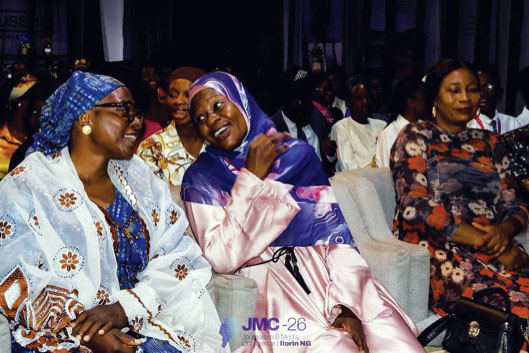
The conference, organised by The Journalism Academy at 12 Workspaces, Ilorin, was themed “The Future of Journalism: Truth vs Trends” and brought together journalists, media practitioners, students and other stakeholders to examine the challenges and opportunities shaping contemporary journalism.
Ajibade raised concerns over threats to journalists, political intimidation, unlawful detention, financial inducements and other pressures capable of undermining the independence of the media:
“Journalism must remain relevant, courageous, independent, and committed to truth. It must never be silenced or compromised for personal, political, or financial interests,” she said.
Ajibade also questioned whether journalism education in Nigerian institutions adequately prepares students for the realities of modern media practice, stressing the need to bridge the gap between classroom knowledge and professional experience.
She said the academy, established on March 2, 2026, was designed to promote practical, inclusive and relevant media education through training, mentorship, career guidance and professional development.
According to her, the academy had extended its sensitisation activities to secondary schools, including Bishop Smith Memorial College and Saint Anthony, to expose students, particularly those in the arts category, to career opportunities in journalism and the broader media industry.
She said the conference was also designed to provide opportunities for experienced journalists to share their professional experiences while recognising veterans who had made significant contributions to the industry.
Delivering the keynote address, Emeribe warned that the increasing competition for online attention was encouraging sensationalism, clickbait headlines and the publication of unverified information at the expense of professional standards.
He argued that journalists did not have to choose between truth and trends, insisting that trending issues should only serve as channels for reaching audiences rather than determining editorial decisions.
“My central argument today is simple: the future of journalism does not require us to choose between truth and trends. It requires us to understand how to use trends without compromising the truth,” he said.
He advised journalists to use social media trends to attract audiences without allowing them to dictate the direction of their reporting.
“Use trends as a vehicle, never as a compass. Trends can take you to your audience, but they must never determine your professional direction,” he added.
Emeribe identified the pressure to publish breaking stories, commercial interests, emotional reactions and the quest for online recognition as factors contributing to misinformation.
He noted that false information often travelled faster than corrections, observing that “falsehood sprints while correction walks.”
Citing the fatal accident near the main gate of the University of Ilorin on July 18, 2024, Emeribe recalled how conflicting reports about the number of casualties demonstrated the dangers of publishing unverified information, particularly during emergencies.
He also urged journalists to pay greater attention to community issues, including the Akerebiata Bridge collapse, flooding and persistent electricity challenges around Ilorin Technical College, Adunbarin, Irewolede and Afenifere.
According to him, stories affecting ordinary Nigerians should not be neglected simply because they do not attract national attention or generate online engagement.
“A collapsed bridge, a flooded community or a neighbourhood living without electricity may not always become a national trend. Yet, for the people affected, these are urgent realities that demand attention and accountability,” he said.
On technology, Emeribe encouraged journalists to embrace artificial intelligence for transcription, translation, data analysis and other newsroom activities but warned that human judgment and independent verification must remain central to journalism.
“AI can assist the journalist, but it cannot assume the journalist’s responsibility,” he stated.
He also identified financial dependence on politicians, government institutions and influential individuals as a threat to editorial independence, urging media organisations to explore sustainable revenue sources through subscriptions, digital publications, podcasts, newsletters, grants and partnerships.
“Dependence is the quiet enemy of independence,” he warned.
Similarly, Akogun called on journalists to strengthen investigative reporting as an instrument for exposing wrongdoing, promoting transparency and holding public officials accountable.
He said journalism must go beyond reporting official statements and breaking news to investigate public expenditure, monitor government projects and establish whether promises made by public officials translate into tangible benefits for citizens.
Using the abandoned Ilesha Baruba-Gwanara road project in Kwara State as an example, Akogun explained that sustained media scrutiny and follow-up reporting were essential to ensuring that public projects were completed.
He noted that the road remained abandoned for about eight years before its eventual completion by the present state administration.
Other News
“A road that exists only in a budget document is not development,” he said, urging journalists to investigate the relationship between budgetary allocations, contract awards and actual project delivery.
Drawing from his experience in environmental and investigative reporting, including concerns surrounding mining activities in Bani, Kwara State, Akogun urged journalists to investigate the environmental and social consequences of resource extraction.
He encouraged practitioners to make greater use of the Freedom of Information Act 2011, procurement documents, audit reports, financial records and other public information to uncover irregularities.
While acknowledging the usefulness of artificial intelligence, satellite imagery, geolocation and open-source intelligence in investigative journalism, he cautioned that such tools must complement rather than replace independent verification.
Akogun also called on media organisations to establish adequately funded investigative desks, improve journalists’ professional development and strengthen newsroom safety measures.
He emphasised that investigative journalism must be guided by fairness, accuracy and accountability.
“Investigative journalism is not a licence to publish unverified allegations. It is a responsibility to establish facts in the public interest,” he said.
In her presentation, Oladotun-Iliyas stressed that accuracy and fact-checking must take precedence over the pressure to break news and generate online engagement.
Speaking on the topic, “Strengthening Trust in Contemporary Journalism: The Place of Fact-Checking, Public Interest Reporting, Solutions Journalism, Health Reporting and Gender,” she warned that the competition between traditional media, bloggers, influencers and social media commentators was increasingly pushing some journalists towards speed at the expense of accuracy.
“Speed has become a competitor to accuracy. It now matters who tells the news first. And sometimes, in our desperation to be the first, we forget that our greatest responsibility is to be right,” she said.
She recalled her early professional experiences at ThisDay Newspapers in Lagos, where reports passed through several editorial stages involving reporters, proofreaders, sub-editors and news editors before publication.
She also recalled her experience at the Broadcasting House in Ikoyi, Lagos, where an experienced newsroom professional ensured that every word used in a report was properly justified.
Oladotun-Iliyas lamented that the growing reliance on social media statements and information from verified accounts had weakened independent verification in some newsrooms.
“A statement carrying the name and logo of a reputable organisation does not automatically become genuine. A video shared by thousands of people does not automatically become authentic,” she cautioned.
Citing previous controversies involving Nigerian media organisations, including the 2015 Nigerian Tribune report falsely attributed to Professor Itse Sagay, the 2020 ThisDay report concerning Bishop David Oyedepo’s alleged visa denial and the April 2026 Daily Trust photograph controversy involving the Jilli Market airstrike, she warned that poor verification could damage media credibility and expose journalists to legal consequences.
She urged journalists to focus more on public-interest issues, particularly healthcare, education, security, livelihoods, environmental protection and governance.
On health reporting, she called for increased investigative coverage of access to medical facilities, availability of medicines, staffing levels and the effectiveness of government health interventions.
She urged journalists to highlight the experiences of women travelling long distances to access maternal healthcare, children unable to obtain basic medical services and communities where primary healthcare centres exist only on paper.
She also advocated balanced gender reporting and solutions journalism, arguing that the media should not only expose societal problems but also highlight practical interventions that could improve people’s lives.
“Stories of solutions give communities ideas, encourage constructive public conversations and show policymakers what may be worth improving or replicating,” she said.
Ahead of the 2027 general elections, Oladotun-Iliyas warned journalists to prepare for fabricated press releases, manipulated videos and misleading information designed to influence public opinion.
She called for continuous training in fact-checking, data journalism, digital security, investigative reporting and responsible artificial intelligence use, while urging professional bodies to strengthen ethical standards across the media industry.
She maintained that public trust remained journalism’s most valuable asset, citing Nobel Peace Prize laureate Maria Ressa’s observation that “without facts you cannot have truth, without truth you cannot have trust.”
The speakers collectively stressed that the future of journalism would depend on the ability of practitioners to balance technological advancement with professional responsibility, protect editorial independence and remain accountable to the public.
They also emphasised that journalists must resist political and commercial pressures, verify information before publication, correct mistakes transparently and continually develop their professional skills.
Emeribe, in particular, outlined seven commitments for emerging journalists, including verification before publication, responsible use of technology, protection of editorial independence, service to local communities and continuous professional development.
He maintained that the profession’s relevance would be determined by its commitment to truth rather than its ability to follow every online trend.
“The future of journalism does not belong to those who merely chase the trend. It belongs to those who understand the trend, master the tools, win the attention of the audience and, above all, never surrender the truth,” he said.
The conference ended with a renewed call for journalists, media organisations, journalism educators and professional associations to work together towards building a credible, independent and sustainable media industry capable of strengthening democracy and holding institutions accountable.