Follow Us on Google

•2027 campaigns more about character assassination than issues
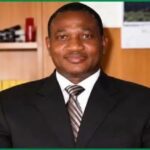
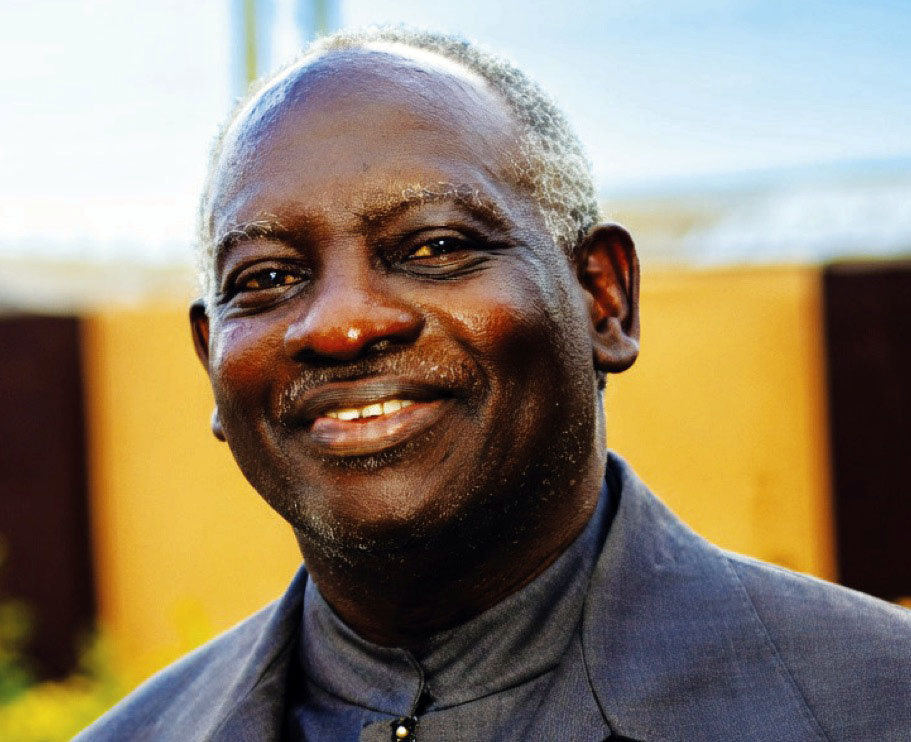
Elder statesman, Prof Yusufu Turaki, has said the Middle Belt would not have a political voice and be politically recognised and respected by all Nigerians until the country constitutionally grants her a regional status as it was done to Mid-West and Calabar Ogoja Rivers (COR).
The scholar noted that it is the debt that Nigeria owes the Middle Belt.
He spoke against the background of a recent visit of the Middle Belt elders led by Lt Gen T Y Danjuma (Retd) to President Bola Tinubu, which generated some remarks in the North.
In an interview with VINCENT KALU, the Professor of Theology and Social Ethic who is also a Middle Belt leader, stressed that, ‘competence, capacity and integrity’ which are the universal determinants in choosing leadership don’t apply in Nigeria, because Nigerians, he said, use parochial and local language of their gods of ethnicity, religion and region to win elections.
The 2027 elections are around the corner. What are your expectations?
I pray that the elections would be peaceful, given the rising violence of political campaigns.
What do you make out of the campaign messages?
The trend of the campaigns tends towards character assassination than political issues. We need issue-based campaigns and not demonising political fellows or parties.
The electioneering has been characterised by hostility, violent attacks, threats, and intolerance. Many of the contestants have had their convoys attacked. What is your take on this? And what should the authorities do before they escalate into anarchy?
The British Colonial Masters built Nigerian political philosophy and practice on three major pillars: ethnicity, religion and region. No one wins election in Nigeria without one, or two or three of these pillars. Nigeria’s political class have been schooled, trained, nurtured, groomed and conditioned in the arts and sciences of these three political pillars. Politics in Nigeria is the battle of the gods of ethnicity, religion and region. The nature of Nigeria’s politics has turned these three political pillars into the battle of the gods of ethnicity, religion and region. Politics has turned good ethnicity into a god whom Nigerians’ worship. It has also turned religion into a god whom Nigerians’ worship, and as well as turning the region into a god whom Nigerians’ worship. The hostility, violent attacks, threat and intolerance are simply the outcome of the battle of the gods of ethnicity, religion and region. The third pillar to ethnicity and religion, which is region, is not going to come in 2027, but instituted right from the beginning.
The battle of the gods of ethnicity, religion and region has been charged by the sectional and divisive political rhetoric. The politicians are the pundits of these ethnic gods, religious gods and regional gods. The battle is converting Nigerians into their ethnic gods, religious gods and regional gods, hoping to win elections.
More than 60 years after independence, and 55 years after the civil war, why should ethnic and religious considerations be on the front burner in choosing Nigeria’s leadership, instead of competence, capacity and integrity?
The words, “competence, capacity and integrity” are of universal language, while Nigerians use parochial and local language of their gods of ethnicity, religion and region. Their languages could not transcend the boundary of their ethnicity, or the boundary of their religion, or the boundary of their region. Whenever political agreements are made across the board, that is universal, but after the communiqué signed or verbal or by consensus, the political pundits would turn to consult their tribal gods, or their religious gods, or their regional gods, and what ensues is always the battle of the gods in the field of politics. The game of politics is mathematical, rigging, manipulation and legalism.
For good 60 years of independence, Nigerians are yet to have learnt the ABC of the universal language of politics. Democracy can be turned into ‘Democrazy’
Last week Middle Belt leaders led by Lt. Gen. T. Y. Danjuma visited President Bola Tinubu, and endorsed his re-election. Does it mean a new dawn for the region, or political deals were cut?
Just prior to independence, the ethnic minorities in Western Nigeria, Eastern Nigeria and Northern Nigeria called upon the British Government to grant them regional autonomy before independence. The British Government rejected that. After independence, Nigeria’s Parliament created the Mid-West Region. During Nigeria’s Civil War of July 1967-January 1970, the military under General Yakubu Gowon carved out Calabar, Ogaja and Rivers (COR) provinces from Eastern Nigeria. But the British and their junior partners in the Anglo-Muslim Rule of Northern Nigeria refused to create the Middle Belt Region. Middle Belt was the only minority that was refused a region.
In spite of the concrete ethnic, cultural and religious reasons, the Middle Belt was appended against its will to Hausaland and Bornoland, thus giving it an inferior status and socio-political role in the racialised and hierarchical structure of the Northern Region of Nigeria.
In 1996, General Sani Abacha created Six Geo-Political Zones: South South, South East, South West, North East and North West. The Middle Belt was balkanised into three parts – One part was appended to North East; another part to North West and the rest was left as North Central.
Historically under British colonial rule, the Northern Region was fused into one political bloc because it was considered as one northern political bloc. The Middle Belt was classified as “Northern” politically, but excluded culturally and religiously in the affairs of Northern Nigeria.
Lest Nigerians forget, when Lt. Gen T.Y. Danjuma (Retd), endorsed President Olusegun Obasanjo, there was no uproar; when he endorsed President Muhammadu Buhari, there was no uproar, now he has endorsed President Bola, and there is an uproar of some people of Hausaland origin. This reflects their desire to continue the subjugation and domination of the Middle Belt. If our brothers of Hausaland and Bornoland have treated the peoples of the Middle Belt as equal and humanely both historically and presently, such a visit would not have occurred.
Public affairs analysts ask if the insecurity in the Middle Belt Region that escalated in the last three years has been tackled and the economy improved for the president’s support for a second term. What is your position on this?
Insecurity in Nigeria is of long-term consequences of the colonial social values and social institutions that the colonial masters used to build Nigeria’s political social order. Herein lies the root of our problems and challenges.
Nigerians have focused too much on the social symptoms and talk much about them. Much time and resources are wasted in treating the symptoms, rather than finding the root causes. As it were, we climb on top of a tree cutting branches and leaves, while leaving the roots that feed the tree to bud branches and leaves. The root causes are in the history of making Nigeria by the empire builders.
How do you tackle insecurity successfully and effectively in the midst of the battle of the gods of ethnicity, religion and region? Nigeria is not like the USA that an economic downturn can cost elections. Put economy and insecurity aside, because Nigerians are steeped in the battle of the gods of ethnicity, religion and region. Nigerian political philosophy and practice are rooted in the manipulation and permutation of these three political pillars – ethnicity, religion and region.
A political pundit who knows the arts and sciences of these three could win elections, regardless of the state of economy or insecurity. Mark you, Nigerians by and large worship the gods of ethnicity, religion and region. Make no bones about it.
Why is the Middle Belt always agitating?
Let me repeat your question. Why is the Middle Belt always agitating? I am sure you are asking about how they are always disturbed about their state and condition. Or why are they forceful in making their demands? Let me take you back to the era of Anglo-Muslim Rule in Northern Nigeria, between 1900 and1960.
Lugard and post-Lugardians used basically three mechanisms of British colonial rule in Northern Nigeria. The first instrument was Indirect Rule—ruling through native authority. The second instrument was proxy administration—using one group to govern others on behalf of the colonial administration. The third instrument was racialised hierarchies—classification of races into superior-inferior. These were the social tools that the British and the caliphates used to seal the inferior status and socio-political role of the non-Muslims in the hierarchical structure of colonial Northern Nigeria. This historical fact has never been changed or modified. It defines Government and religious policies, administrative practice, attitude of government officers and religious leaders in the Northern system. These are the historical social values and social structures that have kept the Middle Belt where they belong, where they were placed in the ladder of colonial human classification, having inferior status and socio-political role.
British colonial racial theory was like this in their classification of human races. The top is Anglo-Saxon (British and German Saxons: most civilised in world); the next is Teutonic races (the rest of Europeans); the next one is light skin and dark skin Arabs.
In Nigeria, it is the Fulani on top and the Hausa below, and at the bottom, you have Primitive Africans, Child Races (Middle Belt nationalities and other Nigerian ethnic groups).
Each race was treated according to the label attached to it. The Middle Belt peoples were placed at the very bottom. The consequences of this classification were: Pattern of superiority-inferiority relationships, dominance-subordination relationships, and politics of inequality, domination or exclusion. Stratified inequality and social and racial hierarchy, rivalry and antagonism abound in colonial policies, administrative practices and attitudes.
What would a human being joyfully and happily live in such a racialised hierarchical system of human servitude? Should the Middle Belt see a window of hope and emancipation in any Nigerian political leader, what would stop them from aligning with such a good Nigeria? The Middle Belters have watched the political dance of Nigerian politicians, and they know who dances best to them.
When you talk about the Middle Belt, some Nigerians see it as Christians in the North. Even those that came from the Southern part of the North are still confused about it; their whole allegiance is still to the Fulani North. Why?
The cause is ignorance or bias. Let’s answer this state of ignorance or bias. I wrote a Memorandum to the 2014 National Conference of President Goodluck Jonathan, of which I was a member, representing Kaduna State. This is what I wrote and I quote: ‘Many analyses of Northern Nigeria, whether of its ethnicity, religion, culture, politics, economics, or geography, have always failed to address the political question of the Middle Belt in Nigerian politics. The Middle Belt of Nigeria consists mainly of the Traditionalists-Christian-Muslim Minorities.
‘The empire builders, the Sokoto Caliphate and the Sultanate of Kanem-Borno and the British Colonial Administration have all failed very woefully in creating a viable and conducive political and social environment for the well-being of the Traditionalists-Christian-Muslim Minorities (TCMM), who resides in the Middle Belt of Nigeria.
‘These Empire builders created artificial political, social, religious and economic boundaries that grossly denied the TCMM of the present northern states, political rights and freedom. When the British gave all Nigerians their political independence in 1960, in Northern Nigeria, the instruments of political power fell on the laps of the political class and elites. The TCMM of the northern states have been kept under a perpetual internal colonialism as the subordinate subjects of the ideology and idolatry of the North.
‘The time has come for all Nigerians to rise up and speak with one voice for the liberation of the peoples of the Middle Belt of Nigeria. This is one of the major tasks that awaits this long awaited National Conference.’
The population of the Middle Belt is more than that of the core north. Why is it that the region is always not considered for presidential running mate to a southern candidate? In 2023, the presidential front liners, President Bola Tinubu of APC picked a Muslim running mate of Kanuri extraction, while Peter Obi of Labour Party picked a Fulani man.
Other News
The colonial history of both the British and the Islamic Caliphates has both given them an inferior status and socio-political role. The Middle Belt had been annexed to Hausaland and Bornoland, whose rulers stood proxy to the British colonial masters. Since the Middle Belt has been fused and squeezed into Northern Nigeria, which had been made into one political bloc; an appendix becomes a second-fiddle.
For the Middle Belt to have a political voice and also be politically recognised and respected by all Nigerians, nothing would solve its political predicament unless Nigeria constitutionally grants the Middle Belt its Regional status as it was done to Mid-West and Calabar Ogoja Rivers (COR). This is the debt which Nigeria owes the Middle Belt.
The argument of some people – that the Middle Belt was conquered by the Fulani Jihad, and that for that reason, they must continue as the conquered – shouldn’t hold any water. Between 1900 and 1903, the British conquered the Sokoto Caliphate and the Sultanate of Kanem-Borno. The suzerainty of the caliphates was abolished by British conquest. The British gave political independence to all Nigerians regardless. No one and no institution can claim imperialism or colonialism over any free and independent Nigerian or region.
Assuming that you conquered somebody and you the conqueror were also conquered, you lack any form of jurisdiction or sovereignty over any one. Many Nigerians are ignorant of how colonialism and imperialism function.
After independence, the British have no political sovereignty over any old kingdom, chiefdom, caliphate, which they once conquered. So it is: No Nigerian, or old kingdom, or old chiefdom, or old caliphate can make a claim of conquest over any one in Nigeria.
Based on the power rotation principle, in 2031, when political power rotates to the North, where should it berth?
This depends upon the dynamics, arbitration, consensus and arrangement of politics at the given time. The North-South political consensus about rotation in this political dispensation has been rejected by some regional politicians.
The Kanuri, unlike the Fulani, have not produced the presidency; they believe that they should succeed President Tinubu if he wins, since their son is the vice president. What is your position on this?
This also depends upon the dynamics, arbitration, consensus and arrangement of politics at the given time.
Mutual suspicion; hatred among ethnic groups in the country is palpable. Why has it remained so, and how can it be rested?
All these psychological issues are rooted in the colonial policies, administrative practices and attitudes towards Africans. I have already mentioned some of them, thus: the first is colonial racial views – the fundamental inequality of races or ethnic groups; classification of human races based upon superior-inferior status, and advocated separate development of people groups by highlighting that: Islam is better suited to Africans than Christianity; Western education and Christianity detribalise Africans, and applied the principles of dominance-subordination of ethnic groups.
The consequences of colonial policies, administrative practices, attitudes towards African groups have created a pattern of superiority-inferiority relationship; pattern of dominance-subordination relationships; pattern of the politics of inequality, domination or exclusion; stratified inequality and social hierarchy; rivalry and antagonism, and latent hostility.
Every group in Nigeria – from the North to the South is crying, which has brought about restiveness, insurgency etc. What are the reasons for these? And how can Nigeria be made comfortable for all its component units?
This is a very loaded question, which needs a very loaded answer.
In the first place, it has become necessary that we have a second look at all the hypotheses, assumptions, theories and models of political, economic, social and religious development that have been applied by various political regimes in Nigeria. Various nation-state builders have applied these, but Nigeria has perpetually become the worst of it.
For several decades, social scientists have formulated and developed theories and models for political and economic development, industrial take-off, modernisation, nation-state building and national integration, and of recent, religious theocracy (Sharia) and ethnic nationalism.
The art of statecraft has applied these models and theories, but what are the results? – Devastating and disappointing. Nigeria is yet to become politically stable. Nigeria is far from becoming industrialised. The emerging and powerful forces of ethnic nationalities, social chaos, moral decadence and religious bigotry have seriously questioned the unity and stability of Nigeria. What really went wrong?
Today, in the political sphere, one hardly hears of any rallying call for national unity and stability. Rather, ethnic nationalism cries only in ethnic tunes and dances only in ethnic rhythms. The agenda that one hears and reads in the national dailies are not national but ethnic, parochial and exclusivist. The Arewa Consultative Forum with its quest for a Northern president, which is revival of northernisation and Sharia. The Afenifere with its Oduduwa agenda and militant OPC, which is the creation of Egbe Omo Oduduwa. The Ohanaeze with its quest for an Igbo president and militant Bakassi Boys, which is the creation of Ndigbo. Other groups such as the MOSSOP—the creation of Delta Region and the Middle Belt Forum—the creation of the Middle Belt Region, have their own ethnic agenda. And presently, we have political parties versus INEC. All these point to a crisis of confidence, trust and legitimacy. By and large, political analysis has seriously taken the turn of ethnic nationalism, religious bigotry and parties’ feud.
Nigeria’s military strategists for the past few decades embarked upon massive political, economic and social engineering so as to stamp out poverty, tribalism, regionalism, ignorance, corruption and usher in political, economic and social growth and stability in Nigeria. But the results are devastating and disappointing.
The military strategists borrowed heavily from authoritarian bureaucratic military systems, especially from Latin America, Western political and economic theories and models and socialist statism. All of these resulted in producing only social, moral and institutional decay and chaos as it is being exhibited in contemporary Nigerian society. What went wrong with the political and military experiment at nation-state building and policy-making?
The people who would implement these had hidden programmes that governed their behaviour, practices and beliefs—their ethnic, religious and regional foundations. The politicians and military strategists have transformed Nigerian society into what? More corruption, resurgent ethnic and tribal nationalism, and fanned the embers of regional, sectional and religious and cultural sentiments, biases and prejudices; unleashed and uncontrollable social and moral chaos, indiscipline, insecurity, instability and forces of violence and conflict. Today, these unleashed and formidable forces of violence, chaos, and conflict confront Nigeria. What are the remedies? We must go back to the basics, our ethical and cultural foundations. The political, economic, social and religious answers and solutions given so far by Nigeria’s experts have all failed at correcting and rectifying the problems of Nigeria. Rather, Nigeria’s multitudes of problems have become more endemic and have also reached epidemic proportions. For this reason, I propose that we have a serious look at and a critical analysis of Nigeria’s obstacles to good governance, good leadership and stability.
Those Nigeria’s obstacles are not necessarily embedded in the political, economic, social and religious theories and models of development as proposed by the social scientists, policy-makers and nation-state builders, but are the fundamental ethical and cultural elements embedded within the Nigerian social environment. They are embedded in the hidden cultural and ethical codes and values of Nigeria’s ethnic, religious and regional groups. They govern the behaviour of ethnic, religious and regional groups, and individuals.
We need to identify those ethical and cultural foundations that have become obstacles to national development. My contention and charge is that these ethical and cultural foundations have been grossly ignored by policy-making and nation-state building in the history of Nigeria.
Today, we are reaping the results of ignoring our ethical and cultural foundations in unleashed corruption, moral decadence, indiscipline, insecurity and instability. These are the evil and wicked social forces that destroy our newfound social, economic and political structures.
Whatever new institutions and new values that we inject into the Nigerian society, they cannot withstand the negative social forces, such as, ethnic militias, religious bigotry, corruption, moral decadence, indiscipline, insecurity, and instability, and now the raging inter-party and intra-party feuds and ethno-regional nationalism.
The 36 Houses of Assembly have passed the State Police Bill, which is waiting for the President’s assent. What is your reaction to this development?
This is good news for Nigeria.
How can the State Police operate without the governors using it to oppress and hound perceived or real political foes?
The 36 states have spoken. This has laid to rest the phobia of State Police. The said governors’ use of state police is an opinion overruled by reason.
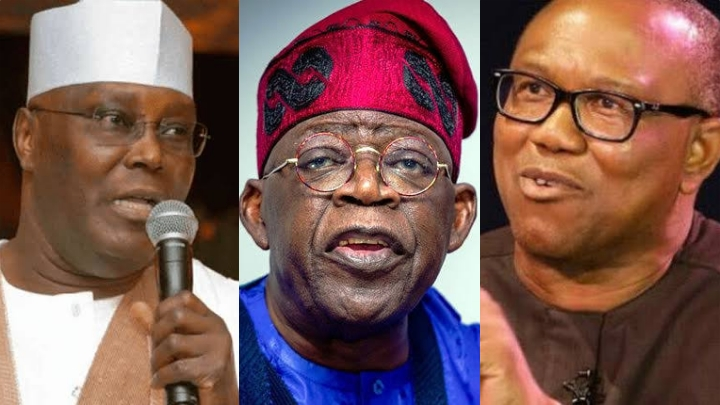
How can you rate the frontline presidential candidates – President Bola Tinubu (APC); Atiku Abubakar (ADC); Peter Obi (NDC); Seyi Makinde (APM); Sowore (AAC)?
Rating of political candidates lies within the realm of biased personal opinion. Facts or reality could be laid aside in favour of one’s political candidate. President Bola Ahmed Tinubu is the incumbent president. He is the candidate to beat. Atiku Abubakar is currently under legal issues, whether the Supreme Court could clear him. Peter Obi is a Southern political candidate that could match politically with the incumbent president.
The last two, Seyi Makinde and Sowore add value to the political campaigns and competition.
Opposition parties have cried out over AI generated photographs in the INEC register, which the electoral umpire has admitted. What does this portend for the 2027 election?
Admission requires an act of rectification. If rectification has been done, can it be verified? Even if done, does this mean that INEC should be disbanded? I remember, several people and groups have protested against the appointment of the chairman and some have called for his removal or his resignation.
With this background, could some people who have opposed the appointment of the Chairman influence the AI generated photographs by some mischievous INEC officers? Would the INEC chairman order the AI issue? After all the debates on this matter, should INEC be disbanded?
Mistrust of the 2027 elections could come from many sources. Is this not a national problem? Right now, as it has always been, the battle of the gods of ethnicity, religion and region are raging fiercely. Some have used religion as a source of misgivings. Some have used ethnicity/tribalism as a source, while others have used region. There may be no solution as they are inherently divided. Which answer would satisfy whom? Thus, the mistrust would continue, while continuity would continue. This is our national predicament.
Don’t you think this may be a recipe for anarchy, as losers may not accept the result of the election?
Winning and losing elections is part of the political game. Losers do not readily accept the results. The battle of the courts is open for legal tussle. Anarchy after elections is never a new thing. It is part of political immaturity and the battle of the gods of ethnicity, religion and region. As a Nigerian, I have witnessed these battles often fought after elections. The cure of all of these is when we dethrone the influence of the gods of ethnicity/tribalism, religion and region.