Follow Us on Google

From Adanna Nnamani, Abuja
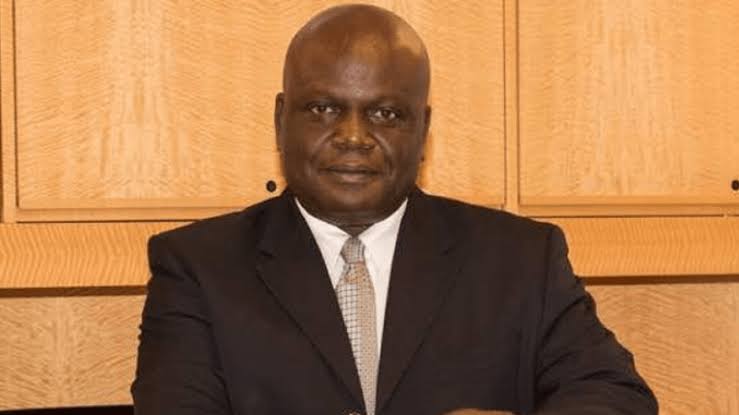
President, African Development Bank (AfDB), Dr. Akinwumi Adesina, is passionate about solving Africa’s food insufficiency nightmare.
To do this, he has designed strategic investment templates to address specific food production challenges in different African countries.
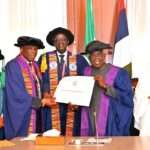
Adesina, who was in Lagos recently to receive the 2024 Obafemi Awolowo Leadership Award, said it was completely unacceptable for Africa to be at the bottom of the value chain despite the enormous human and natural resources at its disposal.
Speaking on Arise Television, the AfDB president revealed that plans were afoot to invest $25 billion in agriculture in the next 10 years to turn around the economic fortunes of the continent.
Below is an excerpt from the engagement.
So, you are in Nigeria as a recipient of the Obafemi Awolowo Leadership Prize by the Obafemi Awolowo Leadership Foundation, which celebrates leadership excellence and legacy. What does this award mean to you?
Well, first and foremost, I must say, I am tremendously humbled by the award and also all the great things that the Chukwuemeka Anyaoku and the selection committee had to say about me. Personally, I am also following some great leaders. You have Professor Wole Soyinka, Afe Babalola and so on and so forth. It is humbling to have to be in that category. But this means a lot to me. I have by God’s grace, won a lot of global awards, but this is the most personal for me. Personal because it is named after the person who gave many of us opportunities to be able to go to school. Without late Pa Awolowo actually doing free education in the western region in those days when I was born, maybe I would not have been able to have education and maybe you would not be here interviewing me today. And that is because I think it is an award that speaks to the importance of leadership, public-facing, people-centric, welfarist policies and how that can change opportunities for people. So, this is an award that is actually, not just like a home award for me, but also an award that brings me back in history and reminds me of what I need to continue to do to improve the lives of people.
Indeed, it is nice to see that you mentioned Obafemi Awolowo. He is clearly a leadership inspiration. Do you have any other leadership inspirations?
There are so many leaders that I can refer to, but I am not going to try and do that. What I try to do is to learn what the secrets of leaders are and what makes them effective leaders and I ask myself in my own leadership journey, what are some of the things that are unique to me? First, I do not think leadership is really about your head. You have your brain to think about what you have to do but effectively, impactful leaders mostly do that from their heart.
Secondly, I really value the importance of public accountability in leadership. At the end of the day, you have been given all these huge opportunities to change and transform the lives of people. And so, I think leaders do not have the luxury of resting. They have to constantly push themselves in the eyes of people because they put their lives and their livelihoods in your hands.
The last thing I guess, when it comes to leadership for me, is I really think that leaders should always bring the future faster into the present.
It has been almost 10 years now leading one of Africa’s biggest multilateral institutions, and it is fair to say every leadership journey has its ups and downs and its milestones.
What were some of the big milestones and challenging times and how did you overcome them?
Firstly, when I was elected president of the African Development Bank, I became the first Nigerian in the history of the bank since 1964 to be the president. So, I am actually always very much aware that I am not my own person. I not only represent a whole continent, but also I represent the confidence of 208 million people from my country that actually supported me to be here.
When I was elected, I asked myself a question: what exactly am I going to do? And I told myself that there is nothing more important for me than to be given the responsibility and the resources and the confidence of our shareholders to go and transform the lives of the continent of my birth. And so, it is not just a not a job. As far as I am concerned, it is a mission and a responsibility that I had this continent to do that and so I started off by actually having a clear vision of exactly how I wanted to see Africa. One, I don’t accept poverty as normal. I think we have to end poverty in Africa and so I said, look, five key things we are going to do is one: light up and power Africa.
Give Africa 100% access to electricity, feed Africa. I believe that if you cannot feed yourself, you cannot develop with pride. And, therefore, you have to feed your people. Nutritious people, productive people are key to industrializing Africa.
Again, I do not accept that Africa has to be at the bottom of the value chain in anything that we have a natural comparative advantage in. And so how do you turn that into real assets for yourself competitively and globally? That is very important. Also, to integrate Africa with 54 countries with a population of 1.4 billion people, we must be able to industrialize and not get stuck at the bottom of value chains and use that market size to grow ourselves.
And finally, the fifth one is to improve the quality of life of the people of Africa and there, you have to improve the skills, education for young people in particular. I am trying to make sure financial systems work for young people and in particular, women, because I am a very pro-women person all through my career.
Also the importance of water and sanitation and also making sure that people have top quality healthcare services.
So, those are the things that I set out to do. And it was kind of fun in the beginning because people said, Oh, high five! But in fact, it was a very powerful thing my team and I and the board of directors drove.
There was an external assessment download of those high fives by the United Nations Development Programme. You know what they found? They said, if Africa achieved those five fives, Africa will have achieved 90% of the Sustainable Development Goals globally. And they would have achieved 90% of the agenda 2063 successfully of our Heads of States. This is the Africa we want. So, we are relentless in making sure that we push for this.
In fact, we just developed a new 10-year strategy for the bank and we are trying to think of many things that we could do. We went back to the countries and guess what they told us just continue to do the high fives” because they have an impact on us, in our countries. And in the last eight years now that I have been president of the bank, those high fives have impacted on the lives of 400 million people.
So, as a leader, I think it is the most exciting part but there are two challenges that you have to think about in trying to do that.
One, of course, is you are going to have a great idea, big ambition, but they say money answers all things. So, if you do not have the money to do it, it is just a dream.
And so the first thing that I had to do was to, very early in my term, seek the support of our shareholders. We have great shareholders. We have 81 shareholders of the bank. 54 of them are from Africa and 27 of them from outside of Africa to increase the capital of the bank. And it was not a walk in the park because no president of the bank ever since 1964 has tried to do anything like that in their first term. But I knew that if we did not have the resources, we could not really transform Africa faster. So, at the end of the day, the shareholders agreed and they increased the capital of the bank, from $93 billion to $208 billion, increasing it with about $150 billion, the largest capital ever in the history of the bank.
And so I am very satisfied with that and the other one, of course, is we have quite a number of low-income countries. There are 37 of them that cannot access what we call the commercial part of the bank, which is the one I just explained to you.
So, we have something called the African Development Fund. And so we do it every two years, we replenish it and so on. Again, by the confidence of our shareholders, we had 16 replenishments in 2022. We were able to raise this donor money, grant money. We were able to raise $8.9 billion, which again was the largest ever raised in terms of replenishment for the African Development Fund, since it was established in 1973.
So those are the things that I felt were very important to do.
But you were mentioning the issue of challenges. There is nothing you do that does not have challenges. I think the courage to continue to pursue what you believe in, not being selfish, being focused on people and being driven and which are the things that I really like to do. And we continue to to do those things and I am delighted that despite challenges that Africa faced with COVID-19, challenges that Africa face in terms of food and all that, we have been able to collectively, (I would not say just the African Development Bank but with the countries and also with other partners), been able to keep Africa’s good precedence.
There was a time you were the Minister of Agriculture in Nigeria and from a leadership perspective, how does that compare to leadership of a multilateral institution?
Well, I think that being a Minister prepared me for the global assignment that I have today. And some of the things that I did as a Minister are exactly what I am replicating at the bigger scale of the continent, which is when I was Minister, I was relentless. I was very sharply focused. I felt that my responsibility was not just to fly the flag of Nigeria, but to make sure that the results are impactful in the lives of people. So, I held myself and my team. I had a fantastic team when I was Minister of Agriculture. I am a results-driven person. I think leadership must be all about accountability. You do not have the luxury of time. You have the responsibility of execution, delivery and impact at stake. So, that was what we did, but now being head of African Development Bank, Africa’s premier financial institution, and by the way, the only triple A financial institution rated by global credit agencies in Africa, well, that means I have got to work with 54 African countries. I have to work with 27 non-African countries. So, your ability to listen, your ability to respect people, your ability to manage diversity, your ability to compromise on what needs to be compromised while not losing track of your vision, and sometimes your ability to even get people that may have different views to coalesce around what you think is the right vision if you actually do believe in what you are doing. So, it is several times much more complicated than that. I did not have to raise money when I was a Minister. It was a budget allocation. Now, I have got to raise a lot of money, but it gives me great satisfaction, because I would constantly tell my staff and colleagues at the bank that our role as we sit there in the boardrooms every time and we are looking at proposals for countries and private sector, is that the poor people or the people that we generally, represent, are not in this boardroom but they are not statistics. Therefore, if you strain your ears enough you must be able to hear what their feelings are and you must make sure that when you are making decisions, you have to fast-track things.
There is no reason why what people should have should always be in the future. It has to be much earlier and so it is a much complicated and much complex set of challenges that you have to deal with. But, I enjoy it because, as I told you, it is not just a job, it is a mission for me and I remember when I was re-elected for a second term, I was so happy because I got real support of course from former President Buhari. He stood behind me, despite the challenges I was facing at that particular time. But I was re-elected. I got 100 percent of all the African votes of all the African shareholders and 100 percent of all the votes of the non-African shareholders.
You see, in the African Development Bank, we probably have the most competitive election in the world for any position and I mean that because you have to win what we call a double majority. That is, you have to win the African votes, then you have to win the non-African votes and so that is a show of confidence in your leadership on that. And by God’s grace, I won 100 percent of both sides, which is the first time that it has ever happened in the history of the bank since 1964. So, I think at the end of the day, what I am saying is that your bank is only as strong as your shareholders, and you are only as effective as the trust and confidence that people put into you. So, I always value trust. I have to manage trust. But I have to deliver on the trust because that is most important. That is why I am there.
And you know, sometimes in the course of leadership, you also have to make difficult decisions.
Looking at some of the statistics around food insecurity, it is fair to say agriculture is your first professional line, you have a PhD in agricultural economics. In 2017, you were awarded the World Food Prize. A year before that the Food and Agricultural Organization had put out a statistic saying there were about 224 million people around the world who are under-nourished. Fast forward seven years later, there are about 224 million people who are undernourished. And so the question in my mind is, are there development interventions for development financing, especially around food security? Then, factor in the complication of climate change, are those interventions working, including the ones that the AfDB is going to take?
Yes, absolutely! I think they are working. There is still quite some journey and ways to go. But you know, when I was minister here, what I pushed forward, which was very successful, was that agriculture is not a way of life. Agriculture is a business because 70% of the population live in the rural areas. So, if they are ever going to change their lives and trajectories of their kids, attain good houses and health and everything else, you have got to make agriculture a very wealthy sector, where they can get jobs, they can do many things. And that is what I did as Minister of Agriculture and it worked. But when I got to the African Development Bank, the first I had central bank governors and ministers of finance understand is that, you know, it is something when you have got inflation and of course, we all know that in macroeconomics, it is pretty straightforward in terms of tightening money supply, raising interest rates, people say boom and all that. Yes. But the fact is that in many African countries, the majority of African countries is that if you look at a consumer price index 65% to 70% or 75% of that is the price of food. So, if I am trying to manage it, from just the monetary policy side, you can not succeed. You therefore, have to have a structural approach to that and so I am very big on making sure we can drive the price of food down so that is why at the African Development Bank, when I became President, I put top priority on food and agriculture. And we are investing over a 10-year period, $25 billion into agriculture.
And let me tell you some of the things that are really working with regard to that. First is in agriculture, you have to have high performing technologies to raise the yields of farmers to produce more and make more money and lower the cost of production. So, I set up something with the approval of our board called Technologies for African Agricultural Transformation. I am not going to go into all the details, but basically what it does is taking high-performing technologies and putting them in the hands of hundreds of millions of farmers because, for me, I always tell my staff, I do not do Mickey Mouse stuff. If we are going to solve a problem, solve it at a scale of 10s and hundreds.
Are we talking about smallholder farmers?
Smallholder farmers, medium-scale farmers, but largely 80% of them are smallholder farmers. And in the last five years, that platform has delivered high yielding technologies for 13 million farmers across many African countries. I give an example of Ethiopia. In Ethiopia, we supported them to have access to heat tolerant wheat varieties. Wheat is a temperate crop, but in a context of climate change, you are able to get technologies that can grow your wheat in a tropical environment. I was talking to the Prime Minister Abiy of Ethiopia and we encouraged him to adopt our strategy.
So, in 2018, they started with 5,000 hectares. You know how much they grew from those varieties? 2.1 million hectares. Ethiopia became self-sufficient in wheat in three years.
This year, Ethiopia became a net exporter of wheat. And so, I am convinced that since Africa has 65% of all the arable land left uncultivated in the world, that has to be the source of wealth for us. Oil is important, gas is important, do not get me wrong. Nobody drinks oil and nobody drinks gas, but everybody eats food all the time around the world. And so that is why at the bank, we went further.
I was actually quite scared when the war in Ukraine started with Russia because it just actually was quite eye opening because I did not realize that Africa was dependent on Russia and Ukraine for most of the wheat and most of the maize. So, the prices just went up globally. Food price indices went up globally. So, I said to myself, no, this cannot continue to happen. So, I remember I was asked to give a testimony in front of the US Senate Committee on Foreign Relations and I said, I do not believe that the only way we can solve this problem is by Africa going with bowls in hand and begging for food. No way. But the way to solve it is to put seeds in those bowls and Africa proceeds and plants those seeds and produce yourself because no development will thrive without you being able to feed yourself.
And so what the board of our bank did was (I went to them with my staff and asked for a $1.5 billion facility). It was an emergency food production facility to help Africa to produce a massive amount of food of wheat, rice and maize and guess what? Today we are supporting 20 million farmers in more than 34 countries that are producing 38 million metric tons of food and why is that important? The different amount of food that we were going to lose from Ukraine and Russia was 30 million metric tons. So, we are going to produce 8 million metric tons more than that. Now, with that confidence and seeing how the countries reacted, I felt encouraged to now go to our leaders and say let us do more. And so I got together with President Macky Sall of Senegal who was then the Chairman of the African Union and said, “Mr President, let us go all the way because short term is short term, structural long term is what is most important. So, we decided to have what we called the feed Africa Summit which we had last year in Dakar. It was mind blowing. We had 34 heads of states and governments that showed up physically. President Buhari was there at the time. We had the president of Ireland who was there, the First Lady from Ireland who was there for the four days of the meeting. Here are the things that really excited me about it. First, this was not a summit where heads of states read speeches. No. In fact, I said we are not going to have speeches. We will speak from your heart about what needs to change and the responsibility and the leadership and our heads of state have to take on and they were amazing.
We organized them into investment boardrooms. We put investors, we put the private sector, we put multilateral financial institutions, everybody into a room and said: “what is the plan for your country to be fully self sufficient in three years? Sovereignty in food? And we put that plan together and while we were putting that plan together, I remember one of the sessions and the president of, I think it was Sierra Leone, President Julius Bio, it was 3 0 clock- 3:30 or there about, they had not eaten. So, I said Mr. President, you just finished a panel, how about you guys go have lunch. But we also have the option of going into the boardrooms, because all the investors are there, which one would you choose? He said no, we are going to go into the boardrooms and figure out how to feed our people and we give up our lunch. President Maky Sall had a state dinner for these presidents. He did not get tickets. Why? The Presidents, many of them were in those investment boardroom till 11 PM. So, tell me, which meeting have you ever seen in Africa that happens like that? So, that tells me that our leaders understand the importance of developing, but developing with pride. Though, your neighbour may love you to death, but it is not the job of your neighbour to feed your kids. And so you got to be able to do that. So, I am very proud of that and within 72 hours of that meeting, we had raised globally $30 billion to implement those things. And within six weeks of that summit, globally, we had worked to raise $72 billion to implement them.