Follow Us on Google
From Obinna Odogwu, Awka
Health professionals from the Federal Ministry of Health, Abuja and their counterparts in Anambra State gathered in Awka, the state capital, recently to deliberate on the best ways to tackle maternal and neonatal mortality in the state, and the country at large.
The event was a five-day workshop on Maternal and Neonatal Mortality Reduction Innovation Initiative (MAMII); a federal government-led initiative aimed at reducing maternal and neonatal mortality rates in Nigeria.
For those five days, they were brainstorming on issues on the subject matter, engaging in fieldwork, sharing ideas, looking at challenges and proffering what they considered to be solutions to the problems.
The workshop, which kicked off at San Antonio Blu Hotel, Awka, took them round to a few other locations before ending up at Anaocha Local Government Area secretariat in Neni community.
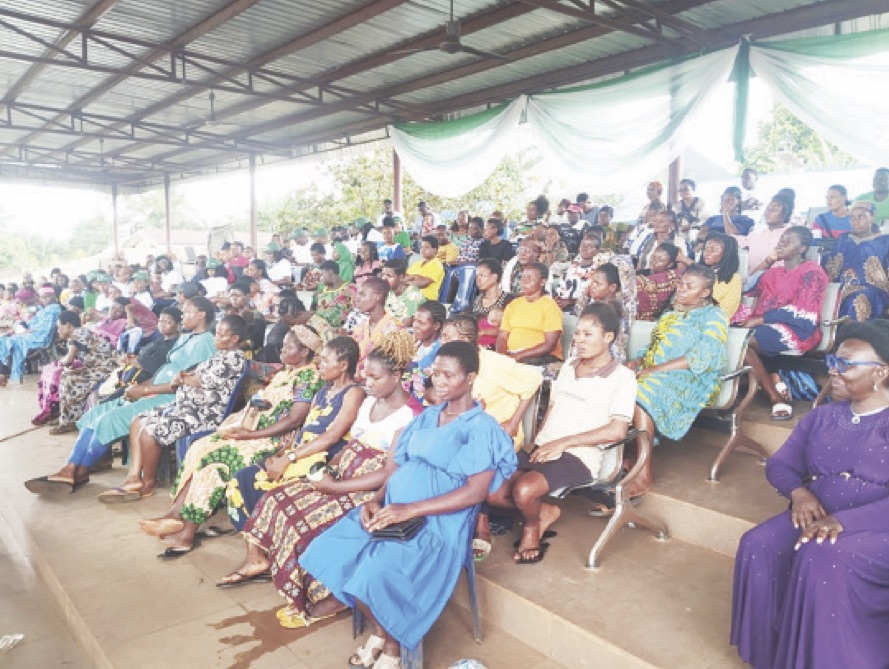
Also at the event were traditional rulers, community and religious leaders, members of non-governmental organisations, government officials, and other stakeholders who were there to contribute to the debates.
The Desk Officer, Sector Wide Approach (SWAp) on the MAMII project, Dr. Obianuju Okoye, said that MAMII seeks to introduce innovative solutions to address the underlying causes of maternal and neonatal deaths, focusing on areas such as access to quality healthcare and provision of timely medical interventions.
She said that the Coordinating Minister for Health and Social Welfare, Prof. Ali Pate, had directed that the programme should be localised in communities with high maternal and neonatal mortalities in the country.
“The minister has directed us to conduct a deep dive into contextual drivers of maternal and neonatal mortality in the communities, explore opportunities therein and identify gaps to address the issue.
“He also directed that we should work with the community and all relevant stakeholders to design context-specific solutions to holistically address issues and fill the identified gaps using the Sector Wide Approach (SWAp) Principles”, she explained.
Okoye said that there were LGAs which had been identified as priority locations with high maternal mortality, and that due to inadequate access to healthcare, especially in rural areas, many women face challenges in receiving proper care during pregnancy, delivery, and postpartum.
“The MAMII initiative will target these LGAs, focusing on improving health infrastructure, community awareness, and access to quality maternal and neonatal health services”, she added.
Okoye said that the aforementioned stakeholders were invited to the event to assist the health professionals in developing a comprehensive implementation plan for MAMII.
“The focus will be on creating actionable strategies that address the specific challenges faced in the state and outline the roles of various partners and stakeholders”, she explained.
She pointed out that the expected outcomes of the workshop were to develop a clear and strategic plan for rolling out MAMII in the state.
On MAMII’s implementation framework, Okoye said that the team would identify underserved regions and deploy mobile health clinics there, improve transportation networks to health facilities, and ensure the presence of skilled birth attendants in rural areas.
“There will also be capacity building for healthcare professionals in the latest maternal and neonatal care practices and ensuring continuous professional development to address new health challenges.
“We’ll explore the use of mobile health technologies, telemedicine and digital health platforms to reach remote communities and provide critical information on maternal and neonatal health”, she narrated.
The Sector Wide Approach Desk Officer further said that community leaders and volunteers would be empowered to educate women and families on safe childbirth practices, prenatal care, and postpartum support.
“We’ll use data to track the progress of MAMII initiatives and ensure informed decision making”, she added.
Commissioner for Health in the state, Dr Afam Obidike, commended the federal government for coming up with the initiative, saying that the programme came just in time.
He said that at the state level, the Prof. Chukwuma Soludo-led administration was working hard to transform the health sector and provide quality healthcare services to the people.
Obidike disclosed that in an effort to ensure that patients got the best care, he established blood banks in the three senatorial zones in the state to ensure availability whenever the need arises.
The commissioner told a story of a woman whose life was saved because blood was available in the hospital where she was rushed to when she had a health issue.
“When we were establishing a blood bank in Umueri General Hospital, we never knew that this woman would benefit from that”, he revealed.
“We did this because of the mortality review we did when we assumed office. When we came on board, we wanted to know about child and maternal mortality; this death, where is it? So, one of the indicators was haemorrhage.
“Maternal mortality review is done to help improve the living. And we established the blood bank in Umueri General Hospital. We established one per region. It is supposed to be a hub that will be serving people in the region.
“We established another one at Ekwulobia and another one at Enugwu-Ukwu. Anytime I go there, I just jokingly enter Enugwu-Ukwu and ask questions about blood banks. Where is your blood bank? How much blood do you have?
“When it will be needed, nobody will know and you may be the person they need the blood on, to give. I just raised this issue to discuss the major causes of maternal mortality with regards to access to hospital”, he added.
The Executive Secretary/Chief Executive Officer of the Anambra State Primary Healthcare Development Agency, Mrs Chisom Uchem, said that the activation of MAMII in the state would open doors for improved healthcare services across the state.
“In the short form, these are strategies and interventions that will see to it that a woman from conception throughout her pregnancy to labour and after labour, that all the untoward effects that occur are mitigated; are actually brought to zero”, she stated.
Uchem, a pharmacist, said that available data show that 172 local government areas in Nigeria contribute to the burden of neonatal and maternal mortality in the country.
“MAMII seeks to reduce burden, improve quality healthcare for mother and the child, and of course, promote community participation”, she explained.
The Executive Secretary said that during the five-day workshop, the health professionals went to the field and interacted with pregnant women, had focus group discussions on ways to expose the challenges that cause women to die while they are pregnant, during delivery and after, and then looked at all the indices from where they made some discoveries.
“We have discovered what may have been the issue that brought about these mortalities in two LGAs in Anambra, namely: Onitsha South and Idemmili South”, she stated.
Uchem said that the federal government was supporting efforts to ensure that pregnant women in the state would enjoy improved healthcare services.
“So, we have put them together and the government of Nigeria is supporting, reaching a point of care. Somebody who wants to go to the hospital but doesn’t have a transport fare, there is a provision for the person to get to the Primary Healthcare Centre.
“Or maybe she has passed the level of PHC, the person will be referred to a general hospital. And like that, like that. So, there’s an upscale from first level to second level to third level”, she said.
Uchem threw more light on the blood banks established in some hospitals in the state, saying that the idea was to ensure availability of blood at all times.
“And if there are blood bank issues, there are blood banks located in the General Hospital, Ekwulobia; General Hospital, Umueri and General Hospital, Enugwu-Ukwu. So, they are centrally located in all the three senatorial zones.
“So, that will help anyone who needs blood to get it from across the state. So, a lot of things are going on; plus health insurance and education and a lot of activities that will make a woman conceive, have comfort from conception to delivery and after the delivery and to make sure that her child is safe.
Uchem said that the state governor, Prof. Chukwuma Soludo, had declared free healthcare services for pregnant women in the state.
“On the 4th of September 2024 at General Hospital, Nnobi, the governor declared from that day, free antenatal, free delivery, plus if the woman is booked for caesarean section, that also would be done free of charge.
“We have had over 640 caesarean sections from last year till now and over 168,000 babies born without mortalities, without issues.
“So, you see, the government is doing its own beat using telemedicine, employing more skilled and trained health workers and all of the things that will enable women to have their children”, she said.
Speaking on the plan of the state government concerning the transportation of pregnant women during emergencies, Uchem said that the government established what it calls Rural Emergency Management Transport System to take care of such matters.
“Every ward in Anambra State has identified three Keke NAPEP riders; Keke riders because they live within the communities. If a woman is in labour and the officer in charge won’t be able to handle that process, she would call the numbers. There are three of them. So, there’s no way the three of them won’t go at a time.
“So, any of them who picks the call first, and of course, as the woman is being carried off to the general hospital, the doctors are put on call through the telemedicine platform, telling them that a woman is coming.
“They will pre-initiate what is wrong with the woman so that the doctors will start preparing before she even arrives, the doctor is already aware that she is coming and on standby waiting for her to come.
“So, it is in all the PHCs in Anambra State; three Keke riders who are very responsible and articulate and already identified across all the PHCs in the state”, Uchem narrated.