Follow Us on Google

From Uchenna Inya, Abakaliki
Cervical cancer has remained a major public health concern in Nigeria, ranking as the second most common cancer among women and the second most frequent cause of cancer death among women between 15 and 44 years.
Over 50.3 million women in the country between these ages and older are at risk of developing cervical cancer.
Approximately 12,075 to 15,000 new cases are diagnosed each year. Around 10,000 women die from the disease annually in the country.
The age-standardized incidence rate is about 18.4 per 100,000 women, which is notably higher than the global average. Roughly 90% of cases are diagnosed at late stages (Stage 3 or Stage 4), drastically reducing survival rates.
Screening rates of the disease have remained critically low, with estimates showing that only about 10% to 14% of eligible women (ages 25 to 49) have ever been screened.
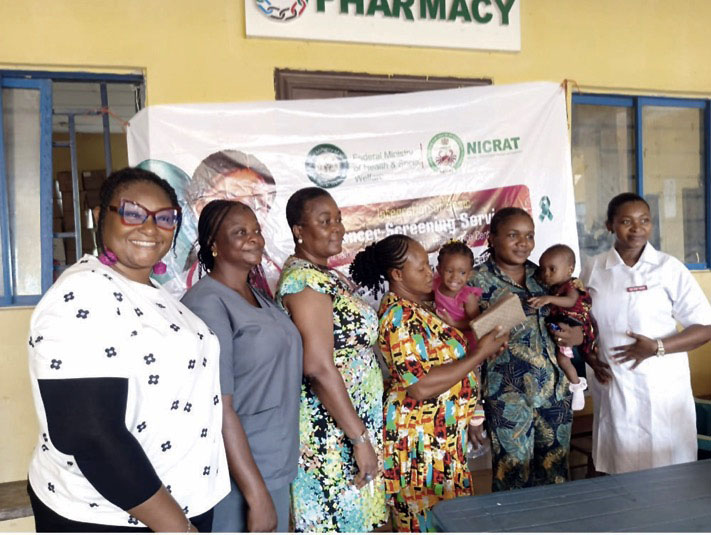
In Ebonyi State, over 200 women recently benefited from free cervical cancer screening organized by the National Institute for Cancer Research and Treatment (NICRAT).
The initiative was implemented by the institute in collaboration with the Federal Ministry of Health and Social Welfare and the National Task Force on Cervical Cancer Elimination.
Mrs. Ibele Chinanye, one of the beneficiaries of the free screening, appreciated the institute for the gesture. She lamented that many women can’t afford money for screening to know their status regarding the disease owing to their poor living conditions: “I’m so happy because, without this free cancer screening, I cannot afford to go to the hospital to do it. So, I give God the glory because I’m one of the luckiest women today. I thank God for that.
“I really, really appreciate it. I’m thanking the people and I’m pleading that they should put in more time so that more women will benefit from it. Many of us are not here for one reason or the other. Some of us are in their mensuration period, so they can’t do it.”
Another beneficiary of the free screening, Oroke Modesta, called for sustenance of the free screening to enable women who cannot afford the cost of the screening to be screened.
She described cervical cancer as a disease that can be treated, if detected on time and urged the institute to increase the number of women for free screening to enable many to benefit from the gesture.
Speaking during the exercise, the Ebonyi State Commissioner for Health, Moses Ekuma, described cervical cancer as a preventable and treatable disease, if detected early, saying the state was committed to reducing cancer-related deaths among its residents. He urged women to take advantage of the free screening and pledged the state government’s support for the programme.
He called for an increase in the number of beneficiaries from the initial 200 to 2,000 women and directed healthcare workers to educate and encourage eligible women to undergo screening during visits to primary healthcare facilities.
“Cervical cancer, likewise breast cancer, even prostate cancer for men are one of those things that I’m interested in reducing to the barest minimum in Ebonyi State because one good thing about it is that it can be prevented.
“And also, if detected early enough, it can be treated. So it’s curable, if detected early enough. And we don’t have any reason why things like cervical cancer should kill our women and the cause of this particular cancer is known. So, we know the cause and what we can prevent should not kill our people
“Some of you that are within the state might have known. We’ve organized cervical cancer screening many times since the outset of this administration. Also, even prostate cancer screening and breast cancer screening.
“But as I told you, there is no way we should allow something that is preventable to continue to gain our land. So, we are also going to assist by making this information spread to all the women and clients of the state because we want our women to come and participate in the screening”, he said.
He urged health workers to ensure they counsel every woman to go for cervical cancer screening to know their status.
Team leader of the NICRAT NISCAN programme in Ebonyi State, Dr. Ifeyinwa Okeke, said the exercise was the second phase of the initiative, following the first phase in December 2025, which focused on breast cancer screening and awareness.
She explained that the current phase involved training healthcare workers from three primary healthcare centres to conduct HPV DNA tests, the World Health Organisation-approved method for cervical cancer screening, while strengthening data collection, referral systems and integration of cancer prevention services into family planning clinics.
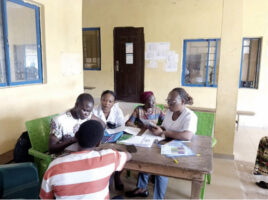
According to her, the screening was conducted with the TrueNAT machine provided by NICRAT, while eligible women were registered and assigned unique identification numbers before their samples were collected for laboratory testing.
She added that the exercise was a pilot programme and the awareness campaign would be extended through community mobilizers and the media.
Okeke disclosed that, in the first phase, more than 10,000 women were screened for breast cancer through clinical breast examinations, with four women identified with abnormalities and referred to the Alex Ekwueme Federal Teaching Hospital Abakaliki (AE-FETHA) for further evaluation.
Also, Musa Segun Terere, Senior Scientific Officer at NICRAT, who represented the Director-General, Professor Usman Malami, said the institute was working to expand access to early cancer detection, screening and coordinated treatment across the country.
He explained that the NISCAN initiative, which means National Initiative for Cancer Early Detection, Screening and Coordinated Access to Network Care, was designed to ensure that people who test positive for cancer-related abnormalities are linked to appropriate health facilities for further evaluation and treatment.
Terere added that NICRAT would provide additional equipment, including a thermal ablation machine and a colposcope, to support the management of women identified with precancerous cervical lesions, while those requiring advanced care would be referred to tertiary hospitals.