Follow Us on Google

By Philip Nwosu
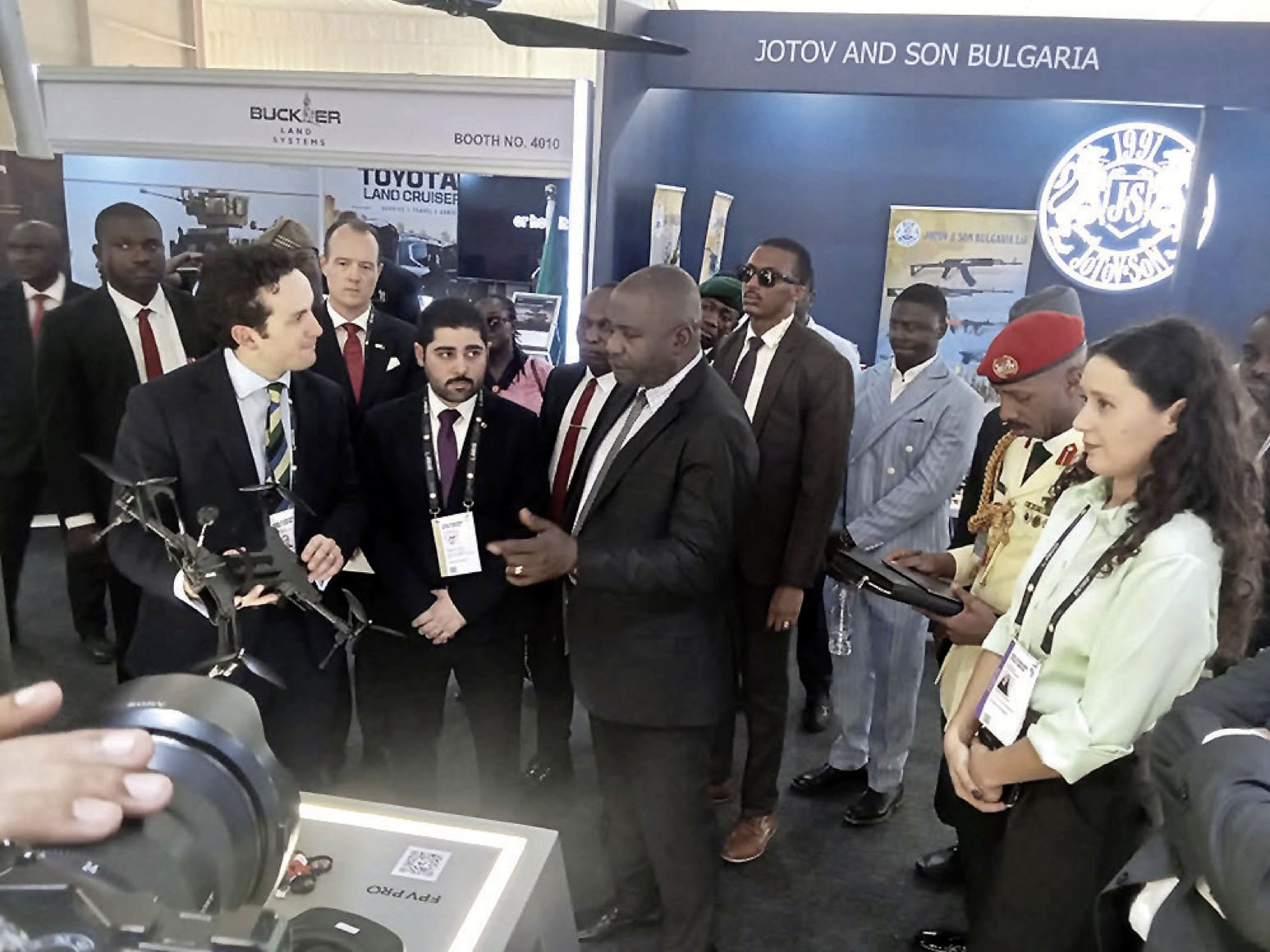
When defence industry leaders, military commanders, policymakers and technology developers from different parts of the world converged on Eko Atlantic City, Lagos, for the maiden Africa International Defence Exhibition (AFRIDEX) 2026, the gathering represented more than an opportunity to display military hardware and emerging technologies.
For Nigeria, it was an opportunity to articulate a long-standing ambition: building a defence industry capable of producing military equipment, developing indigenous technologies and providing sustainable solutions to the country’s security challenges.
Held from October 26 to 29, 2026, the exhibition brought together international defence manufacturers, government representatives, military delegations and security technology companies to explore investment, industrial partnerships and technological cooperation.
Organised by dmg events in partnership with the Defence Industries Corporation of Nigeria (DICON), AFRIDEX attracted attention to Nigeria’s position as a potential centre for defence manufacturing and technology development in Africa.
At the heart of the exhibition was a fundamental question: Can Nigeria move beyond being a major importer of military equipment to becoming a significant producer and supplier of defence technologies?
The exhibition provided a platform for stakeholders to begin addressing that question through discussions on indigenous manufacturing, technology transfer, research and development, local capacity building and international cooperation.
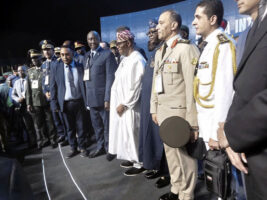
Representing President Bola Tinubu at the opening ceremony, Senate President Godswill Akpabio challenged African governments and defence industry stakeholders to embrace indigenous production and strengthen cooperation in addressing the continent’s security challenges.
His message reflected the growing recognition that Africa’s security problems require more than the acquisition of sophisticated military equipment.
For Nigeria, the development of a sustainable defence industry is increasingly linked to its ability to respond independently to security threats, maintain military platforms and develop technologies suited to its operational environment.

Akpabio stressed the importance of technology and knowledge transfer, skills development, local maintenance capacity and stronger institutions, noting that partnerships with foreign manufacturers should contribute to building domestic capabilities rather than perpetuating dependence on imported equipment.
The message resonated with the exhibition’s central objective of connecting African security requirements with global technological expertise and investment opportunities.
Nigeria’s Minister of Defence, General Christopher Musa (retd.), also underscored the country’s investment potential, pointing to its population, landmass and strategic position as advantages for defence manufacturing and industrial development.
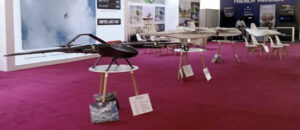
The exhibition’s scope extended beyond conventional military hardware to emerging areas such as artificial intelligence, autonomous systems, cybersecurity, space technology, surveillance and electronic warfare.
These technologies have become increasingly important in modern warfare, where the effectiveness of military operations depends not only on the number of weapons available but also on intelligence, information processing, precision and the ability to detect and neutralise threats.
One of the major institutions under the spotlight was the Defence Industries Corporation of Nigeria, which is expected to play a central role in translating the country’s defence industrial ambitions into practical results.
With Nigeria confronting insurgency, terrorism, banditry, maritime crimes and other security threats, the need for a reliable domestic defence manufacturing base has become increasingly important.
The objective is not necessarily to eliminate international defence partnerships but to ensure that such relationships strengthen Nigeria’s capacity to manufacture, maintain and eventually develop its own military equipment.
AFRIDEX therefore provided DICON with an opportunity to engage international manufacturers and explore areas of cooperation that could expand its production capabilities.
The Director-General of DICON, Major General Babatunde Ibrahim Alaya, described the maiden exhibition as a major success, citing the participation of defence chiefs, ministers, senior government officials and international companies.
However, the more significant task lies beyond the exhibition itself.
DICON’s Public Relations Officer, Maria Sambo, subsequently disclosed that the corporation was working towards translating the engagements into investment opportunities, industrial partnerships, technology transfer and local production initiatives.
She emphasised that the real value of the exhibition would be measured by practical outcomes capable of strengthening Nigeria’s domestic defence manufacturing capacity.
Among the international companies attracting attention at the exhibition was Qatar’s Barzan Holdings, which used the platform to showcase its defence technologies and explore opportunities for deeper cooperation with Nigeria.
Engineer Thamer Al Emadi, Regional General Manager for Africa at Barzan Holdings and Managing Director of DICON-SUR, described Nigeria as an important partner in the company’s African engagement.
He explained that DICON-SUR was established as a joint venture involving Qatar’s Ministry of Defence and Nigeria’s Defence Industries Corporation.
According to him, the partnership represents an opportunity to develop a stronger defence industrial relationship between both countries.
Barzan Holdings has capabilities covering small arms, ammunition, unmanned aerial vehicles, surveillance technologies, command-and-control systems and counter-drone solutions.
Al Emadi disclosed that the company was exploring potential business opportunities with Nigeria’s military services, including the Nigerian Army, Navy and Air Force.
He also indicated that the company had received requirements from Nigeria’s Ministry of Defence and was examining technological solutions that could address the country’s operational needs.
Other News
However, he made an important distinction between selling military equipment and establishing a sustainable defence partnership.
“We are not coming here to sell. We are coming here to cooperate,” he said.
The distinction is significant for Nigeria, whose defence industrial development requires access not only to finished products but also to technical expertise, manufacturing processes, maintenance capabilities and technology transfer.
Although no specific equipment procurement contract was announced during the engagement, the discussions highlighted the potential for Qatar-Nigeria cooperation to expand through DICON-SUR and other industrial arrangements.
Another significant development from AFRIDEX was the signing of a Memorandum of Understanding between Turkish defence technology company Havelsan and DICON.
The agreement established a framework for potential cooperation in command, control, communications, computers, intelligence, surveillance and reconnaissance systems, simulation and training technologies, unmanned and autonomous systems, information and communication technologies, integrated security solutions and cybersecurity.
The agreement followed discussions at the Türkiye-Nigeria industrial cooperation panel, where participants examined joint development, manufacturing, investment, technology transfer and skills development.
The development reflects Nigeria’s increasing interest in partnerships that can provide access to advanced defence technologies while strengthening indigenous technical capabilities.
However, the MoU represents a framework for exploring cooperation rather than a confirmed procurement contract. Its ultimate significance will depend on the projects, investments and technical arrangements that emerge from subsequent engagements.
AFRIDEX also provided an opportunity for Nigeria to demonstrate some of its existing security capabilities, particularly in maritime surveillance and the protection of its territorial waters.
The Deep Blue Project, Nigeria’s integrated maritime security initiative, featured demonstrations that highlighted the role of technology and trained personnel in maritime security operations.
Kaki Habila, a C4I consultant with HLSI, which operates the Deep Blue Project, described the demonstrations as successful, noting that they illustrated how technology, when supported by trained personnel and technical partners, could improve operational effectiveness.
The demonstrations attracted interest from visitors who wanted to understand how Nigeria had deployed technology to address maritime security challenges.
The presentation was particularly relevant given the security and economic importance of the Gulf of Guinea, where piracy, illegal activities, maritime trafficking and other criminal networks pose challenges to regional stability and commerce.
The message from the demonstrations was that acquiring equipment alone does not guarantee security. Effective deployment, integration, training, intelligence and coordination are equally important.
For Nigeria, the experience also reinforces the need to develop local expertise capable of operating and maintaining sophisticated security systems.
The exhibition’s international character was reflected in the participation of companies and delegations from different countries, including Türkiye, Qatar, Estonia and India.
Estonian defence companies, for instance, explored opportunities to introduce their intelligence and information-fusion technologies to African markets.
Villiko Nurmoja, Chief Executive Officer of Estonia’s SENSUSQ, said the company had secured two strong business leads and several other potential opportunities during the exhibition.
Indian defence company Airbornics Defence & Space Limited also described its participation positively, disclosing that it had engaged with DICON and Nigerian defence industry stakeholders.
The company also signed a memorandum of understanding with Nigus Industries, providing a framework for further engagement in Nigeria.
These developments suggest that AFRIDEX succeeded in creating opportunities for international companies to explore the Nigerian defence market while giving local manufacturers access to potential technical and commercial partners.
For Nigeria, the challenge will be ensuring that such engagements translate into investments, production facilities, employment opportunities and the development of local technical expertise.
Experts say that the most important lesson from AFRIDEX 2026 is that Nigeria’s defence industrial ambition cannot be achieved through exhibitions and diplomatic engagements alone.
They insist that Nigeria must build an ecosystem that supports research, innovation, manufacturing, technical training, quality assurance and sustainable investment.
They also said that the country must also develop a system that encourages collaboration between DICON, private Nigerian defence manufacturers, universities, research institutions and international technology companies.
Equally important is the need to ensure that foreign partnerships include clearly defined arrangements for technology transfer, local participation, maintenance and the gradual development of indigenous production capabilities.
The changing character of warfare makes this requirement even more urgent.
The increasing use of drones, autonomous platforms, artificial intelligence, cyber capabilities and advanced surveillance systems means that countries that cannot develop or maintain relevant technologies risk becoming excessively dependent on external suppliers.
For Nigeria, the implications extend beyond military procurement to national security, economic development and technological sovereignty.
The country’s large domestic market, strategic location and growing security requirements provide opportunities for investment in defence manufacturing. But investors will also require predictable policies, infrastructure, skilled manpower and sustained government commitment.
As the inaugural AFRIDEX ended on October 29, the exhibition left behind a series of engagements, proposed partnerships, technology discussions and agreements that could influence the direction of Nigeria’s defence industry.
The DICON-Havelsan MoU, the existing DICON-SUR partnership involving Qatar’s Barzan Holdings, the engagement with Nigus Industries and the interest expressed by other international manufacturers provide indications of the opportunities available.
Yet, these developments should not be mistaken for an immediate transformation of Nigeria’s defence manufacturing capacity. Most of the engagements still require further negotiations, investment decisions, technical assessments and implementation.
The responsibility now rests on the Federal Government, DICON and other stakeholders to ensure that the momentum generated by the exhibition is sustained.
For the Nigerian Armed Forces, the ultimate benefit should be improved access to reliable equipment, stronger maintenance capabilities, better technology and solutions tailored to the country’s security environment.
For the domestic defence industry, the expectation is that international cooperation will create opportunities to manufacture more equipment locally, develop skilled manpower and establish Nigeria as a credible contributor to Africa’s defence technology market.
AFRIDEX 2026 may have been the first edition, but its significance will ultimately be determined by what follows.
The exhibition has opened the door to a new level of international engagement. Whether Nigeria can turn that opportunity into a sustainable indigenous defence industry will depend on the willingness to move from agreements to implementation, from technology demonstrations to local production, and from ambition to measurable results.