Follow Us on Google
Omodele Adigun
The Federal Government has been advised to take a cue from China by accessing local financial markets for funds to solve the economic challenges.
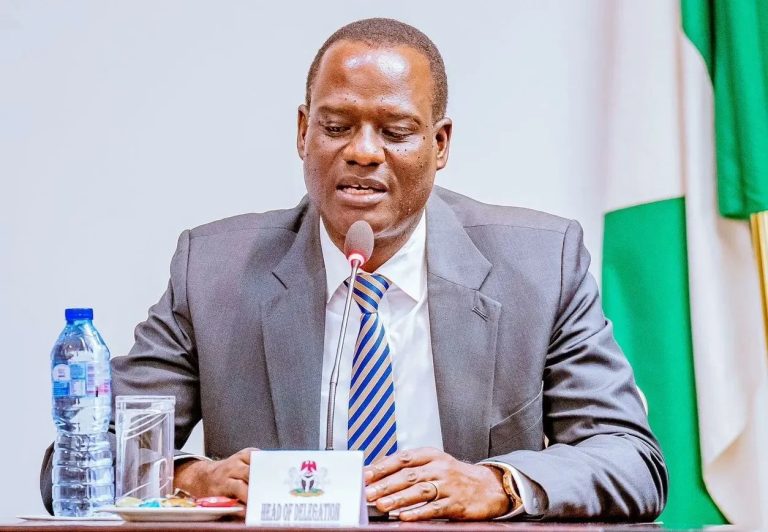
According to Mr Mobolaji Balogun, CEO of Capelhill Denham, “all the solutions to Nigeria’s economic problems are available inside our financial markets, including debt financing to execute capital projects.”
Balogun, who gave the advice at an inaugural session of Concrete Ideas Webinar series, with the theme: Approaches to Rapidly Upscaling Nigeria’s Economic Infrastructure, recently organised by Lafarge Africa Plc, lamented that only about 27 per cent of the Federal budget this year is going into capital expenditure (CAPEX).
He explained that, incisively, that is only about one-quarter per cent of the CAPEX budget.
He added: “In other words, two per cent of GDP or less than two per cent is actually going into infrastructure development. When we recognise that, then the starting point is that we are going to attract private capital. I think one of the mistakes that we think about is to think of private capital as only Public-Private Partnership (PPP). PPP is only one aspect of private capital that is available for development of infrastructure. For example, what China does today, which we do not understand and which we should be interested in, is a process of what we call Corporatisation. It is what city state like Hong Kong and Singapore have done for a quite a number of years. When they take a critical infrastructure asset, they put it into a corporate well governed structure like a company such as GT Bank or Zenith Bank or Lafarge or Dangote. They start, first and foremost, by issuing bonds in the capital market. And you begin essentially the process of utilising market. All of the solutions to Nigeria’s economic problems are available inside of our financial markets. A debt (financing) that Minister Fashola talked about, that appears not to exist, actually does exist and substantially in our capital market. You start issuing debt; when the next process is out, when those projects get to a point, if they are economically viable projects, that they are generating cashflows sustainably, the government is able to sell down its equities. Take Beijing for example. Beijing has a number of listed entities that are [also] listed in Hong Kong, providing infrastructure in various assets.Beijing Water is a listed company in Hong Kong; a number of Beijing Toll Road companies, the Metropolitan Rails, in other words, the City Rail or the Light Rail is also listed in Hong Kong. Even in the most communist of countries, people are using licensed market solutions.
“Globally today, the assets managers have somewhere around $140 billion of assets under management. About 30 or 35 per cent of that money today is being invested at negative yield.
“That capital is looking for a home. If you took just 0.25 per cent of that number I mentioned, in other words $300million, you would finance all the Sustainable Development Goals (SDGs) for a country like Nigeria. Not not even just Nigeria alone, you would probably substantially change this continent. So what is my message? It is going to require visionary leaders. Babatunde Fashola started it off in Lagos State. If Lagos State basically issued a budget, 70 per cent of his budget was going into capital expenditure, and not into salaries and debt service. If you start off from that premise where we begin to shift the basics, only then can we become an efficient transmission vehicle .”