Follow Us on Google
By Chinenye Anuforo
The United Nations Children’s Fund (UNICEF) has announced plans to register at least 545,000 children under the age of one in Lagos State by the end of 2025, as part of a national drive to ensure every Nigerian child has a recognized legal identity.
At a Birth Registration Multi-Sector Dialogue held in Lagos on Monday, Celine Lafoucriere, Chief of UNICEF’s Lagos Field Office, described birth registration as a fundamental right and the first step in protecting a child’s access to basic services such as healthcare, education, and social welfare.
“Children without birth registration are invisible. They cannot access schools, hospitals, or social protection services,” Lafoucriere said. “Lagos has made remarkable progress, with about 94 percent of children under five already registered. However, our mission is to reach every child especially those in low-income and hard-to-reach areas.”
She explained that Lagos is among 15 priority states in UNICEF’s national plan to register 3.69 million children by 2025. The state, she noted, received over six million birth certificates from the National Population Commission (NPC) last month, reflecting its capacity and readiness to scale up registration efforts.
“The groundwork is complete trainings across all 20 local government areas, supply of tablets, and activation of registration points. Lagos is prepared, but real success depends on all of us,” Lafoucriere stressed.
She called on ministries, traditional rulers, civil society, and the media to integrate birth registration into routine services and community structures. “Health facilities should include registration during immunisation and maternal care. Schools must require birth certificates at enrolment. Traditional and community leaders must promote registration as a civic duty, while the media keeps the conversation alive,” she urged.
According to her, the dialogue would produce a Lagos State Birth Registration Action Plan, a framework to boost community engagement, strengthen demand, and pilot linkages between birth registration, immunisation, and child welfare services.
“We are not here to make speeches but commitments. We want actionable steps that will be tracked and implemented. The resources are available, and the will is right here in this room,” she said.
Other News
Lafoucriere appealed for collective ownership of the initiative: “Let’s leave here with commitments, not intentions, so that every child in Lagos is counted, protected, and given the identity they deserve.”
Olayinka Oladunjoye, Federal Commissioner of the NPC in Lagos, also underscored the importance of accurate data in national planning.
“Without registration, there’s no identity, and without identity, we can’t plan effectively,” she said. “Reliable data helps determine how many schools, hospitals, or social facilities are needed in each area. Birth registration is not just a record—it’s the foundation for development planning.”
Oladunjoye commended UNICEF, the Association of Local Governments of Nigeria (ALGON), and civil society partners for their consistent support, describing the campaign as a shared responsibility. “All our children must be registered and issued certificates. We thank UNICEF for its partnership and steadfast commitment,” she added.
Despite notable progress, participants highlighted persisting challenges such as limited awareness, unofficial charges, and fake birth certificates in some communities.
Mrs. Olajumoke Otitoloju, Welfare Officer of the Child Protection Network (CPN) and Project Coordinator at Yanuora Children’s Care Foundation, lamented that some parents in informal settlements still face exploitation from unregistered agents.
“Birth registration is the first legal recognition of a child’s existence, yet many remain unregistered. Some families are charged illegal fees or given fake documents, discouraging genuine participation,” she said.
She recommended placing registration desks in primary schools and making certificates a requirement for school admission and naming ceremonies. “If schools and faith-based institutions demand it, parents will see it as a duty, not an option. It’s not just about giving a name, it’s about giving an identity,” Otitoloju added.
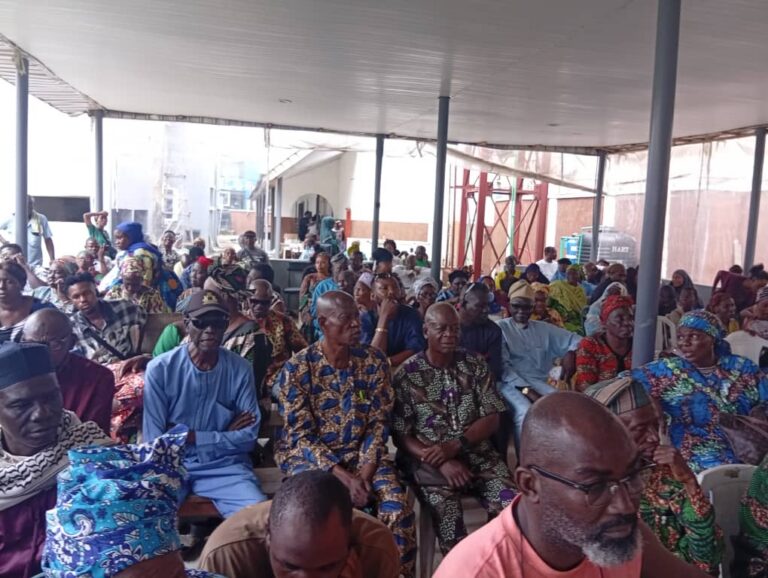
The dialogue, themed “Every Child Counts: Accelerating Birth Registration in Lagos State,” brought together representatives from the Ministries of Health, Education, Youth and Social Development, ALGON, civil society organisations, and the media. Participants agreed to co-develop a State Action Plan aimed at strengthening coordination, increasing awareness, and ensuring universal birth registration coverage across Lagos by the end of the year.