Follow Us on Google
• How frustration, greed, harsh economy killed business that once lifted thousands from despair
By Olakunle Olafioye
There was a time when the arrival of Uber in Nigeria felt less like the entry of another multinational corporation and more like the opening of a door. For thousands of Nigerians trapped in an unforgiving economy, that door led somewhere — away from unemployment, poorly paid jobs and, in some cases, the crushing temptation to leave the country in search of greener pastures.

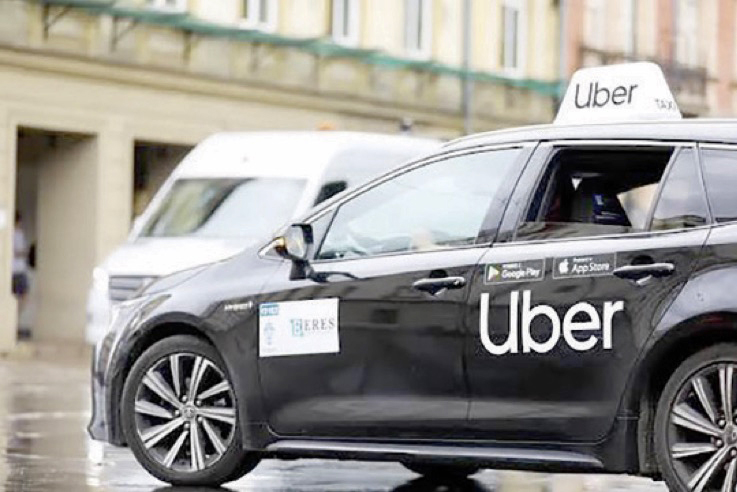
Uber Technologies, Inc., according to Wikipedia, is an American multinational transportation company that provides ride-hailing services, courier services, food delivery and freight transport, with headquarters in San Francisco, California. It operates in about 70 countries and 15,000 cities worldwide.
For some, Uber became a second chance. For others, it was an opportunity to become entrepreneurs without having to establish a conventional business. A car, a smartphone and a willingness to work could suddenly become the ingredients for a livelihood.
For Innocent Odikpo, it was almost literally a rescue. A graduate of Economics and a young father of two at the time, Odikpo was teaching in a private school for less than N30,000 a month. Despite his university degree, he could barely support his young family and had to rely on stipends from his retired parents.
Then Uber came. “My parents were trying to help me out of the country then. Plans were on to trade off whatever could be sold to finance my travelling when one of my uncles alerted me to the opportunities in e-hailing rides with Uber,” he recalled.
“So the whole travelling plan was shelved and diverted into buying a car for Uber. That marked the turning point for me as I transited from being dependent to a fully financially independent adult.”
Odikpo remembers those early days with something approaching disbelief. In one particular week, he said, he earned almost three times his monthly salary as a teacher. The experience was so transformative that he vowed never again to consider conventional salaried employment.
That was the magic of Uber in its early Nigerian years. It was not merely moving people from Point A to Point B; it was moving people from despair to hope.
Door that eventually slammed shut
Twelve years after Uber entered Lagos in 2014, however, that door has slammed shut. On September 2, 2026, Uber ended its ride-hailing operations in Nigeria, bringing its over a decade Nigerian journey to an abrupt end. The company simultaneously announced its exit from Uganda, while stressing that the decision was limited to those markets and did not represent a withdrawal from the rest of Africa.
For a company that had become part of the daily rhythm of Nigerian cities, its disappearance from the ride-hailing landscape was jarring. Almost immediately, the question began to dominate public conversation: what killed Uber in Nigeria?
Uber itself offered no detailed public breakdown of the factors behind the decision beyond saying it followed a review of its evolving business priorities and investment focus.
But Nigerians have their own theories. Some blame the brutal economy. Others point to the company’s business model. Some accuse drivers of greed and passengers of complicity. Others blame fierce competition, regulation and what they describe as the failure of the company to adapt sufficiently to Nigerian realities. Perhaps the most uncomfortable conclusion is that everybody may have played a part.
From lifeline to battleground
When Uber arrived in Lagos, Nigeria’s ride-hailing market was still largely an uncharted territory. The proposition was simple but revolutionary: download an app, request a ride, see information about the driver, know approximately what you would pay and travel without the uncertainty associated with many traditional taxi arrangements.
For drivers, the attraction was even greater. A person with a reasonably good vehicle could suddenly become part of a structured transportation economy. A graduate without a job could earn an income. A civil servant could supplement a salary. A struggling family could acquire another source of livelihood. A young Nigerian contemplating emigration could postpone the journey.
Uber became a ladder. But ladders are useful only when there is somewhere to climb. Gradually, Nigeria’s economic crisis began eating away at the foundation of the business. Drivers began to groan as fuel prices climbed and spare parts became more expensive; the naira weakened and inflation eroded household incomes, with vehicle maintenance becoming increasingly punishing.
Yet passengers remained unwilling — or increasingly unable — to pay fares high enough to compensate drivers adequately. That created the central contradiction that would haunt the ride-hailing industry: Drivers wanted higher fares, while passengers wanted cheaper rides. Something had to give.
When drivers began to revolt
By March 2026, the frustration had become impossible to ignore. Ride-hailing drivers in Lagos embarked on a three-day strike involving Uber, Bolt, inDrive and LagRide. The Amalgamated Union of App-Based Transporters of Nigeria (AUATON) said drivers were struggling with rising fuel prices, inflation, vehicle maintenance and other living expenses while fare structures had failed to keep pace with economic realities.
The union demanded fare reviews, reduced commissions and guaranteed minimum trip fares. It was an important warning. The people powering the platforms were effectively telling the companies that the economics no longer worked.
Some drivers complained that they were spending long hours behind the wheel without earning enough to maintain the vehicles beneath them. Some abandoned the platforms. Others cancelled trips they considered unprofitable. And some found a more controversial solution: taking passengers offline.
Instead of completing transactions through the app, drivers and passengers would sometimes agree to conduct business privately, cutting out the platform and, crucially, its commission. For some, it was simply survival. For others, it was greed. But collectively, it was beginning to undermine the very ecosystem on which everyone depended.
The warning never heeded
In October 2023, a netizen, Olajide Abiola, warned against the growing practice of drivers taking passengers offline. His argument was simple: drivers who sabotaged the platforms from which they earned their livelihoods could eventually destroy the ecosystem itself. “How do you want to blame Uber and Bolt for the sabotage acts of these drivers?” he asked.
Three years later, that warning has acquired an uncomfortable resonance. Did greed kill Uber? For some Nigerians, the answer is an emphatic yes. A businessman, Mr. Buraimo Taiwo, believes the industry suffered from a toxic combination of greed and failure to adapt to local realities. “There is mechanism to check the offline. There is limit to cancellation with penalties and blockage. Greed killed Uber in Nigeria. Non-adaptability to local milieu killed Uber in Nigeria,” he argued.
His assessment touches the raw nerve of the ride-hailing model: trust. The platform needs passengers to trust drivers. Drivers need to trust the platform. The company needs both sides to play by the rules. But once drivers manipulate the system, passengers seek ways around the fare structure and the platforms respond with stricter controls, the relationship begins to deteriorate.
“We began to witness situations when passengers would cancel trips because a driver asked for extra money. Drivers, on the other hand, would cancel trips because the fares were too low. A passenger may ask to go offline to avoid the platform’s fare and the driver will concede because he wants to avoid commission. Everybody started to think he was solving his immediate problem. Collectively, however, they were destroying the business. That is the paradox,” Taiwo submitted.
But are drivers really the villains?
Not everyone agrees that drivers should carry the blame. Mrs Mabel Adikpe, a business analyst, strongly rejects the temptation to make drivers the villains of the story. According to her, there are “arrays of reasons businesses fail”, and blaming everything on drivers would be dangerously simplistic.
Her argument deserves consideration. Uber is a multinational corporation operating across numerous markets. Its Nigerian experience cannot be divorced entirely from the company’s broader global strategy. Indeed, Uber announced its Nigerian and Ugandan exits around the same period it unveiled plans to cut about 3,300 corporate jobs globally as part of a restructuring and strategic shift. Uber has also withdrawn from other African markets in recent years.
Other News
For Adikpe, therefore, the claim that Nigerian drivers alone “killed Uber” is too convenient. There were larger forces at work. “Nigeria’s population is huge. But are Nigerians rich enough to sustain businesses?” She asked.
“Investors frequently point to Nigeria’s population of more than 200 million as evidence of a huge market. But population is not the same as purchasing power. A country can have hundreds of millions of people and still be a difficult consumer market if large numbers of households cannot consistently afford the goods and services being offered. That is precisely the dilemma exposed by ride-hailing in Nigeria,” she explained.
The Naira problem
An economist, Mrs Morayo Atitebi believes another dimension is often overlooked. For a multinational corporation, revenue earned in naira ultimately forms part of a global financial calculation. “When the local currency loses substantial value against major international currencies, a business can generate impressive naira revenues while seeing the international value of those revenues deteriorate,” she explained.
“At the same time, many of its costs rise. The result is a business caught between local affordability and global profitability.
“That may be one of the most important pieces of the Uber puzzle. Passengers cannot afford significantly higher fares. Drivers cannot survive on the existing fares. Yet the company must also generate returns. The result is an economic triangle in which every side feels cheated,” Atitebi said.
Competition closes in
Uber also lost the advantage it once enjoyed. When it entered Nigeria, competition was relatively limited. But the landscape changed dramatically. Bolt and inDrive emerged as formidable alternatives, while traditional modes of transportation — taxis, danfos, BRT buses, tricycles and motorcycles — continued to serve millions of commuters.
As competition intensified, drivers and passengers gained alternatives. Mr Ebiyibo Joshua noted that Uber entered Nigeria as a dominant player, but competitors gave both drivers and passengers other options. “The company’s problem was therefore not simply that drivers were unhappy. Passengers were unhappy too and competitors were waiting to take advantage of the dissatisfaction on either side. That is a nightmare for any marketplace,” he concluded.
When those that built platform felt abandoned
The bitterness among some drivers became even more evident following Uber’s exit. AUATON accused Uber of operating an exploitative business model and failing to respect workers’ rights and collective bargaining.
The union’s national spokesperson, Jossy Adaraniwon, described the company’s exit as irresponsible and alleged that Uber failed to give drivers adequate prior notice. He also accused the company of anti-union practices and claimed that it sought to frustrate the union’s registration and collective bargaining efforts.
Uber’s position on those allegations would be critical to a fuller understanding of the dispute, but the accusations themselves reveal the depth of resentment among some of the people who powered its Nigerian operation. Adaraniwon also warned Bolt and inDrive that they could face similar resistance if they continued what the union described as exploitative practices.
The message is unmistakable: The drivers no longer want to be treated as the weakest link in the chain.
‘Govt not innocent’
The Nigerian government and its agencies cannot be spectators in this story. Regulation can make or break an industry.
Some analysts expressed the view that the relationship between e-hailing operators and government authorities has periodically been tense, with airport operations becoming one of the flashpoints.
Restrictions around e-hailing pickups at airports, including those associated with the Federal Airports Authority of Nigeria, generated controversy. Uber, however, said its eventual exit was unrelated to the FAAN directive.
Notwithstanding, analysts believe the broader lesson remains important. According to them, investors need predictable rules and need to know that what is permitted today will not suddenly become impossible tomorrow. Drivers and passengers, on the other hand, need protection while companies need regulation. But regulation, they however suggest, must not become strangulation.
The Nigerian factor
Perhaps the most provocative dimension of the Uber debate is the suggestion that Nigerians themselves sometimes contribute to the destruction of the systems they complain about.
A transport business owner, Mr. Adewoyin Quadri took this argument further, suggesting that Nigeria has developed a culture in which some workers pursue immediate personal benefits at the expense of the organisations that provide their livelihoods.
He pointed to indiscipline, corruption, moral bankruptcy and greed as part of Nigeria’s wider economic problems. “There is an uncomfortable truth here: Businesses do not operate in a vacuum. Their cultures are partly shaped by the societies in which they operate. If corruption becomes normal, businesses must spend more money building systems to combat it.
“If customers constantly seek ways around payment systems, businesses invest more in enforcement. If workers exploit loopholes, companies introduce stricter rules. Then workers complain that the companies have become too controlling. The vicious cycle continues.”
But blaming Nigerians alone would be dishonest. Quadri pointed out that it was erroneous to blame the Uber story totally on Nigerians and suggested that it must be balanced. According to him, Nigerians did not invent inflation and drivers did not cause the naira crisis.
“Passengers did not remove fuel subsidies neither did ordinary Nigerians create the country’s infrastructure deficit. Nor did they design the complex regulatory environment in which businesses operate. And Uber itself is not a charity. It is a global corporation whose primary responsibility is to its business and shareholders. Therefore, the argument cannot simply be: Nigerians are greedy; therefore Uber left.”
To him, that would be an oversimplification. The more accurate conclusion is more disturbing: The Uber ecosystem became increasingly unsustainable because too many competing interests were trying to survive inside an economy that was itself becoming increasingly difficult to survive in.
Tragedy of business that once created hope
Perhaps this is what makes Uber’s exit particularly painful. The company was not simply another multinational disappearing from Nigeria. It represented an idea. The idea that technology could create opportunity where traditional employment could not. The idea that a graduate could create his own income stream. The idea that a car could become a small business. The idea that Nigerians could participate in the digital economy without having to leave the country.
For people like Odikpo, Uber was not merely an app. It was an escape route. That is why its exit resonates beyond transportation. It raises a larger question: How many other opportunities are Nigerians losing because the environment that created them has become too hostile to sustain them?
So, who killed Uber?
Perhaps there was no single killer. There was the harsh economy. There was inflation. There was the fuel crisis. There was currency depreciation. There was fierce competition. There were unhappy drivers. There were unhappy passengers. There were allegations of exploitative practices. There were accusations of driver misconduct. There were regulatory complications.
And somewhere in the middle was a business trying to make money from people who increasingly could not afford to pay enough for its service, while those providing the service increasingly could not afford to provide it.
Uber has not offered a detailed public breakdown assigning blame for its Nigerian exit. Its stated explanation was a review of its business priorities and investment focus. But perhaps the greatest lesson lies beyond Uber. A company can survive competition. It can survive regulation. It can survive difficult customers. It can survive difficult workers. What becomes much harder to survive is an entire ecosystem in which everybody is struggling to survive at everyone else’s expense. That is the deeper tragedy of Uber’s Nigerian story.