Follow Us on Google
The new Ohanaeze Ndigbo Worldwide headquarters in Enugu is taking shape as more than an administrative complex. With its amphitheatres, offices, library, art space and memorabilia section, the facility is being designed to combine the present-day functions of the apex Igbo socio-cultural organisation with spaces dedicated to history, culture and identity.
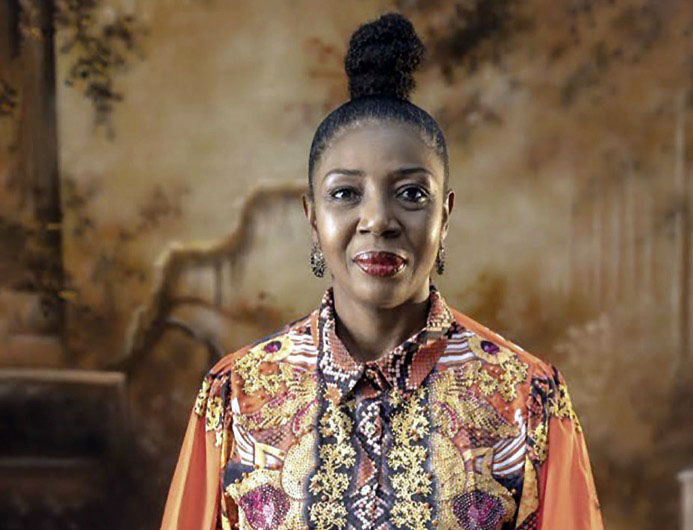
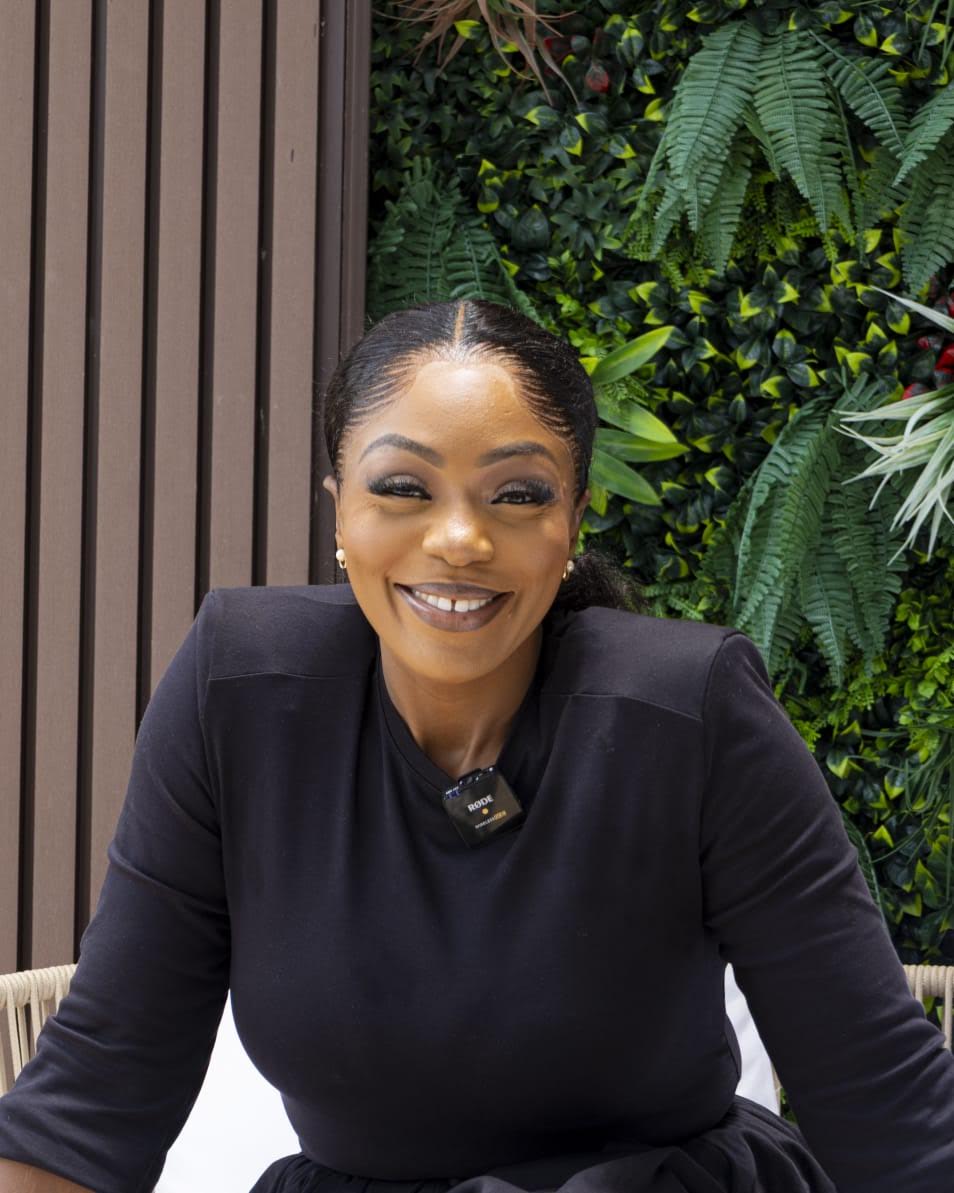
At the centre of the design and construction of the project is Mrs Uloma Rochas-Nwosu, Managing Director of Walsh Blanc, the firm handling the project.
Nwosu is also the Group Managing Director of UL Group, with interests spanning construction, luxury living, hospitality, education, media and other businesses. Walsh Blanc is an integrated spatial design and experiential architecture practice under the UL Group.
Her role in the Ohanaeze project has involved translating the brief from the project’s sponsor, Senator Rochas Okorocha, into a physical structure that combines modern functionality with elements of Igbo history and heritage.
The facility, which was about 85 per cent complete during the recent inspection, features 11 offices, two amphitheatres, ICT facilities, conference rooms, an interactive audiovisual library and a memorabilia section. Seven pillars and other design elements have also been deliberately incorporated to reflect aspects of Igbo identity.
One of the striking aspects of the project is the attempt to preserve the past while creating a new future. Although the major part of the old Ohanaeze secretariat is expected to give way to the new structure, part of the old building will be preserved, with old furniture, flooring, photographs and other historical materials retained.
In this interview, Mrs Uloma Rochas-Nwosu speaks about the inspiration behind the design, the symbolism embedded in the building, preserving the old Ohanaeze secretariat, the role of young people and tourism, the use of locally produced materials, maintenance and her personal motivation for taking on the project.
Q: What inspired the design of this space?
When His Excellency Senator Rochas Okorocha contacted Walsh Blanc and asked us to create this for Ohanaeze Ndigbo, the inspiration came from the idea that the Igbo people needed a place to unite.
His brief was that he wanted us to create something that would tell the story of the Igbo nation. That was where the inspiration came from.
The Igbo are known to be very royal and very proud in a good way, and that inspired the design. We wanted to create something that would give the Igbo people a sense of pride, belonging and beauty.
If you look around, you will see that we played with a lot of lights and crystals. Most Igbo homes you visit carry a bit of a royal theme, so we decided to incorporate that into our design.
Q: Can you take us through some of the elements that would stand out when this place is opened, particularly elements that would connect the past, present and future for generations to come?
One of the things, and it is my favourite place here at Ohanaeze, is the memorabilia, which sits in the basement of this facility.
The idea is to preserve history. You will see a lot of audiovisual setups and artworks that will tell children’s stories, where we play documentaries. We have a lot of screens there, so people can learn about our historical fathers, what makes the Igbo race and all of that.
That is one of my favourite spaces in the Ohanaeze building.
We also have seven pillars and seven lights in the second amphitheatre. This represents the seven Igbo-speaking states.
We have about 11 offices. We have the ICT office, the President-General’s office, the Deputy President-General’s office and conference rooms. These are all set up intentionally to preserve Igbo history.
The building sitting to my left, I was told, had existed for about 150 years. So, we have designed this space in a way that it could hold the next 150 years and tell our children, generations yet unborn, what the Igbo race is all about.
Q: What will happen to the existing old building?
The plan is to demolish the major part of the building, but we intend to keep a part of it for history’s sake.
There is a smaller building that we intend to preserve. We will move some of the old tables and furniture there so that people can still get a sense of what was there and what we are doing now.
We intend to keep that building and build something around it so that it can serve as a museum.
We will also get the old videos and pictures and place them in the memorabilia section, so you get a sense of what it used to be like.
Q: What motivated you personally to take up a project of this magnitude?
That is an interesting question because I put a lot of my heart and soul into it.
It stemmed from the fact that the person who hired Walsh Blanc is also very dear to me and told me the importance and significance of what we were creating. It was supposed to be a place that would unify the Igbo nation.
Once there is a sense of pride, it brings a sense of unity, unity of purpose. That got my attention and I wanted to be a part of that.
I wanted to be part of history in the making, and I am glad that we are finally here.
Q: Looking at the facilities here, there are offices, a library and conference areas. For many people, it may look like a place primarily for meetings and the administration of Ohanaeze. But on a day-to-day basis, what are the things you think could happen here that would make a difference for younger people?
I did a bit of research and found that the former Ohanaeze was a decision-making space where they would hold meetings, so yes, you are right.
But what we did was create more room for experiences.
For instance, it is not just about history; it is about preserving history and redirecting our young ones to understand their roots, where they are from and all that.
We have created those spaces intentionally to guide that.
I imagine that with some of the facilities we have put in place, they could have excursions for young children and students. We also hope that this will become a tourist destination.
Tourism is something people can take advantage of because it has been curated to serve that purpose.
Q: Since you mentioned tourism, how do you see the facility contributing to that?
I think it has the potential to become a tourist destination because it tells a story.
When I got here, I saw the old building and thought that was a way to preserve the past. This is new; this is the future, but that is where we are coming from.
So, I thought it would present as a museum of what this has grown into, because that is the way to measure growth.
Other News
Q: Is there any way the old building can be preserved in such a way that it remains a reference point for people who have sentimental attachment to it?
Yes. Like I said, we have two buildings. There is one sitting right in front of the hall, the multipurpose hall. It is small, but we intend to move some of the old tables and old furniture there.
We will preserve the old floors and other elements and artistically put them together in the smaller building, so you still get a sense of what it was before.
For those who have a sentimental attachment to the old building, once you walk in there, you will feel, ‘This is what it used to be.’
The nostalgic feeling will come back. You are going to remember it for what it was.
But there is also beauty in growing and evolving, and we are very intentional about keeping and preserving history.
Q: Let’s talk about maintenance. This project is still ongoing, but how are you thinking about maintenance culture to ensure that all the effort put into it does not deteriorate after handover?
As far as maintenance culture is concerned, if you notice from our level of finishing, we tried to incorporate a lot of low-maintenance finishes.
For instance, most of our walkways are clad in boards, so you would hardly ever see hand stains. We took that into consideration because it is a public building. We do not expect people to manage it the way they would manage their personal homes.
So, we used a lot of surface coverings such as boards, alcoves, glass and stones.
If you notice, we adorned the entire facade with stones. These are timeless finishes, so we know that with what we have done, there will be little or no need for excessive maintenance.
Obviously, we are still going to leave maintenance instructions with the Ohanaeze team once we hand over, and we hope that they do it justice.
Q: Did you encounter any major challenges while handling a project of this magnitude?
As with any project of this magnitude, there are challenges. But they were not out of the ordinary, and they were not things that we could not overcome and handle.
By God’s grace, I am just excited that we are here.
We are not 100 per cent done, but we are here. So far, I am glad, excited and grateful to God at how it has been received by the President-General of Ohanaeze, His Excellency, the Executive Governor of Enugu, and His Excellency, Senator Rochas.
They are all smiles, and so that is fulfilment for us. At least, we have done something right.
Q: Looking around, most of the things we see here appear foreign. When we talk about made-in-Nigeria products, can you tell us how much of what you have put here is made in Nigeria?
The furniture is made in Nigeria. The couches that you see and the furniture are all made locally.
The artworks are done by our very own people. The artworks that you see at the amphitheatres, we did not import them. They are locals who put those in place.
I would say that a huge percentage of what we have done here is foreign because there are certain things I would love to use, but we have not got to the stage where they are locally produced.
Hopefully, this is supposed to inspire a lot of young people to go into manufacturing, to produce things that we could possibly use to finish projects like this.
What is most important is: can this stand the test of time? Can this stay for the next 150 years? And that is what we have ensured that we are doing.
Q: You said the project is about 85 per cent complete. What should people expect in the final stages?
When you get to the final stages, you are going to see a lot of soft finishing, the arts and things that will begin to speak to people.
The idea is that these walls will speak to you once you come in. You get a sense that you are in the Igbo nation.
There are lots of art pieces that are coming in. For instance, we have a flooring that says, ‘Igbo Kwenu.’
They are all curated to talk to you and tell you the Igbo story.
But you are making me reveal too much. I like surprises. I want people to come and be wowed.
Q: Can you disclose how much it cost to put up this facility?
To be honest, I think it is way above my pay grade to say how much.
But I can tell you that, speaking from the standpoint of what I represent, I know that it took a lot of sacrifice and it needed to be done.
It is interesting that for a race like the Igbo people, we did not have an identity, a place to fall back to.
You have this in the West, you have this in the North, but the Igbo had nothing to be proud of.
That is something I think is most important. It is not in how much it cost, but in the fact that it is standing before us and what it represents for the Igbo people.
Q: You described this as a personal project. What do you hope the project inspires other Igbo people to do?
Absolutely. The idea is that what we have done will hopefully inspire a lot of Igbo people to come and do the same.
This is all very inspiring, and I am really proud and excited to be a part of it.