Follow Us on Google
• Named The Sun Public Service Personality of the Year 2026
From Fred Ezeh, Abuja
Before now, Nigeria’s tertiary education system battled a familiar catalogue of problems, notably, deteriorating infrastructure, inadequate learning facilities, obsolete equipment, limited research capacity and inadequate funding.
The consequences have been visible across many public universities, polytechnics and colleges of education, where students and lecturers have sometimes been forced to learn and teach in environments that fall short of the standards expected of modern institutions.
But in the midst of the challenges, the Tertiary Education Trust Fund (TETFund) is seeking to change the narrative through sustained intervention in infrastructure, research, innovation and academic development.
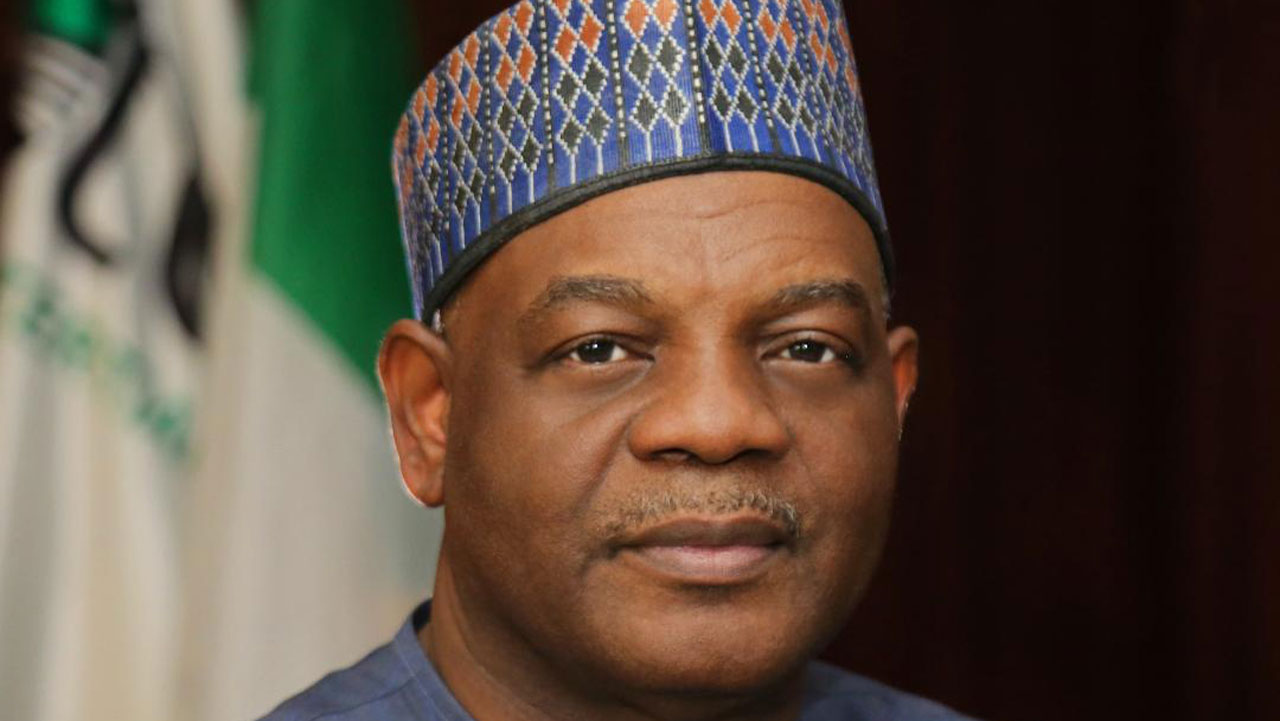
At the centre of that effort is the Executive Secretary of TETFund, Arc. Sonny Echono, whose contribution to public service and tertiary education has earned him recognition as The Sun Public Service Personality of the Year, 2026.
The management of The Sun Newspapers formally presented the letter notifying Echono of the award during a visit to his office in Abuja, ahead of the presentation ceremony scheduled for November.
Receiving the delegation, Echono expressed profound appreciation to the Chairman, Board, Managing Director and Management of The Sun Newspapers for considering him worthy of the recognition.
But beyond the personal honour, he used the occasion to reflect on the larger responsibility of rebuilding Nigeria’s tertiary education system and preparing the country’s young people for the future.
He described the development of young Nigerians as one of the most important responsibilities confronting the country, arguing that human capital represents Nigeria’s most critical resource.
“I am humbled yet grateful that our modest efforts in trying to contribute meaningfully to the preparation of young and future generations of Nigeria, which, in our view, constitutes perhaps the most critical resource we have as a country, is being noticed, acknowledged and rewarded with an award like this,” he said.
For Echono, therefore, the recognition is less about an individual and more about the collective effort to reposition an important sector of the Nigerian economy.
Award as push for greater service
Echono described The Sun Award as a highly coveted national recognition, noting that the annual event attracts considerable attention across the country.
“Everybody knows that The Sun’s Award is usually coveted, and the only drama that comes with it whenever it’s coming up, the whole country is at attention,” he said.
He expressed gratitude for being selected for the 2026 Public Service Personality of the Year award, but said the recognition would not be treated as an endpoint. “Rather, it would serve as motivation to rededicate myself and the TETFund team to national service.
“For really considering us for this major honour, I want to express our depth of gratitude and to assure you that not only will we come in our numbers, but we will also use it as a stimulus to rededicate ourselves to the service of our country,” he said.
He also promised that the qualities and values recognised through the award would continue to guide the organisation and inspire whoever succeeds him in office. The emphasis on continuity was significant.
For an agency whose interventions span hundreds of tertiary institutions, institutional progress cannot depend solely on the tenure of one executive secretary. Sustainable development require systems, standards and values capable of surviving changes in leadership.
Echono acknowledged this, saying the progress being recorded at TETFund was a collective effort built on the heritage inherited from previous administrations.
Rebuilding the foundation of tertiary education
TETFund occupies a strategic position in Nigeria’s tertiary education system. Through its interventions, the agency supports infrastructure development, research, academic staff development, innovation and other programmes aimed at strengthening universities, polytechnics and colleges of education. The scale of the challenge remains enormous.
Nigeria’s rapidly growing population has increased demand for tertiary education, thus placing additional pressure on existing infrastructure and academic resources.
For Echono, the answer cannot simply be the expansion of access. Institutions must also be transformed into environments capable of delivering quality education.
“There’s the need to restore campuses to the standards expected of institutions of learning. On the physical side, we restore our campuses to the standards of learning that they should be. That reflects the broader philosophy behind TETFund’s intervention,” he said.
He insisted that a university cannot be transformed simply by increasing its student population. “Students need functional classrooms, laboratories, libraries, digital facilities and other infrastructure required for effective learning.
“Researchers need properly equipped laboratories and research centres. Academic staff need environments that support teaching, research and innovation. And institutions need infrastructure that can withstand the demands of modern education.
Other News
“The challenge, therefore, is to move from simply having tertiary institutions to having the ones that function effectively and meet contemporary standards,” he explained.
From dilapisated campues to institutions that work
Echono, however, illustrated the transformation he envisages with his recent experience at the National Open University of Nigeria (NOUN).
He recalled that some visitors attending an event at the institution for the first time had arrived with expectations that the campus might be dilapidated and poorly maintained. But their impression changed when they saw the quality of facilities and clean campus environment.
He said the visitors were surprised when they entered one of the halls being used for the event and discovered that it could compare with facilities in institutions elsewhere in the world.
“I was pleased that some of the guests that were there for the first time made positive remarks about the impression they had that our campus was dilapidated. They were surprised coming to a particular hall that we were using for the event; they could see that it could compare to any other institution anywhere. That experience demonstrates why infrastructure remains an important part of the tertiary education transformation agenda.
“Our desire is to create campuses that inspire confidence rather than reinforce the perception that public institutions are necessarily synonymous with decaying infrastructure. But physical transformation is only one component of the bigger picture.
“A new building, modern laboratory or renovated lecture theatre only becomes meaningful when it contributes to better teaching, learning, research and ultimately better graduates. That is why our vision extends beyond the physical environment,” he added.
Preparing graduates for global opportunities
At the heart of Echono’s argument was the belief that infrastructure development must ultimately serve the purpose of human-capital development. “To this end, we also prepare and equip our graduates so that they could compete globally.
“That ambition has become increasingly important as the global economy changes rapidly. Technology, artificial intelligence, digital communication and the internationalisation of employment have altered the skills required of graduates.
“A university degree alone is no longer sufficient to guarantee that a graduate can compete effectively in the labour market. Young Nigerians increasingly need skills that allow them to participate in an economy that is no longer restricted by geographical boundaries.
“For Nigeria, the challenge is particularly important because of the size of its youthful population. The country has millions of young people entering the education system and, eventually, the labour market. Whether that population becomes a productive force capable of driving economic growth will depend significantly on the quality of education, skills and opportunities available to it.
“This explains our emphasis on the preparation of young Nigerians as perhaps the most critical national investment. For TETFund, the objective is therefore not simply to fund projects but to create the conditions under which tertiary institutions can produce graduates, researchers and innovators capable of contributing meaningfully to national development and competing internationally,” he said.
A legacy that must outlive one man
Perhaps the most significant aspect of Echono’s remarks at the meeting was his insistence that the transformation being pursued at TETFund cannot be attributed to one individual.
He said the progress recorded was a collective effort involving the Board, management, staff and other stakeholders.
He also acknowledged that the work was built on the foundation inherited from previous leadership. “I can assure you it’s a collective effort, and it builds on the heritage that we inherited, and with the support of so many actors, we were able to create an environment that is able to play that transformative role in our tertiary education, changing the dynamics, changing our history.
“This underscored an important principle of public-sector reform: lasting transformation that must survive the individuals who initiate or oversee it,” he said.
Echono further stated that the values and qualities for which he was being recognised by the management of The Sun Newspapers should continue to inform and inspire whoever succeeds him to achieve even more. That, perhaps, is the bigger challenge facing TETFund.
“It is one thing to construct buildings and provide equipment; it is another to create institutions and systems capable of sustaining those investments.
“Maintenance, accountability, effective management, research productivity and continued investment in human capacity will determine whether today’s interventions become lasting improvements.
“The ultimate ambition is to create institutions that Nigerians can confidently point to as examples of public institutions that work. It is the reason why we stay awake at night and that we all endeavour to ensure that let there be institutions in this country that people can point to that is working,” he said.
As he prepares to receive The Sun Public Service Personality of the Year, 2026, Echono said he sees the honour not merely as recognition of his work, but as a fresh call to continue the difficult task of rebuilding Nigeria’s tertiary education system.
He said his vision is straightforward: restore the physical environment, strengthen institutions, equip graduates with globally relevant skills and build a culture of excellence capable of surviving changes in leadership.
“For a sector that has endured years of challenges, the real test of that vision will ultimately be whether more Nigerian universities, polytechnics and colleges could become institutions that people can point to, and confidently say: this institution is working,” he said.