Follow Us on Google
By Chinwendu Obienyi
As Nigerians marked the nation’s 62nd birthday on October 1, 2022 with the verse “the labour of our heroes past shall never be in vain” with the National Anthem played across many TV and other broadcast stations at the weekend, there were mixed feelings as to why the country has yet to attain “developed” status at that age.
With the combination of COVID-19 pandemic, inflation, FX scarcity, political crisis as well as a weak macroeconomicenvironment plagueing the country, it was however not surprising that the capital market, recorded mixed fortunes over the past 62 years.
Coincidentally, the Nigerian stock market kicked off the same year the country got its independence, with the founding fathers, signing Memorandum and Articles of Association to establish the then Lagos Stock Exchange (LSE) in 1960.
Those who signed the initial Memorandum and Articles of Association included Sir Odumegwu Ojukwu, Akintola Williams, C.T Bowring and John Holt Investment Company. The Exchange then began operations as a private company limited by shares. But formal trading did not commence until June 5, 1961.
After existing as the LSE for about 17 years, the exchange was renamed Nigerian Stock Exchange (NSE) in December 1977 and re-incorporated as a company limited by guarantee in December 1990.
With just four firms including Inlaks, John Holt, CT Bowering and ICON (Investment Company of Nigeria) as market dealers, its total market volume then was about £250,000, largely made up of government securities.
But sixty two years down the line, that little foundation which has now become a veritable window through which the global business community sees the Nigerian economy and a platform for investment capital inflows, has metamorphosed into a global entity capable of competing with any other elsewhere in the world in terms of its legal structure, trading system, clearing, settlement and delivery system, number of listed companies and securities, corporate governance and in the deployment of Information and Communication Technology (ICT).
Furthermore, the interface between the market and the investor is no longer wrapped in obscure practices but has become open to the light of new trading rules and new trading methods (open-outcry and trader market muscle memory were replaced with keyboards, monitors, charts, research reports, Fibonacci algorithms, candlestick presentations and corporate market engagement, ‘Facts-Behind-the-Figures’).
As at 1984, the All Share Index (ASI) stood at 100 basis points, but last Tuesday’s closing session of 49,475.42 points and N26.69 trillion shows that the market has grown significantly over the years.
Also, total transactions done by domestic investors on the floor of the Nigerian Exchange Limited (NGX) grew by N1.490 trillion as against N273.16 billion recorded by foreign investors in the first seven months of 2022.
Evidently, there have clearly been reforms and initiatives by the apex regulator- The Securities and Exchange Commission (SEC) and Nigerian Exchange Limited (NGX) to help the capital market achieve world class status and compete with its peers.
SEC and NGX reforms
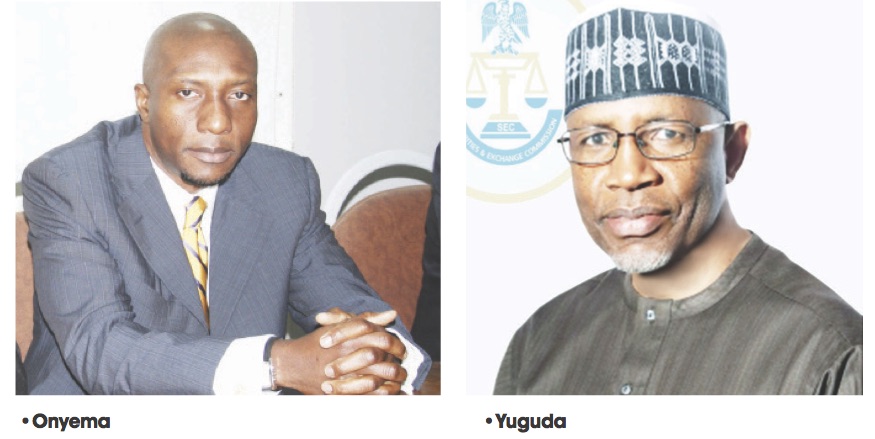
The SEC launched the 10-year Capital Market Masterplan (CMMP) in 2014 with the aim of harnessing the potential of the market to catalyse economic growth and development. Today, the SEC, currently under the administration of Lamido Yuguda, has successfully revised the plan and has now been admitted as the 246th programme and project in the recently approved National Development Plan 2021-2025 (NDP2515033). Consistent with the CMMP, the SEC undertook a raft of initiatives to enhance transparency and boost investor confidence notable among which were the Direct Cash Settlement scheme designed to ensure that investors received money directly whenever securities were sold, the Corporate Governance scorecard for companies listed on the NGX meant to foster good governance practices by public companies, e-dividend to reduce unclaimed dividends as well as the recapitalisation of capital market operators (CMOs) aimed at improving their baseline infrastructure and service delivery.
As a complement, the NGX which became a demutualised entity last year, implemented minimum operating standards for market operators, set up an Investors Protection Fund as well as introduced a Whistle Blower policy. In addition, physical share certificates have been fully converted into electronic form in what is known as dematerialisation of share certificates.
Also, activities in the non-interest capital market space gained traction with the introduction of Sukuk bonds. Indeed, over the last six decades. Despite all of these, the market still remains shallow and without liquidity to fully support Nigeria’s economic priorities.
For example, South Africa with over $1trillion in market capitalisation, represents over 200 per cent of the country’s GDP, the total market capitalisation in Nigeria actually pales into insignificance. Regrettably, the introduction of e-dividend has not helped to reduce the huge unclaimed dividends as expected as the figure currently stands at N177 billion.
Also, it is instructive to note that the first Real Estate Investment Trust (REIT) was registered in Nigeria in 2007. Since then, the country can only boast of 3 REITs namely Skye Shelter fund, Union Homes, and UACN Property Development Corporation (UPDC). Contrast this with the case of South Africa having over 30 REITs notwithstanding the fact that the REIT legislation was passed in that country only in 2013.
Speaking to Daily Sun, market operators believe that the government and the regulators need to put in place measures to enhance the competitiveness of the Nigerian capital market (NCM) in order to unlock its potential.
The Chairman, Issuers and Investors Alternative Dispute Resolution (IIADRI), Moses Igbrude, said the performance of the country’s capital market has somewhat topsy-turvy while adding that despite the progress made over the years, there is a likelihood that a new administration would come in and bring the much more improvement in the market.
“There has been progress at times and there has been retrogressing sometimes. The capital market on the other hand has developed whether we like it or not. The number of companies that were there before when they started, has grown. There are multinationals, Nigerian companies and all of that. The stock exchange which was running on a manual basis has now moved to automation. There was initially a dividend list which was hard copy and now we have an e-dividend. So a lot of things have been introduced into the system and there are different types of business options that are now available in the capital market. These things were not there before as the exchange is now demutualized and its shares have been listed on its platform. This is to say progress has been made very tremendously.
However, there have been challenges which stakeholders, especially the regulators, really need to tackle. We have the issue of delisting, e-dividend has not been reduced, not much of investors’ confidence, insider trading and others. There must be some intrinsic benefits of listing companies on the exchange because there are many companies who have not come to the market for a very long time. Presently, because of the economic situation like scarcity of FX, insecurity, inadequate infrastructure amongst others has made the economy really terrible for companies and so many of them as regards their shares are under-valued. Moving forward, I think there is hope that a new government will come in. It will come with fresh ideas and there is a likelihood for change for the better”, Igbrude said.
For his part, the President, Capital Market Academics of Nigeria, Professor Uche Uwaleke, noted that despite several advancements made in the capital market, the market requires a broadly diversified investor base with significant participation of retail investors.
According to him, this will require a great deal of education efforts including developing financial markets courses not only for secondary schools, as currently being championed by the SEC, but also for tertiary educational institutions.
“Singapore, for example, launched numerous initiatives to reinforce financial literacy in the country both at the undergraduate and graduate levels. Singapore’s universities tailored courses to address the growing needs of the financial sector including through the introduction of relevant graduate programmes by the National University of Singapore. Nigeria can do likewise. The National Universities Commission should encourage Universities to mount graduate programmes in capital market studies.
It is a fact that, like every other sector of the economy, a major challenge the capital market has faced over the years has been dearth of infrastructure and poor ease of doing business in the country generally. Therefore, improvements in these areas will certainly bode well for the nation’s capital market”, Uwaleke said.