Follow Us on Google
From Scholastica Hir, Makurdi; Tony John, Port Harcourt; Noah Ebije, Kaduna; Lucky Ighomuaye, Benin; Laide Raheem, Abeokuta; Okey Sampson, Umuahia and Femi Foranmi, Yenagoa
The House of Representatives, penultimate Friday, altered the 1999 Constitution to create a framework for the decentralisation of policing in the country.

When passed into law, it will empower state governments to set up their own police force.
The Speaker, House of Representatives, Hon. Tajudeen Abbas, said, the need becomes necessary to tackle escalating security challenges in Nigeria.
In this report, some Nigerians suggest how the state police should operate.
State police must mandatorily report to legislature –Prof Simon Ejembi, lecturer; Makurdi
There should be a firm legal mandate on state police that must be truly independent and not subject to any amendments by state governors. The appointment of state commissioner of police should be determined by two thirds majority of House of Assembly and for a fixed tenure of four years.
Funding should be the first line and the Police Service Commission (PSC) should be responsible for their salaries and promotions. There should be a clearly defined protocol for emergencies and they must mandatorily report to the legislature.
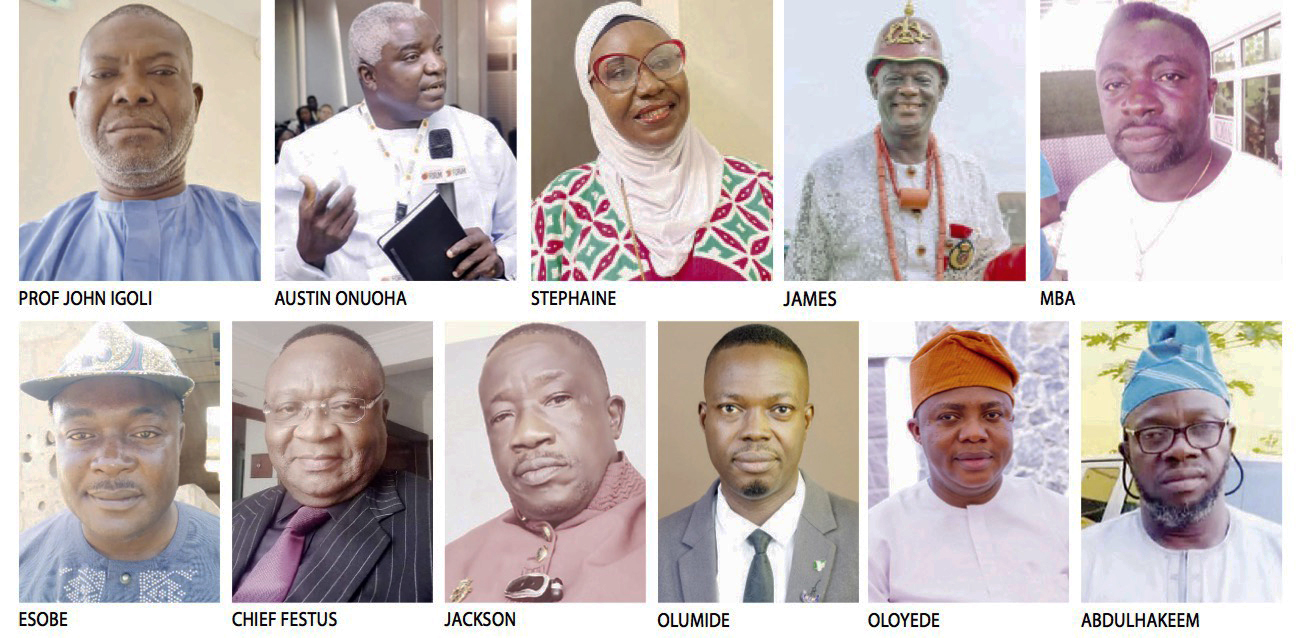
They should be more concerned in protecting their people –Prof John Igoli, lecturer; Makurdi
The concept of state police has been on the burner for a very long time. However, it has been brought to the fore because of the people’s distrust of the police in handling the current state of insecurity in the country. State police should not replace the National Police, but should act only within their stipulated regions. They should cooperate fully with the National police and submit to national directives.
For the sake of indigenous affiliation, they may be more concerned in protecting their people.
State police under govs won’t be better –Austin Onuoha, political analyst; Makurdi
I’m opposed to state police. Think about it, what aspect of our national life has the state taken over and made a success of. Is education better under the state, do we have better road infrastructure, is the judiciary better? Look at how the states conduct local government elections, it’s a shame. So, what is the guarantee that they will make the state police better?
There should be framework on its operations to avoid abuse –Stephaine Ebitari Ekpebulu, lawyer; Yenagoa
If the apparatus of the police is given to the states, there is definitely going to be abuse by the governors. But the question is, would the state police really tackle the rising insecurity in Nigeria? If it will, how? What has the government done with the current Nigeria Police Force that creating a state police would enhance the tackling of security challenges? Honestly, I don’t see any positive side to it.
If, eventually, the bill becomes law, creating the state police, there should be a framework to ensure checks and balances in its operations to avoid abuse.
CP should be appointed by board, not governor –Alabo Nengi James, human rights activist; Yenagoa
I have read the Bill, and I think there are a lot of issues to be discussed before it is passed into law to ensure its seamless operation. Issues that need further deliberation are the composition of the Board, recruitment, and regulation. For the state police to be functional and above partisan interests, the commissioner of police should be appointed by the Board. If it is the Board that appoints the CP, it is better than having the governor do it alone.
Nigeria not ripe for state police –Stanley Mba, broadcaster; Umuahia
I know they are taking a cue from the U.S and other countries in the developed climes, but Nigeria is not ripe for state police. Since our leaders are always implementing any good policy from the wrong angle, this state police would, if care is not taken, worsen the security situation in the country.
However, since the president believes state police should be established, there should be a firm law by the National Assembly that will make it a criminal offence for governors to use state police as vindictive tool to harass and intimidate their political opponents, which may tend to worsen security in the states instead of curbing it.
It shouldn’t be military arm of ruling party in any state –Uche Esobe, businessman; Aba
I’m afraid the country may not be able to contend with what may come out from the establishment of state police if it is not properly handled. Political opponents of state governors are definitely going to pay the price.
Other News
If proper care is not taken, there will always be clashes of interest between federal and state police.
The Federal Government should come up up with measures that will not allow state police to become the military arm of the ruling party in any given state.
There should be strict regulation to ensure it doesn’t transform into monster –Chief Festus Ogwuche, lawyer; Port Harcourt
The idea of the establishment of state police was hatched long ago, but there has been visible reluctance in its implementation. This apparently is informed by the ugly experiences emanating from its abuse in the First Republic, which saw a native police system that assisted in the deterioration of the security situations in parts of the country.
This new enthusiasm for the setting up of state police is a practical response to the worsening insecurity and all the arguments that are put forward for the engagement of a structurally diversified political system to abate the intolerable insecurity that has almost brought the country to its knees.
This surely calls for strict regulatory mechanisms as to ensure that the proposed state policing system does not transform into the monster that the Nigeria Police Force has become all through the years.
State police commission should run it –Jackson Ojo, security expert; Port Harcourt
State police should be run by a state police commission with members appointed jointly by the governor, state legislature, and judiciary and civil society. Recruitment, promotions, and disciplinary actions must go through the commission, not the governor’s office. Funding should come from a dedicated account in the state budget audited yearly by the Auditor-General and State Assembly; so, governors can’t starve or weaponise the budget.
Police reform, total overhauling of system needed, not state policing –Olumide Abiodun, businessman; Ijebu-Ode
Nigeria is not ripe for state policing yet. I advance this position for two major reasons. In the first place, we still struggle with maladministration, political intolerance, and unethical practices. Given this reality, our governors will likely abuse state-controlled police powers for political ends.
Secondly, the welfare of civil and public servants in many states is still in shambles. There is poor remuneration, no leave bonus, and allowances are unpaid, talk less of pensions and retirement packages. If that is the treatment meted out to existing civil servants, will state police officers not suffer the same poor conditions? Are our states financially capable of procuring modern equipment needed to combat rising insecurity? Police reform and a total overhauling of the system is what we need now, not state policing.
States should have police service commissions –Damilare Oloyede, political analyst; Ilaro
The only way state police won’t become governors’ private militias is to build independent oversight from day one. Firstly, recruitment, training, and promotion must be handled by a state police service commission with members drawn from the judiciary, Nigerian Bar Association (NBA), civil society, and traditional councils — not just political appointees.
Secondly, operational funding should be a first-line charge on the Federation Account, not subject to a governor’s whims, so salaries don’t get used as leverage. If a governor wants to deploy officers for anything outside crime-fighting, it should require approval from the state assemblies and the commission.
There should be strict penalties for misuse –Abdulhakeem Adegoke Alawuje, politician; Kaduna
The creation of state police has both potential benefits and possible risks. Therefore, the focus should not only be on whether we have state police, but on how it is structured and regulated.
The recruitment, promotion, discipline, and removal of officers should be overseen by an independent state police service commission rather than being controlled solely by governors. There should also be legislative oversight, judicial review, and strict penalties for any misuse of the police for political purposes.
Federal police should provide guidelines for its operations –Elder Sunday Oibe; chairman, Christians group; Kaduna
Having witnessed the abuse of power by Nigerian politicians even when they are not in control of the federal police, I have my sincere fears over for the creation of state police.
However, if the powers that be go ahead to create state police, I would suggest that the federal police should provide the operational guidelines for their operations so as to safeguard the citizens from being abused and molested by the activities of overzealous state officers that may be appointed by the state governors.
State police service commission should run state police –Dr. Isaac Omo-Ehiabhi Eranga, journalist; Benin
To prevent state governors from converting the state police into personal political tools, I will suggest that the modus operandi must be separated from the operational command of state executive.
There should be an establishment of independent, multi-stakeholder state police service commission, comprising representatives from civil society, the judiciary, and professional bodies to handle appointments, promotions, and discipline, rather than leaving it to the governor’s whims.
State police commissions should be independent –Favour Osaretin Evbuomwan, activist, Benin
On the issues of state policing, in order to prevent abuse by the state governors, the first step of implementation is the decentralisation of state police recruitment and disciplinary procedures including dismissals.
There should also be a constitutional amendment in this regard by the National Assembly, one that mandates an independent state police commission to oversee the affairs of state policing in each state.
This should be drawn from the three arms of government without sole control by the State Executive Council, alongside embedded regulations.