Follow Us on Google
From Isaac Anumihe, Abuja
The Federal Government has observed a significant rise in inflows to the Federation Account in the last three years, saying that the total gross accruals into the account in 2023 and 2024 were N11,930,865,030,521.50 and N21,432,592,362,620.70, respectively, whereas the 10‑month accruals into the same account from January to October 2025 was N23,058,248,707,725.50.
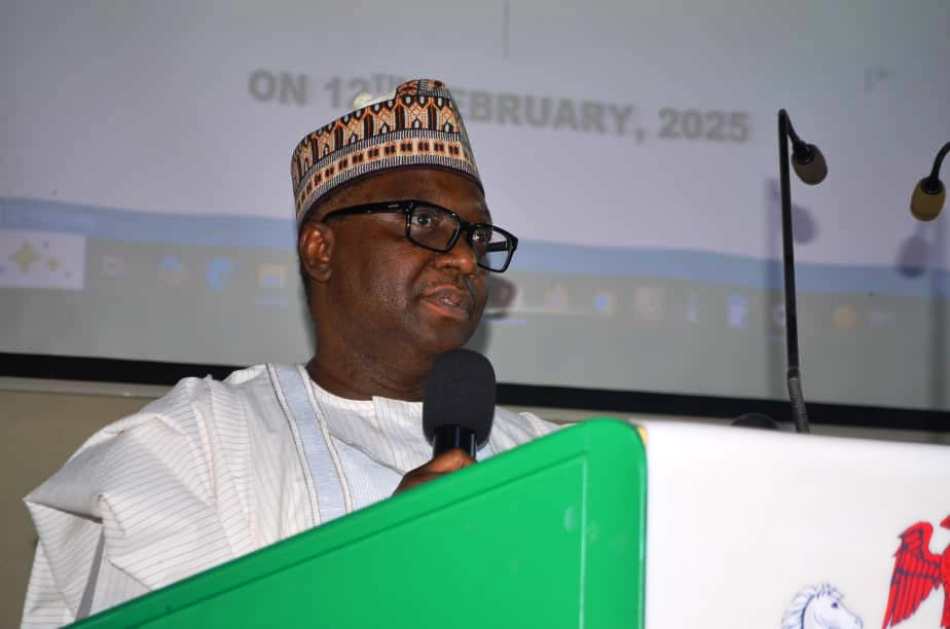
Speaking at a two‑day National Stakeholders’ Discourse on Enhancing Fiscal Efficiency and Revenue Growth under the Nigeria Tax Act, 2025, in Abuja, Chairman, Revenue Mobilisation and Fiscal Commission (RMAFC), Dr Mohammed Shehu, noted that the continued growth in inflows is due to fiscal reforms, tracking and coordination among revenue agencies; stronger audits; digital tracking; and fiscal reforms.
These measures, he said, strengthened fiscal discipline and expanded the revenue pool for allocation to federal, state and local governments.
“This shift marks progress towards a more resilient, diversified and sustainable public finance system with less dependence on oil earnings,” he noted.
According to him, over the years, the Nigerian economy had suffered from boom‑bust cycles driven by volatile oil prices, creating unpredictable revenue streams that undermine long‑term planning and fiscal stability.
This, Shehu explained, was in addition to high debt‑service obligations that consume an alarming proportion of government revenue, constraining public investment and threatening fiscal sustainability across all tiers of government.
Other News
“Bearing these in mind, the National Stakeholders Discourse with the theme ‘Enhancing Fiscal Efficiency and Revenue Growth under the Nigeria Tax Act, 2025’ is not only timely but necessary. The Nigeria Tax Act, 2025, has not only harmonised Nigeria’s hitherto fragmented tax laws into a single statute, but it has also reduced or eliminated duplication and obsolete provisions while enhancing ease of doing business.
“In addition, once it comes into effect by January 2026, it will reduce compliance burdens, thus creating a more coherent and predictable fiscal environment and eliminating regional differences in tax administration. In a nutshell, this legislation will serve as a call to action for the commission, in addition to demonstrating the government’s commitment to creating a just, effective and sustainable revenue system.
“The decision by the commission to convene this programme at this time is aimed at bringing all stakeholders, including the organised labour, to have a deep discussion and understanding of the implementation of the Act,” he said.
Earlier, Chairman, Fiscal Efficiency and Budget Committee, Desmond Akawor, explained that the Nigeria Tax Act represents a major reform milestone aimed at modernising tax administration, strengthening compliance frameworks, closing revenue leakages and expanding the revenue base across all tiers of government.
“For these reforms to achieve their intended outcomes, active participation, cooperation and a shared understanding among stakeholders from government, the private sector, civil society and development partners remain indispensable,” he stated.
Meanwhile, in his presentation, Chairman, Tax Reform Committee, Professor Taiwo Oyedele, stated the need to bring the over 60 different taxes and levies Nigeria is operating into a single operational entity, saying that if it is only two taxes that are efficiently collected or operated, it is better than 50 of them that are not properly harnessed.
According to him, multiplicity of taxes encourages corruption. In the new tax Act, basic consumption items will not be taxed and all investors are exempted from capital gains tax.