Follow Us on Google
From Aniekan Aniekan, Calabar
In the heart of Nigeria’s southeastern region, where lush green forests once stretched as far as the eye could see, a silent crisis is unfolding that threatens the very existence of man, deforestation.
Cross River, a state renowned for its rich biodiversity and natural beauty, is witnessing rapid disappearance of its wilderness, which is not just a pride to the state but Nigeria as a whole.
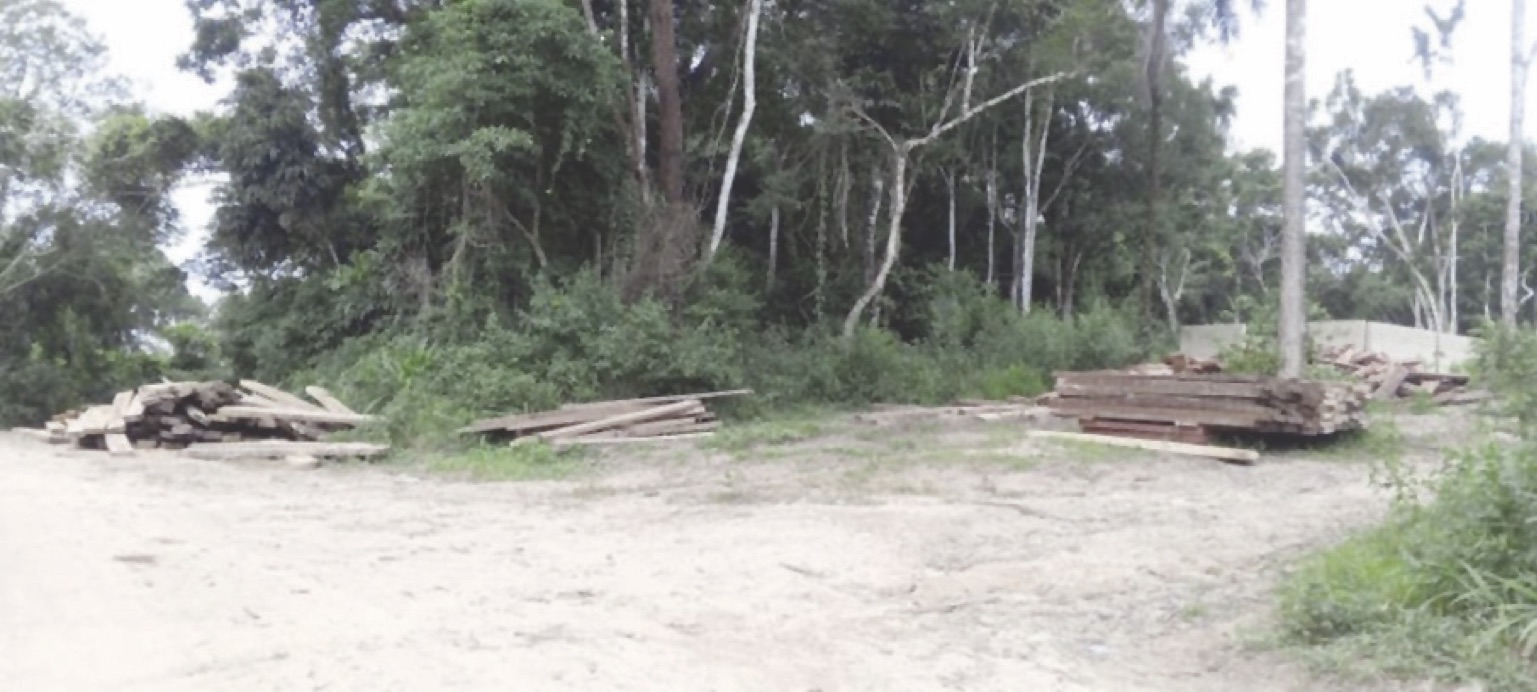
Forests that had stood for centuries, providing a home for countless species and a livelihood for local communities, are vanishing at an alarming rate.
This is Cross River’s lost wilderness – a tale of environmental degradation, neglect and the urgent need for conservation.
There was once a time when Nigeria had a fair share of the global forest cover and a significant percentage of this was in Cross River State.

The Cross River tropical rain forest was esteemed as the richest cover in the entire West African region, up to the 20th century.
A NASRDA and FAO study on the drivers of deforestation and forest degradation in Cross River State found that the state had lost 39,907 hectares of forest between 2000 and 2007, which is an annual rate of 5,701 hectares per year or 0.67 percent.
This annual percentage loss increased to 2.95 percent for the period 2007 to 2014, when 167,382 hectares were lost at a rate of 23,911 hectares per year. The study further projects that Cross River State’s forest cover will have decreased from one million hectares in 1976 to just below 600,000 hectares or close to 40% loss by 2035 (NASDRA and FAO, 2015).
Findings indicated that the drivers of deforestation in the state are largely from the policies of government and activities of non-state actors.
One of the drivers of deforestation in the state has to do with salvage logging across the once dense forests of the state by commercial-scale agro-allied companies and private plantations.
Salvage logging is a situation where a firm embarks on massive logging and clearing of forest to salvage the land for a particular purpose.
A report, titled “Vanishing Forests,” published in 2022, indicates that at least 21 salvage logging companies and 55 private plantations are being carried out in the pristine rainforest of Cross River State.
The report further stated that there are no publicly available records of any environmental impact assessment conducted before the commencement of these projects.
The Prof. Ben Ayade government commenced the construction of a casino project as well as a super highway, which was expected to traverse the pristine forest of the state.
These projects, which were eventually aborted, saw the destruction of vast portions of forests. The super highway, for instance, according to a 2017 Cross River State REDD+ Strategy document, would cause a direct loss of at least 250,000 trees and construction had started with substantial logging ongoing before it was aborted towards the end of the Ayade administration.
Similarly, a REDD+ 2016 document indicated that as of 2016 there were 10 deforestation hotspots in Cross River State spread across six local government areas, which comprise Akamkpa, Akpabuyo, Boki, Ikom, Obubra and Yakurr.
These areas, with a combined total area of 28,015.88 hectares, mostly caused by itinerant subsistence agriculture, commercial agriculture, new settlements, illegal logging and fuelwood.
The report also indicated that the projected forest cover in Cross River State is likely to decline to 550,000 hectares by 2040, if no preventive measures are put in place.
At least two-thirds of the forest areas of the state have been cleared and transformed into plantations, including cocoa and oil palm.
Cross River is also renowned for cocoa cultivation but this is having a devastating effect on its tropical rainforest as there are at present massive illegal encroachment and logging activities in all forest reserves and national parks in the state.
Unfortunately, areas within the state noted for large-scale production of cocoa are forest cover areas and communities there have been reporting alarming clearing of forest areas for the purpose of cocoa plantation.
Within the last 10 years, the state government has acquired 7,000 hectares of agro forest lands in Etara and Ekuri communities, 10,000 hectares of agro forest in Neghe community as well as 3,800 hectares at Akin Osomba, all for cocoa cultivation.
The bid for cocoa cultivation, which aims to feed a cocoa processing factory set up by the state government, has seen an aggressive incursion into the pristine forest cover of the state and has become a key driver for forest cover loss.
Outside cocoa, oil palm also constitutes a major driver of forest cover loss in the state and oil palm plantations have been established in roughly 61% of what used to be forest areas.
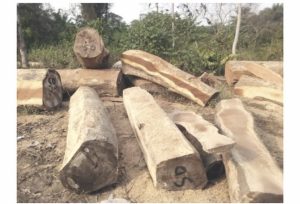
The illicit trade in timber in the state has over the years become more sinister with the emergence of well armed and connected cartels with links to foreign nationals.
These cartels with links to foreign nationals of Chinese extraction are rampaging across the forests for specific types of wood species, including Apa and Bubinga.
In 2024, the people of Effi community protested against the illegal invasion of their forest by foreigners suspected to be Chinese.
To ascertain the status of the immigrants, a seven member fact-finding committee was set up in July 2024 by the clan head of Effi, His Royal Highness, Okim John Osadim.
His sole mandate was to unravel the status of the Chinese and the report of the fact-finding mission as headed by Engr. Ndoma Nyambi.
The report of the fact finding team revealed that the Chinese have no registered company name nor did any document relating to their immigration clearance.
It was further revealed that there was no evidence that any agreement was entered into with the community giving them license to operate. This sparked fuss among the indigenes as they demand to know the operational status of the Chinese who seem to have been carrying out their operations anonymously and illegally for months.
Commenting on the Chinese invasion of the community, an environmentalist, Odey Oyama, said the Chinese incursion into Effi community is a two-faced calamity on the people.
Oyama, an indigene of Okuni community, said they were able to gain entry into the community to do business through the aid of the chiefs and supposed community lawyer, not minding the consequences.
“The entire episode is shrouded in secrecy and opacity. How can we admit faceless people into our community?
“What we are witnessing today in our community is the cutting down of trees, including immature ones by the Chinese and their local co-conspirators in a process which the Chinese are paying their agents and co-conspirators just a pittance.
“What would have turned out to be the wealth of the kingdom in the generations that will come after us and the negative impacts are already spreading out to other parts of Okuni and beyond,” he stated.
The community youth president, Comrade Obaji Ndoma Ori, expressed dissatisfaction with the presence of the Chinese and their method of operation.
“I am not comfortable with what is going on. These people are using us; they use us to exploit ourselves, cause environmental issues for ourselves and rob our generations yet unborn for a pittance.
“Although they don’t go to the forest to cut the trees by themselves, they pay the indigenes as low as N1,500 to N3,000 for a tree stump which is way too small for the damage done,” he said.
The Cross River State government, however, refuted allegations of Chinese nationals invading the Effi community’s forest. Dr. George O’ben-Etchi, chief executive officer and chairman of the Cross River State Forestry Commission, made this statement following a visit to the area last year.
However, efforts to get his reaction on the pervasive activities of salvage loggers across the state’s forests have not been fruitful as he has persistently declined requests for a reaction.
Anthony Atah, the Cross River State Landscape Director with the Wildlife Conservation Society Nigeria programme, said the high rate of deforestation is posing a biological impact on the remaining forest. He said the Nigeria/Cameroon Chimpanzee, for instance, which is native to the forested areas, is now threatened when their natural habitat is tampered with.
He further said: “The rate of deforestation is so high even in reserves. We now have cocoa farm, for instance, inside a sanctuary.
“Some communities that used to have water all through the year now lack water. Streams in parts of Boki have become seasonal and the demand for boreholes is very high.
“There is need to educate the farmers on deforestation, free cocoa cultivation like we are trying to do. There is no need to clear forests to farm but existing farmlands can be rehabilitated by replacing the old trees in line with global standards.”