Follow Us on Google
From Juliana Taiwo-Obalonye and Francis Onyedikachukwu, Abuja
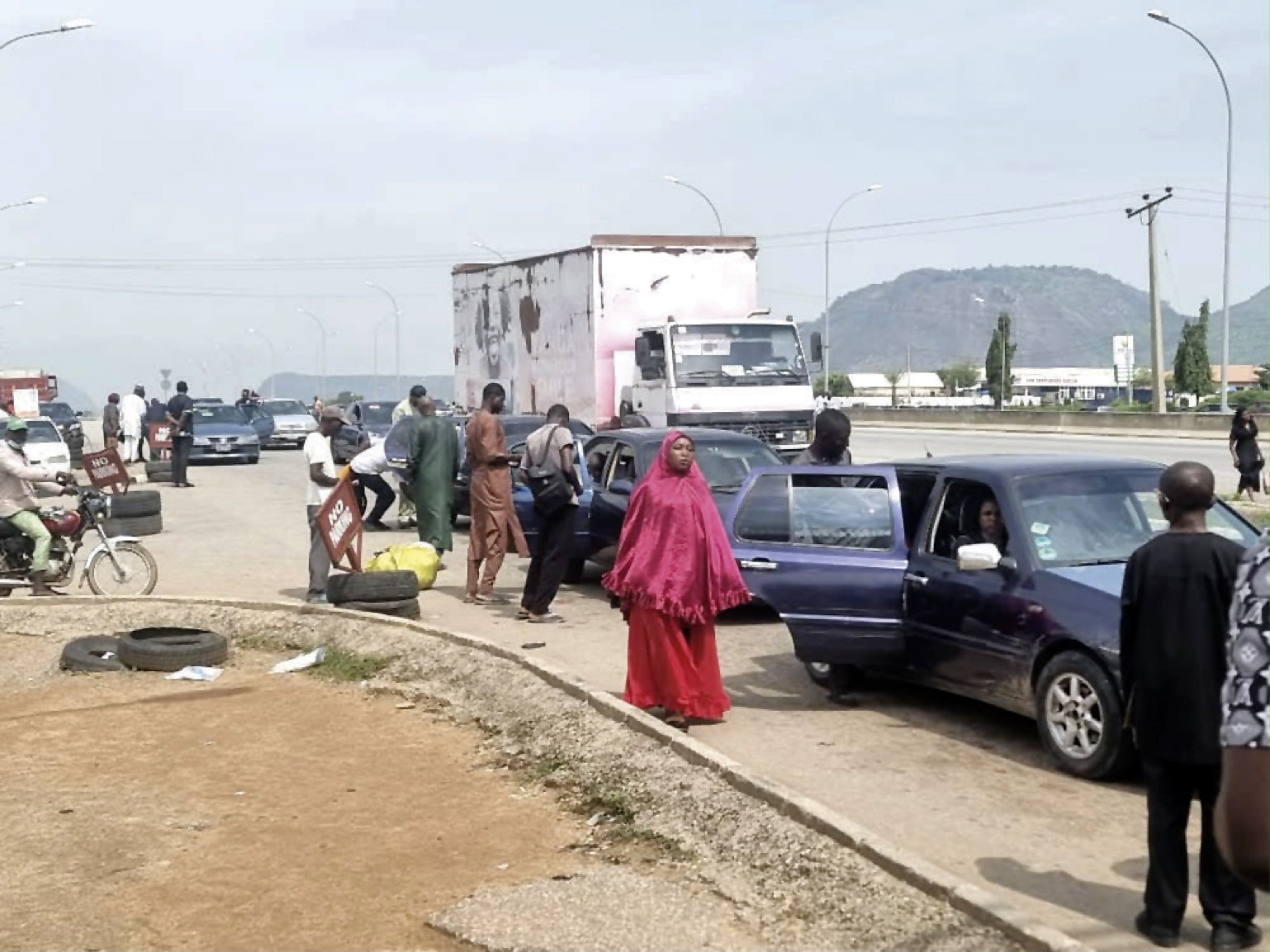
For thousands of Abuja commuters, the roadside is more than a place to catch a bus. It is a lifeline. Every morning, long before the city fully wakes up, passengers spill out of neighbourhoods, estates and side streets onto major roads, waving at passing taxis and buses. Drivers slow down, doors swing open and commuters scramble inside.
For workers racing against time, students trying to beat the morning rush and residents simply trying to get home, the roadside vehicle is often the quickest and most accessible option. But in a city increasingly haunted by the menace of “one-chance” robbery, that convenience can carry a frightening risk.
For Stella, a caregiver, who had been given a rare weekend break, an ordinary journey from Maitama to Nyanya turned into a terrifying ordeal. She had planned to spend the weekend with her sister, expecting nothing more than a routine taxi ride across Abuja.

Shortly after the vehicle set off, however, the journey took a violent turn. According to her account, she was threatened with a jackknife, robbed of her phone and handbag and eventually pushed out of the moving vehicle. The weekend she had planned as time with family ended with her stranded by the roadside, robbed and traumatised.
Ndidi Ebere’s experience was similarly devastating. She had secured a job interview in the Central Area scheduled for 10am and left home around 7am, confident that she had allowed enough time to beat the morning traffic.
She boarded a vehicle around ECWA with other passengers and settled in for what she believed would be an uneventful journey.
Then the doors were centrally locked. What began as a normal taxi ride became a five-hour ordeal. Ndidi was slapped, beaten and forced to surrender her phone and bag. Her attackers allegedly compelled her to contact relatives and request money, which they attempted to withdraw from her account.
Her job interview became irrelevant. The plans she had made for the day disappeared. For hours, she was simply a captive trying to stay alive. She was eventually pushed out of the vehicle on the road towards Suleja, injured and without her belongings.
The experiences of Stella and Ndidi expose the danger lurking beneath an apparently ordinary feature of life in Abuja: the roadside taxi. For commuters, however, the choice is rarely as simple as safety versus recklessness.
Often, it is a calculation between convenience, cost, distance and time. That is the dilemma at the heart of the Federal Capital Territory Administration’s latest push to dismantle illegal motor parks and stop commercial vehicles from loading passengers indiscriminately along roadsides.
The administration wants intercity and intra-city transport operators moved into designated terminals, with the stated objectives of improving passenger safety, reducing congestion, regulating commercial transportation and making it more difficult for criminals to operate under the cover of an informal transport system.
The policy is being driven by the FCT Transportation Secretariat under the leadership of Mandate Secretary, Chinedum Elechi, who has linked the unregulated transport system to insecurity, including “one-chance” robbery and other criminal activities. Elechi said the transport system was closely connected to broader security challenges, arguing that “at the root of all social insecurity is transportation.”
According to him, the absence of properly regulated terminals creates opportunities for criminals involved in activities ranging from armed robbery to drug trafficking and the movement of illegal arms.
Elechi said the “one-chance” menace and general insecurity could be significantly reduced through a properly organised transportation system in which operators are profiled and required to operate from designated hubs. Under the proposed restructuring, buses travelling to destinations such as Kaduna, Lokoja, Aba, Owerri and Sokoto will operate from the Mabushi and Kugbo terminals, while the Central Business District terminal will accommodate intra-city commuters, taxis, e-hailing services and feeder buses.
The facilities are intended to provide a more structured alternative to the chaotic roadside loading system and include parking areas and other amenities. The administration says the terminals represent a major step towards bringing Abuja’s transport system in line with those of modern capitals.
Elechi described the facilities as the first of their kind in the nearly five-decade history of the FCT, noting that they were designed to accommodate more than 2,000 passengers daily and include structured parking lots, shopping outlets, food courts, escalators and cinemas. The terminals are being managed through a Public-Private Partnership with Planet Projects, while discussions are also ongoing with the Office of the Head of the Civil Service of the Federation on dedicated loading bays for civil servants using staff buses at the CBD terminal.
But the success of the policy may ultimately depend less on the terminals themselves than on whether ordinary commuters can actually afford and conveniently access them. Between 6am and 8am, the Nyanya-Berger corridor provides a glimpse into why roadside loading has become deeply entrenched. Passengers emerge from Nyanya, Karu and surrounding communities and converge on major roads in search of vehicles heading towards Berger, Area 1 and the Central Area. A taxi that slows down can quickly attract several commuters. Within seconds, passengers are calling out destinations, stretching out their hands and competing for limited seats. Similar scenes play out along the Lugbe-Area 1 corridor and routes linking Orozo, Jikwoyi and Kurudu with other parts of Abuja.
In the evening, the direction reverses. From around 4pm, thousands of workers leave offices in the Central Area, Wuse, Area 1 and other commercial districts and begin the long journey home. For many of them, the roadside is attractive because it brings transport closer to where they live and work. A commuter leaving Nyanya for Berger may not want to spend additional money travelling to a formal terminal before beginning the journey. Someone living around Karsana or Dei-Dei may face the same dilemma. For residents of Jikwoyi, Kurudu, Orozo or Lugbe, the nearest recognised terminal may not always be where they need it to be.
Cornelius, chairman of a transport park in Kubwa, questioned how commuters living in areas such as Karsana, Dei-Dei and around Mopol Barracks would cope if they were required to travel long distances to reach designated terminals. He warned that the additional trip could increase the cost of transportation for people who are already struggling with rising living expenses.
His concern reflects one of the central contradictions confronting the government’s plan: the roadside is often where the passengers are. A policy can prohibit roadside loading, but if commuters cannot easily reach designated terminals, they may simply continue using the roadsides, particularly where the alternative means paying for an additional journey before the actual trip begins.
Drivers, too, have economic reasons for operating outside formal parks. Some say waiting inside parks can mean spending hours before getting enough passengers to leave, while others point to commissions and other charges associated with formal parks, arguing that picking up passengers directly from the road allows them to reduce operating costs. Cornelius questioned how a driver travelling from Zuba towards the city would remain economically viable if prevented from picking up passengers along the route, particularly when the driver still has to cover fuel and other operating expenses.
The economic pressure is particularly acute among low-income commuters and drivers who depend entirely on commercial transportation for their livelihood. One driver operating in Abuja said he holds a master’s degree and had worked in several companies before turning to commercial driving because of difficulties finding sustainable employment. “If I should tell you that I am a master’s holder, would you believe that?” he asked, explaining that commercial driving had become his means of survival. For people in that position, the vehicle is not simply a means of transportation; it is an income-generating asset.
The prospect of vehicle seizures therefore creates another layer of anxiety. “If they are seizing cars, in fact, the hunger will now be times two,” the driver said, stressing the potential impact of enforcement on operators already struggling to make ends meet. The concern is that a policy designed to improve the transport system could inadvertently deepen economic hardship if it removes vehicles from the road without providing drivers with viable alternatives.
Other News
Despite these concerns, the drivers interviewed for this report were not uniformly opposed to the government’s plan. Some acknowledged that a regulated transport system could make Abuja safer. One driver described the proposal as “a very, very good plan”, particularly because a centralised system would make it more difficult for criminals to operate anonymously. He argued that criminals would be less likely to enter a recognised and crowded transport facility where drivers and vehicles could be identified.
He also proposed that every commercial vehicle operating under the new system should carry a clearly identifiable tag. “Every vehicle should have a particular tag,” he said, explaining that passengers would then know exactly which vehicle they had boarded and authorities would have a trail to follow in the event of a crime. The suggestion is significant because one of the greatest difficulties associated with “one-chance” incidents is the inability of victims to identify or trace the vehicle involved. Properly registered and visibly tagged vehicles could provide passengers and law enforcement agencies with a clearer trail from the point of boarding to the location of a reported crime.
Another driver, however, cautioned that enforcement should begin with orientation and engagement. He said the government should meet transport union leaders and operators before implementing the policy, arguing that “there’s supposed to be an orientation” and that there should be adequate awareness among chairmen of the various mini parks. His concern is that the government must make the transition easy for both drivers and commuters rather than simply announce a ban and begin impounding vehicles.
The drivers are also divided over the extent to which passengers themselves contribute to the roadside loading culture. Some say commuters deliberately avoid formal parks because they believe roadside vehicles are faster and cheaper. A driver explained that passengers often become impatient when a vehicle inside a park takes too long to fill up, meaning they will readily board a vehicle that stops along the road without necessarily knowing enough about the driver or vehicle.
The same driver acknowledged, however, that passengers can reduce their vulnerability by making the effort to use recognised parks. Boarding from a formal facility provides a greater possibility of recovering lost property because the vehicle and driver can be traced.
Another driver put the issue more bluntly, saying: “If you enter a park, you are safe, passengers are safe. But if you go and enter along the road, and you stop there, anything you see, na you sabi.”
Not every driver believes the policy will work without addressing the economic pressures pushing operators onto the roadside. One driver pointed out that formal parks often require commissions from drivers, making roadside loading financially attractive.
He explained: “When you pick passengers on the road now, you may not pay a commission. But when you carry a car and go inside park, when you load there, you will pay a commission.”
He argued that these costs could eventually be passed on to passengers, further encouraging commuters to seek cheaper roadside alternatives.
The cost of transport is another concern. A driver who spoke about the pressures facing low-income workers said some commuters earn salaries of about N40,000 or N50,000 but may spend as much as N2,500 or N3,000 daily on transportation. For such workers, even a modest increase in fares can have a major impact on their monthly income. Any transport reform that adds another layer of cost could therefore face resistance from commuters who are already struggling to get to work and back home.
Tony Nnamani, a driver operating around Wuse, supports the plan but wants the government to provide legitimate loading points before enforcing the ban. He said drivers operating on the road often face harassment from enforcement agencies because there are not enough permanent loading spaces. “Give us a permanent place whereby we will be loading freely,” he said. “No police harassment. No task force harassment.”
For Nnamani, the issue is not resistance to regulation but the need for a workable system that allows drivers to operate legally and earn a living.
Another driver, Paul, also supported the reform and praised the FCT Administration for its infrastructure projects, but he acknowledged why many operators continue to pick passengers on the road. He said drivers can spend hours waiting inside a park for their turn to load. “Sometimes, we spend two hours or three hours. We’re waiting for one turn,” he said, explaining that the long waiting periods encourage some drivers to leave formal parks and search for passengers on the road.
The issue of illegal parks, unregistered vehicles and informal operators also features prominently in the debate. Drivers say stronger identification and enforcement could help address criminality, but they want legitimate operators protected from the actions of unregulated transport workers and informal agents. They also want the government to distinguish between drivers deliberately violating regulations and those operating informally because of inadequate formal loading facilities.
The FCT Administration, however, appears determined to provide that enforcement. Elechi recalled that more than 100 impounded vehicles had previously been released after their owners signed undertakings to comply with transport regulations. This time, however, he warned that the administration would be less lenient, particularly against private premises converted into illegal motor parks.
“If you rent private premises and turn them into an illegal motor park, we will enforce the law, seal off the premises and impound the vehicles,” Elechi said.
He maintained that the government was not taking food away from transport operators but was asking them to move from unsafe and unhealthy roadside locations into modern facilities built with significant public and private investment. For him, the broader objective is to ensure that “FCT must look like every modern capital city.”
The administration has also had to address concerns over storm damage at the Kugbo terminal. Elechi explained that the facility recently bore the brunt of a severe windstorm that could have caused greater damage to nearby residential buildings. He said repairs and structural improvements were nearing completion and that the terminal would soon become operational alongside the Mabushi and CBD facilities.
Yet even when the terminals are fully operational, the more difficult challenge may begin. Will commuters use them? Will drivers abandon the roadside voluntarily? Will the cost of getting to a terminal and boarding a vehicle remain affordable? Will passengers be willing to wait for vehicles to fill up? And will enforcement be consistent across Abuja? These questions will determine whether the reform succeeds.
A terminal that is too far from residential communities may be ignored. A system that significantly increases fares may become unpopular. Long waiting times could push passengers back to roadside vehicles, while excessive fees could encourage drivers to continue operating outside the formal system. If enforcement officers apply the policy selectively, the credibility of the entire reform could also be undermined.
The government will therefore need more than enforcement. It will need strategically located terminals, feeder transport, affordable fares, proper driver profiling, visible vehicle identification and transparent enforcement. It must also ensure that legitimate drivers are not pushed out of business by excessive charges or arbitrary enforcement. A commercial vehicle is the livelihood of many families, and taking it away without providing a viable alternative could deepen the hardship the policy is intended to address.
The stories of Stella and Ndidi provide the strongest argument for reform. Neither set out looking for danger. Stella wanted to spend a weekend with her family, while Ndidi wanted to attend a job interview. Both entered vehicles expecting ordinary journeys. Both encountered violence instead. Their experiences demonstrate that the “one-chance” problem is not an abstract security issue. It affects people trying to get to work, attend appointments, visit relatives and return home.
Yet the answer cannot simply be to tell commuters to stop boarding roadside vehicles. The government must make the safer alternative practical. Passengers need terminals they can reach without spending a substantial portion of their income before their actual journey begins. They need vehicles that are properly registered and identifiable. They need confidence that drivers have been screened and that complaints can be traced to specific operators.
Drivers, on the other hand, need a system that allows them to earn a living without being forced into illegal operations by excessive waiting times, high charges or inadequate loading facilities. The reform must therefore address both sides of the equation. The government cannot expect drivers to abandon a system that provides immediate access to passengers unless the alternative is economically sustainable.
Abuja’s transport crisis is ultimately bigger than illegal motor parks. It is about the relationship between safety, affordability, accessibility and livelihood. The government wants commuters inside recognised terminals. Drivers want access to passengers and enough income to sustain their families. Passengers want vehicles close to their homes and workplaces. Traffic authorities want roads free of obstruction. And residents want an end to the fear that entering an ordinary taxi could turn into a nightmare.
The true measure of the FCT’s reform will not be the number of vehicles impounded or illegal parks sealed. It will be what happens at 6:30am on the Nyanya-Berger axis, whether a commuter leaving Lugbe for Area 1 can find safe transport without paying an additional premium to reach a terminal, whether workers leaving the Central Area after 4pm can get home without standing by the roadside for hours, and whether residents of Jikwoyi, Kurudu, Orozo, Karsana, Dei-Dei and other expanding communities can access the formal transport network without being priced out of it.
For now, the roadside remains busy. Passengers still wait at junctions. Drivers still slow down to pick them up. Traffic officers still try to keep vehicles moving. Commuters still rush towards the first available taxi because being late for work can have consequences of its own. The FCT Administration wants that picture to change. The drivers say they can change with the system, provided they are not pushed out of business. The passengers want safer journeys, provided the alternative remains affordable and accessible. The government wants Abuja to function like a modern capital, but the real challenge is ensuring that the transformation reaches beyond the terminals and into the daily realities of the people who use them.
For Stella, a weekend journey ended with a knife, robbery and a desperate escape from a moving vehicle. For Ndidi, a routine trip to a job interview became hours of captivity, assault and financial extortion before she was abandoned on the road to Suleja. Their experiences represent the human cost of a transport system that leaves too much room for anonymity and criminality.
As Wike’s administration moves to shut illegal parks and end indiscriminate roadside loading, Abuja is being presented with an opportunity to rethink how people move around the capital. The question is no longer simply whether roadside loading should end. It is whether the city can build a transport system safe enough, affordable enough and accessible enough that passengers will willingly leave the roadside behind.
Because for the ordinary Abuja commuter, the journey has never been just about getting somewhere. It is about getting there alive.