Follow Us on Google
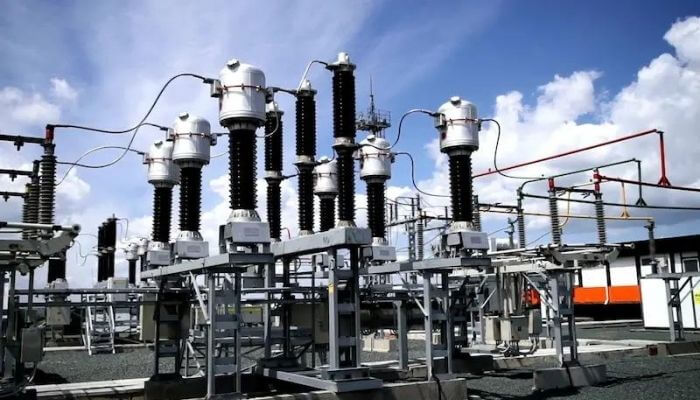
Despite N10 trillion investments in the power sector in the last 13 years following the privatisation programme, it is disappointing that power generation in the country remains stuck at the average of 4,500 mega watts (MW) or below. This is far below the 30,000 MW the country needs to achieve sustained economic development. Funds were reportedly misappropriated as a result of administrative bottlenecks. Out of the N10 trillion, President Bola Tinubu approved N3.3 trillion financial intervention plan under the Presidential Power Reforms programme to clear legacy debts owed to power Generation Companies (Gencos) and gas suppliers.
Of the total approved framework, the federal government said it raised N501 billion and disbursed over N223 billion in initial settlement funds. Besides, in the last three years, Nigeria attracted over $60 billion in sector investment and pipeline commitment. Yet, little improvement has been recorded in power supply across the country.
Of the total N10 trillion investments in 13 years, the Central Bank of Nigeria (CBN) deployed N213 billion through the stabilisation facility payment guarantee worth N701 billion for Gencos. A ttotsl of N200 billion was spent via the National Mass Metering programme and N700 billion under the Presidential Metering Initiative. The investment includes the €2.3 billion International partnership committed through the Siemens Presidential Initiative.
In spite of these investments, the power sector failure remains a constant concern due to many factors that include chronic debts owed to gas suppliers. This has led to lack of fuel at the thermal plants, frequent grid failure due to weak infrastructure, liquidity traps that make Distribution Companies (Discos) to struggle with tariff collection losses and inability to recover market values. Also, rising legacy debts across the value- chain continue to discourage fresh private investment in the power sector.
Considering the importance of power supply to medium and small enterprises (MSMEs), revamping the sector is imperative, while other renewable energy options should be explored. Spending N10trillion in the power sector in 13 years without tangible results is a sad commentary on governance in the country. It is time to restore confidence in the sector.
Other News
Erratic power supply nationwide is getting progressively worse every day, with no end in sight. The constant collapse of the national grid adds to the persistent nightmares that Nigerians and businesses go through. According to experts, anytime the national grid collapses, resulting from simultaneous tripping of transmission lines, allocation to the Discos come to zero MW, indicating no electricity supply throughout the day. The losses by businesses and the economy are huge. Also, every minute that the national grid fails, the economy loses an estimated N1.9 billion.
The persistent collapse of the grid underscores deep structural and operational weakness in the power transmission system. It is an indictment that the relevant agency has failed to find permanent solution to the erratic power supply. Therefore, restoring grid stability must be treated as an economic emergency.
Available data indicate that from 2015 to 2025, the national grid had collapsed more than 200 times. Figures from the Nigerian Electricity Regulatory Commission (NERC) revealed that the country recorded 105 grid failures in nine years, of which 93 were recorded during the administration of President Muhammadu Buhari. Also, from June 2023 to December, 2023, three grid collapses were recorded and 12 incidents in 2024. In 2025, four major grid collapses occurred on February 12, March 7, September 10, and December 29, 2025, respectively.
While some reports highlighted the four incidents, the national grid is reported to have remained volatile throughout last year, and even this year. Based on current patterns, the country may experience more grid collapses in 2026. This poses a serious threat to the survival of key sectors of the economy, among them, the manufacturing sector that is the engine of the country’s production lines. It will also slow down enterprise sustainability efforts. Every segment of the economy, the formal and informal sectors, will be negatively affected every time the grid experiences collapse.
This is in spite of huge investments and loans worth $4.36 billion secured by the federal government from the World Bank in the past 10 years to address the key challenges in the power sector. Together, these projects represent $2.06 billion, or 47.25 per cent of the total loan portfolio. A comprehensive upgrade is needed in the power sector. Currently, Nigeria is ranked 67th in the global electricity rankings, the largest electricity deficit of any nation in the world. This is not a good report for a country with enormous gas supply and huge hydro power system.