Follow Us on Google
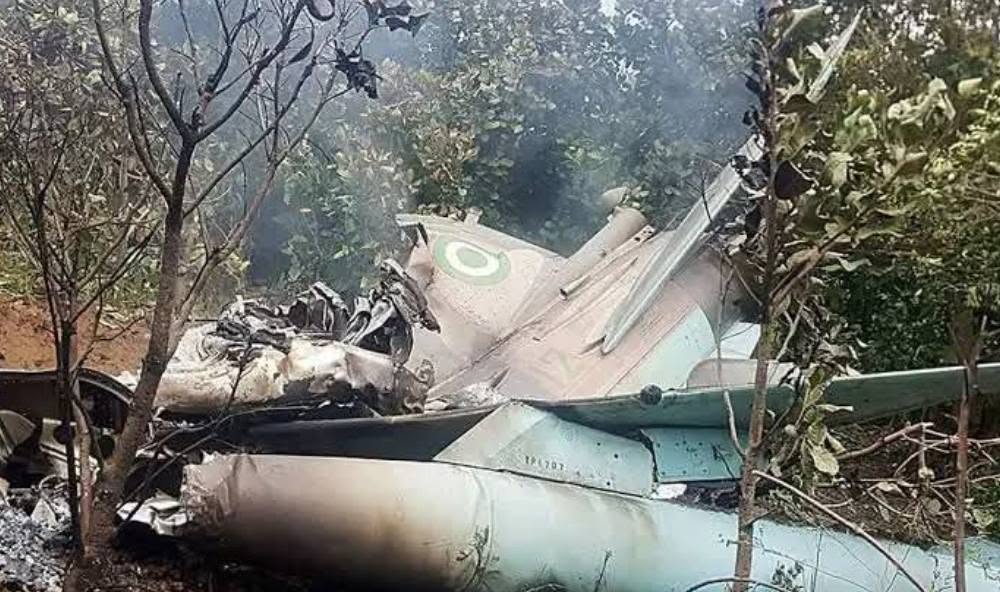
The Nigerian Air Force (NAF) plane crash, which claimed the lives of 20 passengers and five crew members on October 5, should be thoroughly investigated. The ill-fated aircraft, with tail number Nigerian Air Force ATR 42 aircraft and registration number NAF 931, was travelling from Benin to Lagos when air traffic controllers lost contact with it at about 9:13am. The plane was later confirmed to have crashed near the Naval Base in Igbokoda, Ilaje Local Government Area of Ondo State, with all the passengers and crew members dead. The names of the victims have been released. The Chief of the Air Staff (CAS), Air Marshal Sunday Kelvin Aneke, described the incident as a deeply painful moment for the Nigerian Air Force and the nation.
President Bola Tinubu expressed deep pains at the mishap and declared a three-day national mourning for Nigerian Air Force personnel who died in the crash. He directed that the national flag should be flown at half-mast throughout the country as a mark of respect for the deceased officers. The President ordered the Nigerian Air Force to investigate the crash. The investigation must be thorough and its outcome made public.
Nigeria has had to grapple with frequent crashes of military aircraft in recent times. All of them had come with great fatalities. The probe panel should establish the causes of these air mishaps and come up with recommendations to curb such incidents. The NAF should do something to minimize these crashes through regular training and retraining of its personnel. Exposing them to compulsory foreign training should not be ruled out. In all, safety must be prioritised. The sudden tragic loss of 25 citizens in one fell swoop calls for great concern. Let NAF overhaul is air safety as well as maintenance of its aircraft
Between 2021 and 2026, Nigeria has recorded at least 10 military aircraft crashes, resulting to deaths and injuries. The incidents involved fighter jets, helicopters, training aircraft, transport aircraft, and unmanned aerial vehicles. These incidents had occurred during combat operations, training exercise, routine missions, casualty evacuation, and post-maintenance checks.
In one instance, an Alpha Jet aircraft, on a mission against terrorists, crashed in Zamfara State on July 21, 2024, while under intense enemy fire. According to a statement by the Air Force, the aircraft was returning from a successful air interdiction mission between the boundaries of Zamfara and Kaduna State, when it came under intense fire resulting to its crash. Luckily, the pilot, Flight Lieutenant Abayomi Dairo, successfully ejected from the aircraft. Three months earlier, in April 2024, a NAF fighter jet was declared missing and suspected to have crashed. While Boko Haram claimed to have shot it down, the military denied it.
Other News
The crashes are not limited to military aircrafts. On July 23, an Enugu Air Embraer ERJ 170 overran the runway at Oba Akenzua II Airport in Benin. The aircraft was carrying 68 people, comprising 63 passengers and five crew members. It struck airport infrastructure beyond the runway before coming to a stop. All 68 occupants were evacuated without injury. Earlier on June 10, a VMO Aero Bombardier Challenger 601 mistakenly landed on a paved road under construction near Asaba Airport. Seven people were on board. No injuries were recorded, although the aircraft sustained damage to its left nose-wheel assembly. On February 11, an Arik Air Boeing 737 operating from Lagos to Port Harcourt developed an engine anomaly, forcing the crew to shut down the affected engine and diverting the aircraft to Benin Airport. All passengers and crew disembarked safely.
These incidents underscore the urgent need for air safety. They are signs that all is not well with our aviation sector. We must strive to get it right with our aviation sector. Therefore, we must increase the level of our air safety. The federal government must invest heavily on modern are navigation instruments that can minimise these tragedies and near-misses. Safety is paramount in aviation.
Aviation experts and other stakeholders should comprehensively review military aviation safety systems, including aircraft maintenance, airworthiness standards, operational procedures, safety oversight and other precautionary measures. The frequency of military aircraft accidents underlines the need for NAF to review its safety systems and regulations. These accidents do not bode well for NAF, its personnel and the entire country. They do not inspire hope or confidence in the system.
There should be stronger collaboration between the Nigerian Air Force, the Nigerian Civil Aviation Authority and the Nigerian Safety Investigation Bureau, to check the recurring air mishaps. The plane crashes and attendant loss of lives should be treated as a national emergency. We say this because the life of every Nigerian matters. We commiserate with the Nigerian Air Force and families that lost their loved ones in the NAF plane crash.