Follow Us on Google

The Managing Director of the International Monetary Fund (IMF), Kristalina Georgieva, has raised the alarm on imminent global recession in 2023. According to her, the looming recession is most likely because the world’s three big economies – the United States, Europe and China – are slowing down simultaneously, while the Russian/Ukraine war is elevating the risks of global economy even higher. On its part, the World Bank had on January 10, warned of imminent global recession. It says that the world has not faced such a period of low growth since the 1990s.
The IMF’s boss warning is particularly important for developing economies like Nigeria, as all economic indices are not looking good. Among the big three economies, the US appears likely to escape the predicted recession because its labour market remains strong, while China, which is the world’s second largest economy is growing at below global growth benchmark for the first time in four decades as a result of rising COVID-19 cases following the recent dismantling of its zero COVID-19 policy restrictions.
However, Georgieva says that certain things can be done to transform the economies of countries, accelerate change and stimulate growth. For weak economies like Nigeria and others with high-debt profile, the global financial institution is worried that some of them are borrowing beyond available revenues. It, therefore, advised such countries to “change their mindsets and move towards more resilience and precautionary actions.”
Already, Ghana is defaulting on repayment loans taken from the World Bank and the IMF. There are concerns too that Nigeria may be moving towards that risky path considering the Federal Government’s excessive borrowings in recent times. The government should not ignore IMF’s alarm over the imminent global recession. It must do something urgently so that Nigeria will not be affected by the global recession.
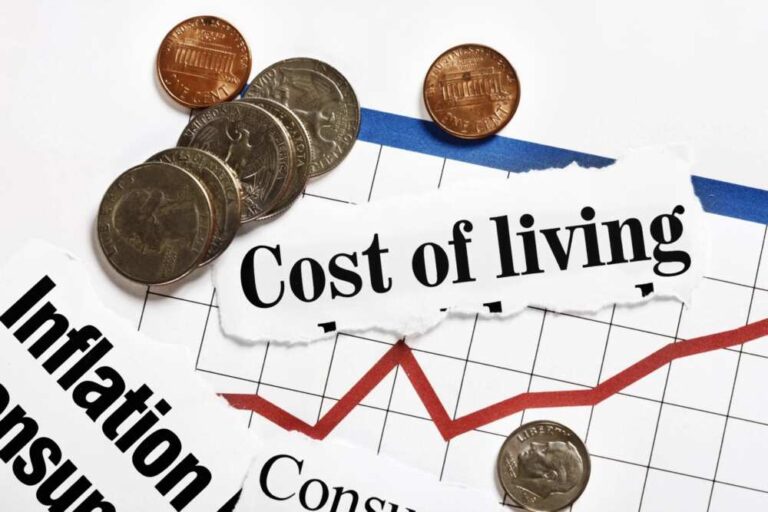
Although IMF’s economic growth forecast for Nigeria in 2023 is 2.9 per cent, there are concerns that this may be reversed downwards soon because of sluggish growth driven by rising inflation and debts, especially Ways & Means advances from the CBN, among other factors. Already, Moody’s and Fitch, two renowned rating agencies have recently downgraded Nigeria to ‘B’- outlook, from ‘B’ even though they believe that the economic outlook remains stable. Listed as key triggers for the gloomy economic outlook are Nigeria’s foreign exchange instability, high poverty rate, low oil producing level, expensive petrol subsidy, low domestic non-oil revenue generation and insecurity.
Based on the IMF’s alarm, the Federal Government must hasten the plans to revamp the economy in order to avert another recession. Nigeria had experienced two recessions in the last six years. A third one is likely to be more devastating, especially in an election year. Removal of petrol subsidy is one issue almost all the presidential candidates have agreed on in view of its drain on the economy. The N3.6trillion allocated to subsidy from now till June, is unsustainable. Also, stabilising the foreign exchange rate is vital for economic growth. At present, the official exchange rate is N450/$1, and over N750/$ at the parallel market. No doubt, Nigeria’s Forex crisis will impact negatively on the economic performance, as businesses will not be able to grow optimally.
What is critical is that the economy must be diversified. It is important that oil projection of 1.69 million barrels per and $75 per barrel as contained in the 2023 budget are met. We call for realistic structural reform with specific timelines that will attract investments and stimulate economic recovery.
Currently, businesses are struggling to survive with multiple taxes/levies, excessive regulations, high interest rate and Forex scarcity. Nigeria’s economy is wobbling because of these factors, in addition to unattractive business environment that has forced many manufacturing companies to either shut down or relocate to neighbouring countries.
Aggressive diversification of the economy must include huge investments in agriculture and other non-oil exports so that the country can earn enough Forex through exports. At present, Nigeria’s terms of trade is increasing as a result of high forex spent on imports, despite the ban on the importation of about 41 items by the CBN. The government should channel more funds to critical infrastructure and Small and Medium Enterprises (SMEs).
At the same time, the fight against corruption must be continued with renewed vigour. With the national debt estimated to hit all-time high of N77 trillion by May this year, the incoming administration needs to take the global financial institutions’ advice seriously to avoid plunging the country into another recession. Electing a competent leader in 2023 is crucial to putting the economy on the path of growth and development.