Follow Us on Google
In spite of swirling opposition, the National Council for Traditional Rulers bill, which seeks to confer constitutional roles to traditional rulers across the country, has passed a second reading in the Senate. The proposed legislation, titled National Council of Traditional Rulers (Establishment) bill, 2024, is sponsored by former governor of Plateau State and current Senator representing Plateau South Senatorial District, Simon Lalong. Also, a similar bill sponsored by Onyinye Ugochinyere and Ibrahim Aliyu is before the House of Representatives. It seeks to alter the provisions of Section 220 of the 1999 Constitution to formally recognise and establish the roles and functions of traditional rulers within the country’s governance framework.
Both bills, according to the sponsors, aim to confer on monarchs and heads of communities in the country specific constitutional roles. They also explained that the bills would help in promoting peace and foster socio-economic development at the grassroots.
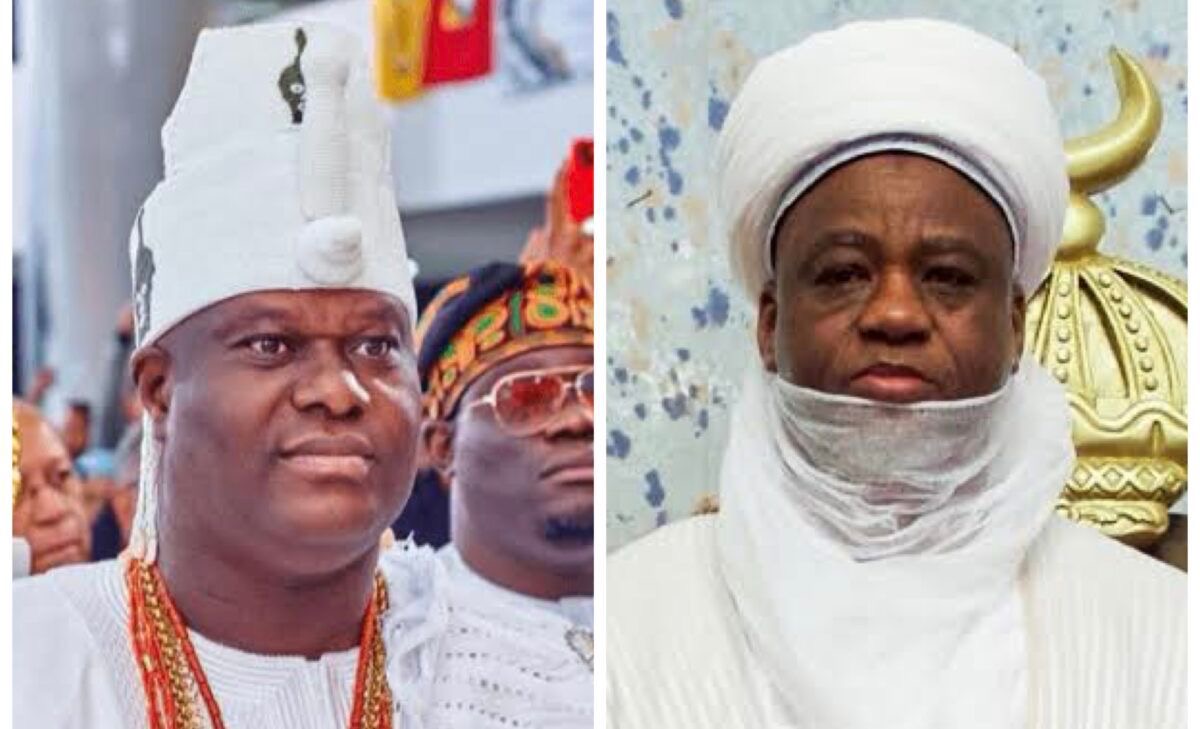
While assigning constitutional roles to traditional rulers will give them more powers to function effectively at the grassroots, there are fears in some quarters that the roles of the traditional rulers and elected officials at the local government level may clash if not explicitly demarcated. The report that a section of the bill at the Senate seeks to permanently elevate the Sultan of Sokoto and the Ooni of Ife as sole co-chairmen of the proposed national council of traditional rulers has caused ripples in the polity. The development has prompted responses from different ethnic groups in the country. The Apex Igbo socio-cultural organisation, the Ohanaeze Ndigbo Worldwide, has condemned the obnoxious aspect of the bill. According to Ohanaeze, the move to have permanent co-chairmen in the proposed law would be at the expense of other traditional rulers from other ethnic nationalities in the country.
In the same vein, the Middle Belt Forum (MBF) has opposed the contentious clause in the bill, vowing that it will mobilise all ethnic nationalities across the Middle Belt to boycott participation in the council if the bill is passed by the Senate without expunging the contentious section. The Ijaw National Congress has equally described the contentious section of the bill as unacceptable and against the rights of the indigenous people across the country. Concerned Hausa Stakeholders have also kicked against the reported section of the bill, arguing that it is ethnically biased, historically misleading, and constitutionally indefensible. “Nigeria is not a two-ethnic federation of Fulani and Yoruba. It is a multi-ethnic republic where equal representation, historical truth, and federal character must be respected,” the group noted.
In a bid to douse the tension generated by the bill, Senator Lalong has dismissed the allegations of attempting to enthrone Sultan and Ooni over other traditional rulers as entirely false, misleading, and unfounded. According to the Senator, nowhere in the text of the Bill is such a provision contained. “For clarity, the bill provides that the Chairman and two Vice Chairmen (representing North and South) shall be appointed from among the members of the Council. The process remains open, inclusive, and in line with democratic principles,” Lalong stated.
The contentious aspect of the bill must be expunged forthwith. The bill should not impose the leadership of the proposed traditional rulers council. Let the leadership of the council be determined by the traditional rulers through a transparent, inclusive process that will reflect Nigeria’s diversity. There is no need to politicize the council at its formative stage. Good enough, some of our traditional rulers are well educated and have enough experience to pilot their affairs. As custodians of culture and tradition, let them be insulated from politics.
It is sad that the bill to assign constitutional roles to traditional rulers is generating controversy. Let the sponsor of the bill and other stakeholders ensure that obnoxious aspects of the bill are duly expunged. Strengthening the traditional rulers and giving them constitutional roles will enhance our democracy and ensure even development at the grassroots level.
The lawmakers must ensure that the proposed law meets the need of the traditional institution, the people and the society at large. Focusing attention on the leadership of the council in the face of multiple challenges confronting the nation is unnecessary. Lawmakers should make laws that would unify the country and not the ones that will widen our already fragile fault lines. Nigerians are already grappling with hardship, hunger, inflation, unemployment and insecurity. The Traditional Rulers Council Bill should not be one of the issues bothering the citizens now. The Senate has accorded too much attention to issues that do not matter to ordinary Nigerians. Alternatively, let each state government determine the roles of its traditional rulers.