Follow Us on Google

How TETFund’s digital innovation is easing access to academic resources
From Fred Ezeh, Abuja
The Federal Government’s Tertiary Education Trust Fund (TETFund), a few years ago, conceived the Tertiary Education, Research, Applications and Services (TERAS) digital platform.
Launched in 2023, TERAS represents an ambitious attempt to transform Nigeria’s tertiary education landscape by bringing essential academic, research and digital learning services on one platform.
This is because, for decades, access to quality academic resources, international journals, digital learning facilities and research support services has remained a major challenge confronting Nigeria’s tertiary education system.
Students in many public universities have had to contend with inadequate library resources, expensive academic subscriptions, poor digital infrastructure and limited opportunities to access quality learning materials. Researchers have equally struggled with accessing credible scholarly publications, checking research originality and collaborating with academics beyond their institutions.
The COVID-19 pandemic further exposed these weaknesses when the closure of educational institutions disrupted academic activities nationwide, forcing stakeholders to reconsider the traditional approach to teaching and learning.
TERAS, unarguably, was more than a digital intervention. It heraled a significant change on how students learn, lecturers teach, researchers conduct investigations and tertiary institutions access educational resources.
However, its expanding reach, with more than 2.5 million students already enrolled, suggests that the platform is gradually becoming an important component of Nigeria’s tertiary education ecosystem.
BREAKING BARRIERS TO ACADEMIC RESOURCES
Perhaps, one of TERAS’s most significant contributions was its attempt to democratise access to academic resources, particularly for students and researchers in public tertiary institutions.
Through the platform, registered beneficiaries were granted access to aggregated journal and research subscription services, open educational resources, plagiarism detection facilities and digital learning management systems.
Among the resources available are EBSCO and other academic journal subscriptions, EagleScan plagiarism checker and Blackboard Learning Management System.
The significance of this arrangement lies in the opportunity it provide students and academics to access resources that might otherwise be difficult or expensive to obtain individually.
TETFund noted that for a postgraduate student preparing a dissertation, access to relevant international journals can make a considerable difference to the quality of literature review and overall research.
Similarly, lecturers can access scholarly publications and digital learning tools to improve course materials and teaching approaches without depending entirely on the limited resources available within their institutions.
It noted that the platform also provides access to thousands of library resources, enabling beneficiaries to explore academic materials beyond the physical libraries of their respective institutions.
“This is particularly important in a country where differences in institutional funding and infrastructure often translate into unequal learning opportunities.
“By bringing these resources together, TERAS is helping to reduce the disadvantage faced by students and researchers whose institutions may not have the financial capacity to independently subscribe to expensive international academic databases,” TETFund noted.
TRANSFORMING CLASSROOM LEARNING
Perhaps, another important area of transformation was the opportunity TERAS provides for digital learning. The inclusion of Blackboard Learning Management System offer institutions a platform to support online teaching, course delivery, academic interaction, assessment and communication between lecturers and students.
This is particularly relevant in the aftermath of COVID-19, which demonstrated the vulnerability of an education system heavily dependent on physical classroom instruction.
During the pandemic, the closure of universities left millions of students unable to continue their academic programmes through conventional arrangements.
Although some institutions attempted to introduce online learning, inadequate infrastructure, limited digital resources and insufficient institutional preparedness affected the effectiveness of those interventions.
TERAS was, therefore, designed to address some of these weaknesses by providing common digital infrastructure that institutions can leverage to strengthen teaching and learning.
With appropriate institutional adoption, lecturers can upload course materials, communicate with students, administer assessments and facilitate learning beyond conventional classrooms.
Students, in turn, can access relevant materials and participate in academic activities without necessarily being physically present on campus.
The expansion of Blackboard across participating institutions represents significant progress in this direction.
A report in April 2026 indicated that approximately 278 tertiary institutions had been onboarded, with more than 2.2 million users, including students, lecturers and administrators, supported by the learning management system.
The report also highlighted increasing course creation, digital content development and faculty participation, alongside the introduction of Video Studio to support video-based instruction and interactive assignments.
This suggests that the intervention is gradually moving beyond providing access credentials towards integrating technology into academic delivery.
MORE ENROLMENT, POOR USAGE
The platform’s expanding enrolment represents one of the clearest indications of its growing acceptance within the tertiary education sector.
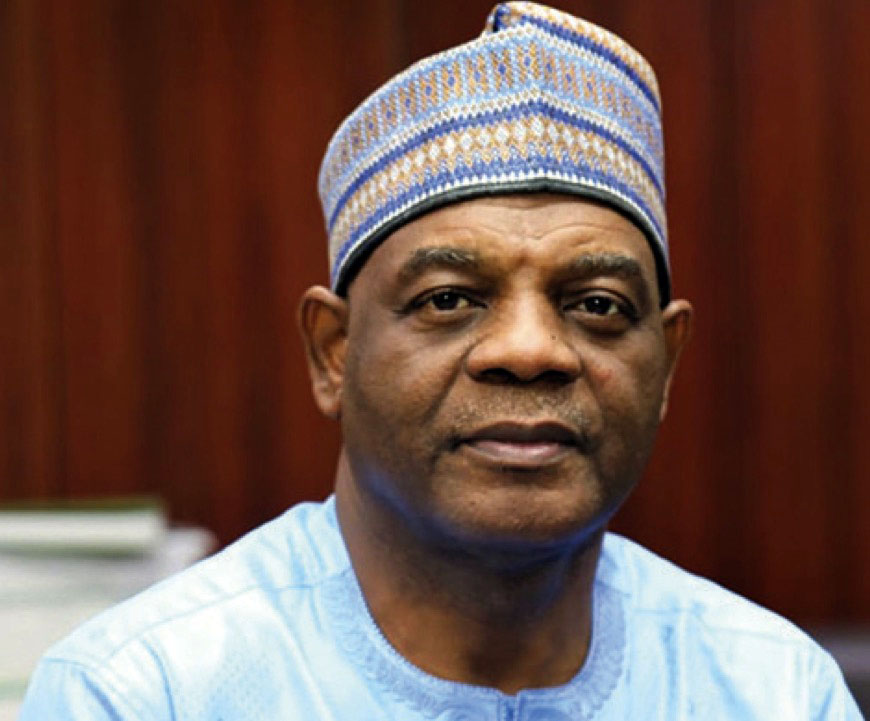
At the 2nd Registrars’ Workshop and 75th Business Meeting of the Association of Registrars of Nigerian Universities (ARNU), held in Abuja, recently, TETFund Executive Secretary, Arc. Sonny Echono, disclosed that approximately 2.5 million students have been enrolled on TERAS.
He further confirmed that the platform have sufficient capacity to accommodate more beneficiaries, adding that TETFund was prioritising public institutions before extending the opportunity to private universities.
Echono said the decision was informed by the need to ensure that students in publicly funded institutions benefited fully from the investment.
He, however, identified actual usage of the available facilities as a major concern, stressing that enrolment alone was not enough to demonstrate the platform’s success.
According to him, the critical consideration should be how many registered students are actively utilising the different services available.
“This distinction is important because the success of a digital education intervention cannot be measured simply by the number of accounts created. Its real value lies in how frequently beneficiaries access resources and the extent to which the services improve teaching, learning and research outcomes,” TETFund noted.
Meanwhile, the latest TERAS institutional directory lists 363 participating institutions, 353 institutions with thesis repository services and 274 connected to Blackboard.
Other News
These figures demonstrate that the platform has grown beyond its initial conception as a resource-access initiative into a wider digital infrastructure supporting institutional learning and research.
However, the figures relating to institutional coverage, student enrolment and Blackboard users represent different measures and reporting periods and should not be treated as interchangeable indicators of active usage.
SUPPORTING RESEARCH AND ACADEMIC INTEGRITY
One of the most important aspects of TERAS is its potential to improve the quality, credibility and visibility of research produced in Nigerian institutions.
The EagleScan plagiarism detection facility provide researchers and students with an opportunity to examine their academic works for similarities with existing publications before submitting them for assessment or publication.
This is particularly relevant at a time when concerns about plagiarism, academic misconduct and research credibility continue to attract attention within the global academic community.
By making plagiarism detection more accessible, the platform encourages students to develop original ideas, acknowledge existing intellectual contributions and observe acceptable academic standards.
The aggregated journal subscription service is equally important. Through EBSCO (Elton B. Stephens Company) and other academic databases, researchers can access scholarly publications covering different disciplines.
For Nigerian academics, this presents an opportunity to engage more meaningfully with international scholarship, strengthen research methodologies and produce publications capable of contributing to global knowledge.
TERAS also supports the development of institutional thesis repositories, helping universities preserve academic works and make them more accessible to researchers.
TETFund’s earlier assessment had identified significant weaknesses in the digitisation of theses across beneficiary institutions, with approximately 80 per cent having either not started or made little progress in the process.
The development of digital repositories therefore offers an opportunity to address the longstanding problem of fragmented academic research materials in Nigeria.
BUILDING DIGITAL SKILLS AND EMPLOYABILITY
Beyond academic publications and online learning, TERAS recognises that access to digital technology alone cannot transform education without the necessary skills to use it effectively.
This explains the inclusion of the International Computer Driving Licence (ICDL) programme and Communication Skills for Productivity.
The digital literacy component is designed to equip students and staff with essential computer and technology skills, while providing opportunities for training and certification.
The communication skills programme offers three levels of learning: Essentials, Intermediate and Advanced. These courses are important because employers increasingly expect graduates to possess competencies beyond the academic qualifications obtained from their institutions.
A graduate may possess a university degree but still struggle with basic digital applications, professional communication and information management.
By integrating these learning opportunities into TERAS, TETFund is attempting to bridge the gap between academic education and the practical competencies required in the labour market.
Another component is sponsored mobile data, which provides registered students and staff with up to 2GB of monthly internet access for TERAS educational services through participating telecommunications networks.
Although this cannot replace the need for affordable and reliable broadband connectivity, it provides additional opportunities for students to access educational resources without bearing the entire cost of data consumption.
EXPANDING ACCESS BEYOND CONVENTIONAL UNIVERSITIES
Another important dimension of the intervention is its potential to improve access for students who may not enjoy the same level of physical and digital infrastructure available in better-funded institutions.
Echono had earlier disclosed plans to connect National Open University of Nigeria (NOUN) study centres nationwide with ICT fibre infrastructure to improve students’ access to digital resources.
In September 2025, NOUN disclosed that TETFund had facilitated the deployment of fibre-optic internet infrastructure at its headquarters and 23 selected study centres nationwide.
The development illustrates how digital education interventions can extend beyond the provision of software to include the physical infrastructure required to make technology work.
For students in locations where reliable internet connectivity has traditionally been difficult to obtain, improved infrastructure could make a significant difference to their academic experience.
THE CHALLENGES AHEAD
Despite its expanding reach, questions remain about the extent to which students and academics are taking full advantage of the opportunities provided.
Echono’s concern about utilisation highlights an important phase in TERAS’s development: moving beyond registration figures towards measurable academic impact.
As of October 31, 2026, publicly accessible information does not provide a figure for monthly active students, completed online courses, journal downloads, plagiarism checks or the number of researchers regularly accessing the platform.
Such information would have provided a clearer picture of the impact of the intervention and help TETFund identify institutions where adoption is slow.
Other challenges requiring attention include unreliable electricity, inadequate internet connectivity in some locations, limited digital skills among sections of the academic community and the need for continuous technical support.
Universities must also take ownership of the intervention by integrating the available facilities into their academic and administrative activities.
Without deliberate institutional commitment, TERAS risks becoming another expensive digital infrastructure that exists without achieving its full potential.
Ultimately, its success will not be determined by the number of institutions onboarded or students registered. It will be measured by how many students graduate with improved competencies, how many researchers produce credible publications and how effectively lecturers adopt improved teaching methods.
With more than 2.5 million students previously reported enrolled, hundreds of participating institutions and an expanding collection of digital learning and research services, TERAS has established an important foundation for transforming Nigerian tertiary education.
The challenge now is to convert its growing reach into demonstrable improvements in the quality, accessibility and competitiveness of the country’s higher education system.
If effectively implemented and sustained, TERAS could become one of the most consequential digital interventions in Nigeria’s tertiary education sector, changing not just where students find academic resources, but how knowledge is created, shared and applied. For Nigeria’s tertiary education system, TERAS could indeed be the game changer.