Follow Us on Google

NDLEA seeks sustainable funding
____________________________________________________
From Godwin Tsa, Abuja
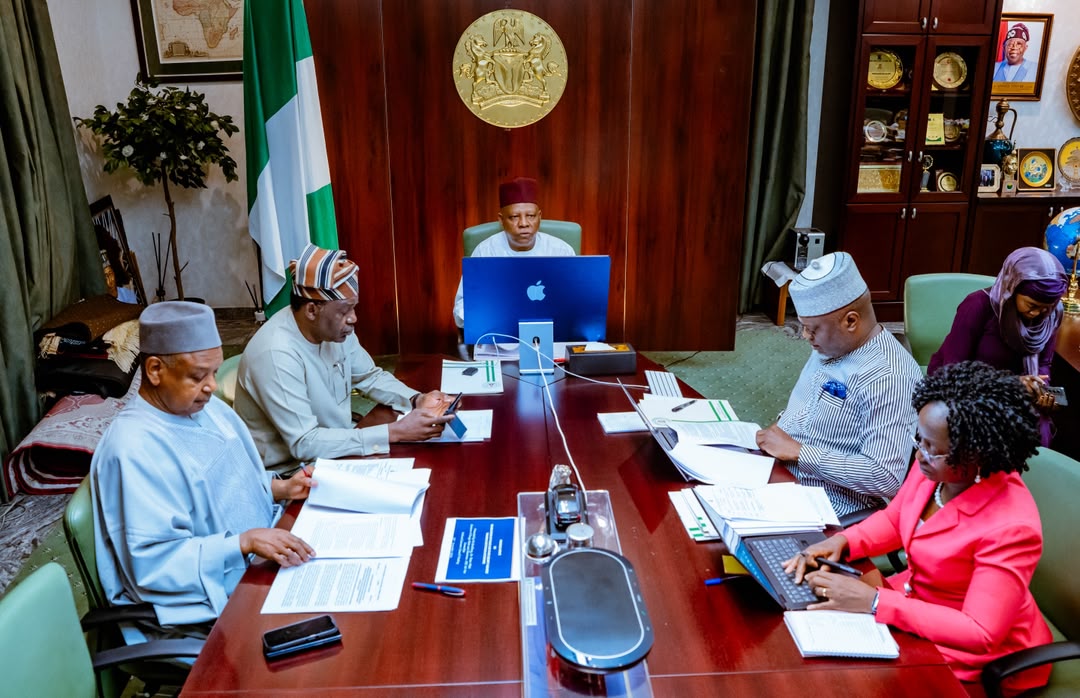
Vice President Kashim Shettima on Monday called on federal agencies, state and local governments, the National Assembly, the private sector, traditional and religious institutions, and international partners to implement the National Drug Control Master Plan (NDCMP) 2026-2030 with urgency, discipline and accountability.
Speaking at the official launch of the Plan in Abuja, the Vice President said drug control must remain a national priority because “a nation cannot secure its future if it fails to protect the people who must build that future.”
Represented by the Special Adviser to the President on Special Duties, Office of the Vice President, Dr Modibbo Aliyu Umar, Shettima described the drug problem as a public health concern, a security threat, a development challenge and an economic issue.
He warned that enforcement alone cannot succeed without prevention, treatment and decisive action against the illicit financial flows that sustain drug markets.
He outlined the Plan’s six pillars: Supply Reduction; Drug Demand Reduction; Access to Controlled Medicines for Scientific and Medical Purposes; Alternative Development and Sustainable Livelihoods; Disruption of the Illicit Drug Economy; and Governance, Financing and Coordination.
Shettima cautioned that “a national plan without a credible financing pathway risks becoming a declaration of good intentions.” He directed that the Plan’s priorities be reflected in institutional work plans, budget proposals and implementation schedules.
He commended the National Drug Law Enforcement Agency (NDLEA), under Brig. Gen. Mohamed Marwa (retd), for making it the first agency in Africa to start an Alternative Development programme.
The pilot is already transforming three communities in Ondo State, and he urged states and local governments to take ownership of the initiative.
In his welcome address, Marwa said the new Plan was designed “to keep what worked, fix what did not, and confront what is emerging.”
He disclosed that the summative evaluation of the 2021-2025 Plan recorded 77,736 arrests, seizures of more than 14.8 million kilograms of drugs and over 14,200 convictions. More than 32,400 people received treatment, counselling and rehabilitation.
The evaluation also identified gaps in coordination, financing, service delivery, data, monitoring and accountability, as well as weak capacity at state and local levels.
Marwa said the new Plan was built on those findings and would strengthen the agency against trafficking networks, synthetic drugs, new psychoactive substances, and syndicates that exploit encrypted communications and cryptocurrency.
He cited recent operations, including a 28 April 2026 joint operation with the United States Drug Enforcement Administration and law enforcement partners in Switzerland, France and Greece.
It led to the arrest of alleged drug baron Amadi Simon in Switzerland and of two women, Jecinta Amara Ikechi in Anambra State and Blessing Ngozi Amadi in Delta State.
Other News
Several bank accounts and crypto wallets were blocked, and the agency secured interim forfeiture of properties linked to Simon, including two hotels in Delta State and an apartment building in Mabushi, Abuja.
Marwa also recalled the dismantling of a Nigerian-Mexican methamphetamine network and a clandestine laboratory in Ogun State, with drugs and chemicals valued at about US$362.9 million.
Four more Mexican-linked laboratories were later uncovered in Oyo, Ebonyi and Enugu States, leading to the arrest of ten Mexicans and 14 local collaborators, who now face criminal charges.
Describing sustainable financing as “perhaps the single most important condition” for the Plan’s success, he urged federal budget authorities to reflect its priorities in annual budgets and the Medium-Term Expenditure Framework.
He asked states and local governments to make dedicated provisions for their Drug Control Committees, and invited banks, telecoms, technology firms, agribusinesses and philanthropists to partner in prevention, treatment and livelihood programmes. “A policy priority without resources is merely an aspiration,” he said.
He welcomed President Bola Tinubu’s transmission of the National Drug Law Enforcement Agency Bill, 2026 to the National Assembly, where it has passed second reading. He assured that enforcement would remain grounded in the rule of law, due process and respect for human rights.
Marwa thanked the European Union, which sponsored the 2021-2025 Plan, the United Nations Office on Drugs and Crime (UNODC) and ECOWAS for their support.
The Attorney-General of the Federation and Minister of Justice, Prince Lateef Fagbemi, SAN, called the NDLEA “the bedrock of our national drug response” and said the Plan consolidated its achievements into a whole-of-government framework linking law enforcement with public health, education, social development and financial investigation.
He said the Ministry of Justice would work with the judiciary to speed up the disposal of drug cases under the Administration of Criminal Justice Act, ensure that every conviction was matched by confiscation of illicit assets, and advance mutual legal assistance, extradition and cross-border asset recovery.
Fagbemi stressed that the law distinguishes between criminal kingpins and people struggling with dependence. “While traffickers must face the full weight of the law, those experiencing drug use disorders require evidence-based care, counselling, treatment and community reintegration,” he said.
The ECOWAS Commission, represented by its Commissioner for Human Development and Social Affairs, Professor Nassirou Bako-Arifari, said the Plan was aligned with regional commitments. He pledged that ECOWAS would “stand with Nigeria at every step”, adding that “no country can win this fight alone.”
The Chairman of the House of Representatives Committee on Drugs and Narcotics, Hon. Abass Adigun, represented by Hon. Dominic Okafor, reaffirmed the committee’s commitment to legislative support, oversight and policy advocacy, and stressed adequate funding and coordination among agencies.
The First Lady of Yobe State, Hajiya Hafsat Kollere Buni, also pledged support.
The launch, themed “Strategic Action for a Drug-Free Nation”, drew ministers, members of the National Assembly and the diplomatic corps, representatives of the EU, UNODC and ECOWAS, members of the Inter-ministerial Committee, state and local government drug control committees, traditional rulers, religious leaders, and representatives of civil society, the private sector and youth groups.
“Five years from now, the significance of today’s launch will not be judged by the ceremony,” Shettima said. “Let this be the moment Nigeria moves from policy to action.”