Follow Us on Google
• Ordeals of teachers in public, primary schools
• Why young teachers are dumping profession for ‘better careers
• We need special salary structure to attract, retain qualified teachers – NUT
By Ngozi Nwoke
Peace Nmesoma, a bright and ambitious young lady, studied English Education at the Ignatius Ajuru University of Education in Port Harcourt, with the dream of shaping young minds. After four years of teaching, she decided to venture into a different line of business: a cleaning agency.
“I just don’t have the passion for teaching anymore. To be honest, the profession doesn’t pay much,” she said, shrugging her shoulders.

Miss Nmesoma, now 28, is an example of the growing trend of young Nigerians who are turning their backs on the teaching profession. She has a new plan, which she believes to be “a business that pays.” She expressed optimism that she can make more money, have better working conditions, and be her own boss.
Her story is not unique. There is Adeola Ojo, a former mathematics teacher who now runs a successful online retail business; Toyin Adebayo, an English Language teacher-turned event planner, and Chukwudi Eze, a former Physics teacher who now sells construction materials. All of them cite similar reasons for leaving the classrooms – low salaries, lack of benefits, and limited opportunities for growth.
In line with the mission of the Nigeria Union of Teachers (NUT), the union maintains that it wants to promote quality education and protect teachers’ rights through advocacy and partnerships.
The union has, through a message on its website, urged state governments to implement the new minimum wage for teachers to prevent industrial action.
The NUT emphasises the need for a special salary structure to attract and retain qualified teachers.
Nigeria is facing a growing shortage of teachers, which is said to be affecting the quality of education. The country’s education system is struggling to attract and retain skilled educators, and it’s no surprise why. Teachers are paid poorly, often with delayed salaries, and benefits are a rarity.
The profession is seen as less prestigious, and those who do enter the field often leave for greener pastures abroad or in other sectors in the country.
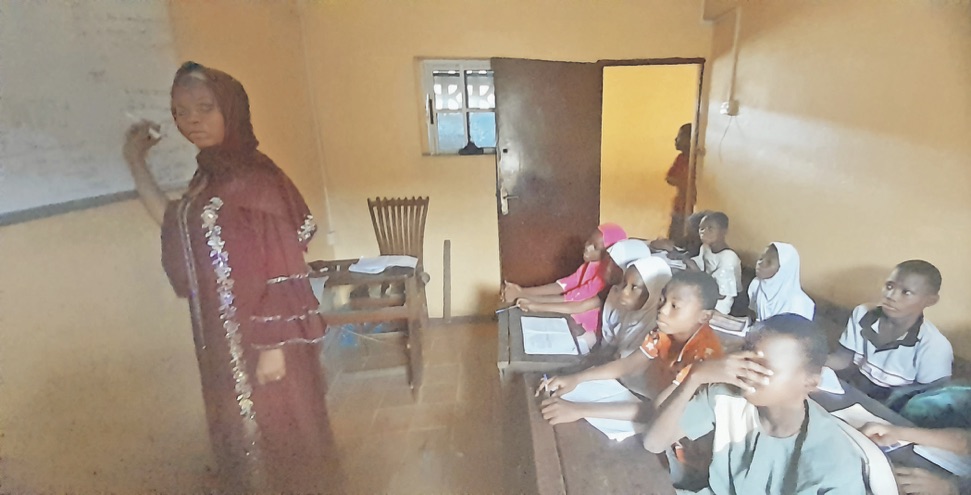
The lack of infrastructure and resources in schools is another factor driving teachers away. Many schools lack basic amenities, making it tough to create a conducive learning environment. The few opportunities for professional development or advancement also deter potential teachers.
A veteran teacher, Mrs Queeneth Kingsley, sounded a distress call. While lamenting the sorry state of the teaching profession in Nigeria, the 42-year-old mother of three, who has spent four years teaching in a government school in Port Harcourt, expressed dismay that many young people shun the profession, opting for more lucrative careers.
She said: “Teaching is surprisingly the most underrated profession. It’s baffling to see people look down on it. Everyone wants to be a doctor, lawyer, or engineer, but few want to be teachers.”
Mrs Kingsley attributed the problem to poor salaries and lack of commensurate welfare packages, saying state governments should provide adequate benefits, including housing and vehicle ownership schemes, to make teachers happy and proud of their profession.
She decried the struggles teachers face, including irregular salaries, accommodation problems, and transportation challenges, saying it’s heart-breaking to see educators live in hardship.
Despite the challenges faced by teachers, the distraught mother revealed that her 12-year-old daughter has shown interest in becoming a teacher, and she’s grooming her towards that direction.
She urged the government to intervene, saying teachers deserve better treatment and respect.
She criticised the Nigeria Union of Teachers for failing to effectively champion the cause of teachers, especially those in private schools who face exploitation and poor wages.
Another young teacher, Feranmi Adigun, broke down the challenges facing educators in Nigeria, saying the lack of support from parents and school management is hindering their efforts to provide quality education.
Adigun, who is a teacher at a private school in the Lagos Mainland area, spoke about his experiences in the profession he chose because he wanted to make a difference in the lives of children.
He said: “I wanted to be one who people will look up to, not just a teacher teaching subjects, but one who can add value, communicate with children, know their weaknesses and try to help them improve.”
Regrettably, Adigun lamented that his good intentions are being hindered by the unavailability of instructional materials, adding that schools should provide these resources to aid teaching and learning.
“As a teacher, I should be appreciated, and the knowledge I put into the lives of children should be acknowledged,” he said, adding that parents should also take responsibility for their children’s education.
“There’s no clear path for growth, no incentives to improve. I have taught in classes with over 80 students, no textbooks, and no whiteboard. It was chaos,” says another ex-educator who preferred to be called Patrick.
Princess Chuku, a parent, said: “Their efforts matter, even when it feels tough, they keep going. They are making a difference in the lives of children.
“I know it’s not easy dealing with big classes, limited resources, and sometimes not getting the respect you deserve. But please, they should know that concerned parents like me value their work.
“They should hold on to their passion, the one that made them want to teach in the first place. It’s what makes the difference in a child’s life,” she said.
Chuku also appealed to parents to support teachers, saying, “Let’s work together to make teaching a respected profession again. It is grossly appalling to see parents go to fight teachers in their children’s schools. That is a clear let-down of the profession and must be assertively put to an end.”
Similarly, James Raphael, a father of three and owner of the Centre for Research and Information Management and Media Development (CRIMMD), also sounded a wake-up call to Nigerian leaders to address the crippling challenges facing teachers in the country.
Raphael lamented that teachers have been saddled with numerous problems for far too long, affecting their performance and productivity as well as putting the nation’s education system at risk.
“For so many years, teachers have been encumbered by so many problems, and the earlier those problems are accorded the attention they deserve, the better for the nation,” he said.
Raphael emphasised that teaching is a psychological vocation that requires passion and dedication, and that certificates are secondary to a genuine interest in the profession.
He decried the poor salaries and allowances paid to teachers, noting that many states owe their teachers months of salary arrears with no hope of payment.
“How some state governments expect teachers to put in excellent discharge of their functions on hungry stomachs is difficult to understand,” he declared. Raphael urged the Nigerian state to invest in teachers if it intends to achieve its education goals.
Despite the enormous challenge faced by the teaching profession, some teachers’ training institutions in Lagos recorded notable enrolment figures. For instance, the Lagos State University of Education matriculated 3,300 students in the 2022/2023 academic session and 4,667 students in the 2024/2025 session.
Similarly, the Federal College of Education (Technical), Akoka, admitted 412 students for the 2022/2023 NCE and PDE sessions, with a total enrolment of 1,391.
The institution also saw 340 students enrol in its Distance Learning Programme in the 2023/2024 academic session.
Generally, the low interest in teaching has raised concerns about the future of teachers training and the teaching profession in Nigeria.