Follow Us on Google
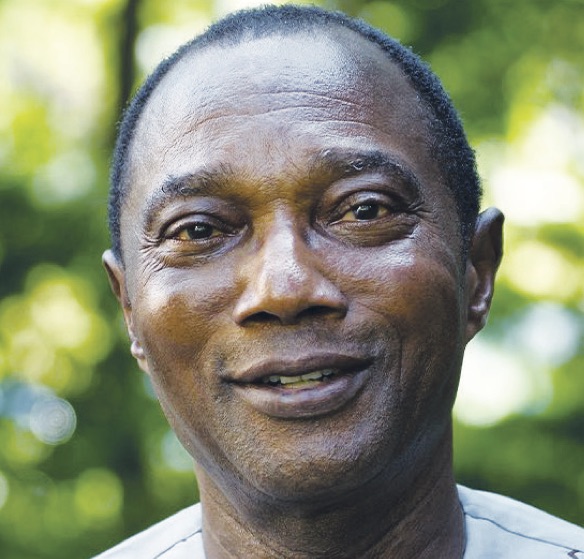
Celebrated US based Nigerian writer and scholar, Professor Tanure Ojaide, has denounced the shoddy manner the 2023 elections were conducted in Nigeria and the needless violence that characterized it. A socio-political and ecocentric poet and winner of the 2018 Wole Soyinka Prize for Literature, Prof Ojaide described the polls as a chaotic exercise unbefitting of Nigeria’s status in the comity of nations. He admonished Nigerians from treading the path of Rwanda with ethnic slurs witnessed during the governorship election in Lagos, while condemning the mute passivity of Nigerian writers who are supposed to be the conscious of the nation. He spoke with HENRY AKUBUIRO.
For decades, scholars and writers like you have pilloried the political system in Nigeria. How do you see the recent general election in terms of organisation by the electoral body, INEC?
Scholars and writers like me have “pilloried the political system in Nigeria” in good faith. It is our effort to make things better. And so one expects improvement in every aspect of the country’s political system, including the conduct of elections. However, with what I saw and read about this last election, I cannot say that we have improved at all. In fact, we might be retrogressing. But to come to INEC’s organisation of the recent general election, if given enough funds for the job, it can best be described as a chaotic exercise.
Look at the time voting started in many places far beyond the 8 am or so when they were supposed to start. I was around during the Presidential Election and it was not transparent and fair. Even INEC admitted lapses as what the Chairman promised publicly was not adhered to at many polling stations. I am talking about uploading results from the polling units into the machines. Not much at the polling units appeared to show preparedness for the task. And many of those working for INEC might have been compromised in their responsibilities. INEC might have done the organization but the reality on the ground did not reflect an efficient work. Though not around, I could see that the state elections differed; some appear organized but a lot of disruption and vote-buying still eluded any law-enforcement officials meant to monitor the events.
What’s your assessment of the performance of the security officers during the elections?
The security officers’ performance, in my opinion, is mostly dismal from the traditional and social media coverage of the elections. There was the impression given before the elections of heavy deployment of army and police to man the polling places. Police and army personnel at many polling stations might have done a good job but some were described as complicit with those attempting to rig the election results. Others who were deployed to polling stations claimed they were not allowed to carry arms on that assignment, and so could only stand by and watch disruptions caused by those with dangerous weapons and intent.
Given the sheer number of polling units, this is an unfair question. The performance ranged from credible, through passable to outright unacceptable. There were media reports of law enforcement looking the other way as fraudulent acts were committed in their presence. That too is complicity.
One sad event that occurred during the recent elections was the unfortunate incident of thugs disrupting the process across the country. How do you see this development?
It is an ugly development. There have always been thugs disrupting the process but it seems to have escalated this time. This is where the security officers could have done much better. I watched a few cases where they intervened but they did not seem to be present at many polling stations where thugs disrupted the voting or snatched voting materials. The development is a reflection of how much more work needs to be done to create a dependable system.
The experience in Lagos, especially the ethnic slur and attacks against non-indigenes, was one of the most ugly incidents recorded during the last election. What’s your reaction?
The experience in Lagos, especially during the governorship election, was wild. Hordes of hooligans took over the streets and many voting areas; they only allowed those expressing sentiments for a particular party access to vote. There was ethnic nationalism at its height. To assume that only Yoruba folks vote APC and only Igbo vote for Labour is very wrong. The mayhem in many parts of Lagos was appalling. Our political leaders should be careful at the seeds they sow in their electoral actions. Stirring ethnic nationalism at elections is very dangerous. When I saw what was happening in Lagos, Rwanda easily came to my mind. An incendiary situation as you had in Lagos where one side felt it had to win at all costs could easily degenerate into another Rwanda inferno.
I won’t comment much on the matter of who owns Lagos. However, inflammatory statements from non-Lagosians, though Yoruba, defeat the argument of Lagos for the Lagos people. Indigenes and non-indigenes should know that Lagos was for long the Federal Capital of Nigeria and brought Nigerians and non-Nigerians there, as is happening now in Abuja in the FCT. In any case, Lagosians or non-indigenes, proven cases of intimidation, violence, and the like should be prosecuted to the fullest extent of the law with appropriate consequences for offenders.
Some people have called for post-election healing. How do we go about it?
Post-election healing will only make sense if the elections were free and fair. How can there be healing if some people are rigged out of power? Should those who rigged and used thugs and violence to gain power be legitimized in office for their bad acts? That should not be allowed to happen so as not to set a bad precedent. The healing should come after the settling of election petitions in the Appeal Court and the Supreme Court. And, of course, the courts have to be professional rather than corrupt. Recent cases from Nigerian courts especially of those who did not take part in primaries still given the chance to contest and win do not augur well for petitioners! The courts this time must uphold justice as the Nigerian Constitution stipulates.
Big writers have kept mute in the face of this sad event. What is supposed to be the role of the writer in a society like ours?
The writer must be part of the moral compass of the nation. As Wole Soyinka has reminded writers and others, the man dies in all who keep silent in the face of tyranny. Writers who keep silent or hide in their ethnic bunkers at this time should be ashamed of themselves. Writers should be bold and tell the truth, even if against his or her people or party. I agree that all writers do not need to belong to the same political party. But one should note that many move from one party to another and many politicians can be identified with other parties at some time in the past. However, writers worth their salt should tell the truth by taking the side of justice when injustice is being done. Why should people read the works of a writer however good that writing if the writer is complicit with corrupt and violent politicians? The writer in our society today should steer the country towards the path that brings Nigerian peoples together and not divide them into ethnic nationalities. I consider my model writer to be the vehicle of truth and nationalism and not of lies and ethnic jingoism.
The silence of most writers during the campaigns leading to the elections and the conduct of the elections in which there were massive riggings, vote-buying, complicity of the security forces and state parties is shameful. The elections were highly flawed and we have to ask for something better for Nigeria at this stage of our development. To ask for less than free and fair elections is immoral.
Drawing from your experience in America, what can Nigeria learn from the electoral process?
Though there are some problems with the American electoral process, Nigerians still have a lot to learn from the American electoral process. First, you don’t have to close schools for four weeks! Nigerian elections are like civil wars and it does not have to be like that. It is a matter of exercising one’s franchise. The INEC has to be truly independent and should not be seen rightly or wrongly as working in the interest of the ruling party in Abuja. The officials and those they engage for the election process have to be carefully selected people of integrity. At voting centres in the United States there are no soldiers at all. Sometimes not even a police officer is around. It is a purely civilian operation. The Nigerian electorate needs education to avoid vote-buying and violence. If the people understand that they stand to gain from electing responsible politicians, they would behave better at elections.
Are you satisfied with the level of youth involvement in politics this time around?
Yes, I am very satisfied that the youths were highly involved at the presidential level of the elections. After their disappointment from the perceived rigging and violence of that one, they did not show up as strongly when it came to the elections of the governors and state legislatures. The youths should not despair because whether their candidates won or not, they have made Nigerian elections to be more competitive. Politicians now know that they need the votes of the people they will serve rather than change figures for re-election. They are making politicians accountable for their statements, deeds, and performance in and outside office.
As somebody from the minorities, how safe do you feel living outside your environment in Nigeria now?
First, nowhere seems very safe for anyone in Nigeria. However, the Lagos occurrences, especially at the elections for state governor and legislature, scared me because flames of ethnic jingoism there or anywhere in Nigeria could easily consume non-indigenes.
I believe in one Nigeria. As a pioneer student of Federal Government College, Warri, a Unity School, my role as a Nigerian citizen is to promote unity. We should work against the divisive forces among us so that every Nigerian will feel safe wherever he or she is. This is guaranteed by the constitution. I still feel safe outside my state or region of origin.