Follow Us on Google
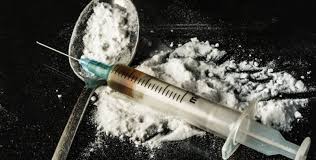
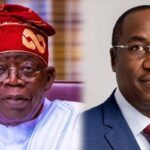
During this year’s commemoration of the World Drug Day (WDD), President Bola Tinubu stated that the war against illicit drug abuse and trafficking in the country should be the duty of all Nigerians and not the job of the government alone. In his keynote address at an event to mark the (WDD) at State House Conference Centre, Abuja, Tinubu stated that “this fight is not one for government alone, it must be a national movement—driven by families, faith leaders, civil society organizations, youth groups, community leaders, businesses, and crucially people with lived experience.” To the President, “their voices matter, their stories inspire and their leadership is essential” in the war against drug abuse and trafficking of illicit substances.
It is good that the President is aware that the scourge is driven by poverty, inequality, violence and conflict. It is also instructive that the government knows that it requires comprehensive approach to effectively tackle the mounting challenges of drug abuse and trafficking. We believe that addressing poverty, hunger, social inequality and youth unemployment will go a long way to reduce the scourge.
Similarly, the Director-General of the National Drug Law Enforcement Agency (NDLEA), Brigadier-General Mohammed Buba Marwa (rtd), rightly observed that this is the time for the country to take illicit drug use seriously. We align with the NDLEA boss that this is, indeed, the time for parents, guardians and governments to increase preventive measures against illicit drug use. “For our nation, prevention is particularly critical, as we are already grappling with a serious challenge. Seven years ago, we came to the stark realization that Nigeria had one of the highest drug abuse prevalence rates in the world,” Marwa stated.
The theme of this year’s WDD, ‘The evidence is clear: Invest in prevention, #StopOrganizedCrime’ is tailored to address the root causes of the drug trade at every point of the illicit supply chain. It also calls for investment, including justice, education, health care and alternative livelihoods—the building blocks of resilience.
No doubt, illicit drug use is a global phenomenon. According to the World Health Organization (WHO), about 292 million people or 5.6 per cent of those between the ages of 15 and 64 used drugs in 2022. It also says that there are 64 million individuals suffering from drug use disorders. Also, in the Eastern Mediterranean Region, about 67 per cent of the population aged between 15 and 64 years used drugs, and more than 3.4 million people suffered from drug use disorders in 2022.
According to the United Nations Office on Drugs and Crime (UNODC) World Drug Report 2025, not less than 310 million people used a drug (excluding alcohol and tobacco) in 2023, or six per cent of the population aged between 15 and 64 years, compared to 5.2 per cent of the population in 2013. The agency further says that with 244 million users, cannabis remains the most widely used drug, followed by opioids (61 million), amphetamines (30.7million), cocaine (25 million) and “ecstacy” (21 million).
The report also revealed that the production, seizures and use of cocaine all hit new highs in 2023, making cocaine the world’s fastest-growing illicit drug market. It also pointed out that illegal production of cocaine skyrocketed to 3,708 tons, nearly 34 per cent more than in 2022. Global cocaine seizures reached a record high at 2,275—a 68 per cent rise over 2019-2023. Also, the use of cocaine grew from 17 million in 2013 to 25 million users in 2023. Sadly, cocaine traffickers are breaking steadily into new markets across Asia and Africa. The lucrative nature of the global illicit drug trade is not in doubt. It is estimated that illicit drug trade generates hundreds of billions of dollars every year.
The prevalence of drug use in Nigeria is high. The UNODC said that about 14.4 per cent or 14.3 million people aged between 15 and 64 years abuse drugs in Nigeria. It has also been estimated that one in seven Nigerians between the ages of 15 and 64 now use drugs. Available information shows that the most common illicit drug used in Nigeria is cannabis or Indian hemp in local parlance. Other illegal drugs used in the country include cocaine, heroin, amphetamine-type stimulants, inhalants and solvents such as glue.
Considering the enormity of the drug use challenge, we urge the federal government to significantly increase the capacity of the NDLEA and other stakeholders through adequate funding and support to tame the illicit drug use and trafficking. Interestingly, the agency has made giant strides in the past four years. It made 66,058 arrests, seized 11.1 million kg of drugs, obtained 12,201 convictions and rehabilitated 26, 393 drug addicts. Above all, there is still need for intensified enlightenment campaign on the dangers of drug abuse and trafficking across the country.