Follow Us on Google

•Sultan, Ganduje, Jega others proffer solutions
From Romanus Ugwu, Abuja
The government of Kano State recently assembled over 500 experts from all areas of human endeavour to brainstorm on the the lingering disturbing spate of clashes between herders and farmers across the country.
In recent years, herders-farmers’ clashes have assumed a worrisome dimension to the point of constituting and contributing in no small measure to the deteriorating security, food shortage and economic downturn in Nigeria.
From Benue to Ondo, Enugu to Cross River, Bauchi, Ogun, Kano to Delta, Lagos and Kaduna states, the frosty relationship between farmers and pastoral herders has heightening anxieties in the country.
The incessant clashes, violent killing of thousands of persons, sacking and burning of villages and settlements, wasting agricultural produce, and worsening the security have characterised the relationship between farmers and herders in the last few of years.
Regrettably, the problems between herders and farmers that were ignored over the years due to weak political will to implement plans and strategies to reduce the conflicts were allowed to snowball into insurgency and banditry and associated criminality ravaging the country and worsening the security challenges.
In the attempt to mitigate the clashes, several government policies, including the politicised ‘Rural Grazing Areas (RUGA)’ settlement, ranching and attempts to claim waterways for open grazing have been mooted.
Worried about the danger the continued clashes portend to the unity and peaceful coexistence of the country, the Governor Abdullahi Umar Ganduje-led government of Kano State resolved to take the bull by the horns by organising the summit, tagged “National conference on livestock reforms and mitigation of associated conflicts,” in Abuja.
Ganduje recently assembled the experts for the conference to brainstorm on the best approach to mitigate the menace.
Resource persons for the crucial national conference were drawn from the academia, development partners, agric industry, livestock management, veterinary and conflict resolution, among many others.
Ganduje, in his opening remarks, noted that “the theme: Sustainable livestock reforms and mitigation of associated conflicts in Nigeria, grew out of the need to provide a solution to the age-long conflict between herders and farmers and propose a way forward to the economic development of the sector.
“For many years in Nigeria, farmers and cattle herders have been in conflict over land rights. But the disputes reached crisis levels in recent years, killing thousands of people and displacing thousands more from their homes and left in relics by attacks.
“Over the past few decades, a wide range of factors have resulted in the tensions, often ending in deadly violent conflicts between the two groups. Climate change, which resulted in desertification and soil erosion, has enraged competition over natural resources, pushing herders to venture into new areas to seek pasture for their herds.
“Drifting away from traditional migratory routes and encroaching on farming lands has fuelled negative perceptions, contrasting sedentary communities versus nomadic ones, often stigmatizing the latter as cultural and/or religious intruders.
“Also, climate change shrinks the amount of arable land, which is contributing to cycles of violence and putting additional strain on relationships among farmers and herders.”
Setting agenda for the conference, Ganduje further said: “This conference must work out ways to strengthen strategies for peace between them. While herders have had to change their transhumance routes along which they move cattle from one grazing ground to another on a seasonal basis, farmers, on the other hand, say herders are intruding on their land.
“The weakness of state institutions and lack of infrastructures, which have resulted in the inability of governments to effectively control their territory, enforce the law and provide formal avenues for the peaceful resolution of disputes, should be the second element for consideration.
“The ‘politics of transhumance’ also highlights the interplay among political elite, which can manipulate political tensions between herders and farmers to advance their agenda, expand land ownership and take control of large herds for their economic and political gains, consequently threatening livelihoods of both communities.”
Sultan of Sokoto, Sa’ad Abubakar III, was, however, more unequivocal in appraising the situation when he charged state governors to come up with concrete solutions to the herders-farmers’ clashes by creating grazing reserves, instead of grandstanding that they do not have any land to cede for the project.
Warning that lands belong to God, not the governors, the Sultan recounted the futile efforts he made to restore peace in the troubled Benue valley, urging the governors to do what he tagged the right thing in accepting ranching in their areas.
He said: “Some governors would say they do not have land for grazing reserves. You don’t own the land. God owns the land. Let’s put politics aside and work for the people. As a governor, the highest you have is eight years and you go, but the people will remain.
“Let us keep politics aside. The issues of development, especially for the common man (should be prioritised). These people that God Almighty gave leadership over will, one day, God forbid, rise up (against us).
“After all these English by professors, how do we get these developments down to the common man who is a farmer, the common Fulani man who doesn’t know anything about development in his life, he only cares about cattle?
“I have been to Beune at least two times as Sultan to sit with the governor and traditional rulers to discuss peace in the Benue valley. At the end of it, the suggestions, we throw them away. Nothing is done and we are back to square one. Let this conference not be in the same manner. Let us do it, and let us do it well and now.”
In arriving at far-reaching resolutions, the conference noted that, notwithstanding the level of insecurity associated with criminal activities as well as conflicts between herders and farmers, there are still many states where the challenges have been effectively managed.
“The states with good security management systems are Kano, Jigawa, Nasarawa and Oyo. Sustained community engagements, robust state government support to farmers and herders in an inclusive manner and the strong involvement of traditional rulers in managing relations between farmers and herders are responsible for the peaceful relations in these States and communities,” the participants agreed.
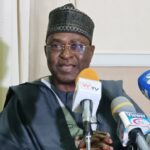
Several solutions to mitigate the clashes were proffered in the communiqué, signed by the conference chairman and former head of the Independent National Electoral Commission (INEC), Professor Attihiru Jega, after the deliberations.
The conference advocated deployment of technology, strengthening the roles of traditional rulers and community leaders in managing the affairs of farmers and herders, as well as sustenance of inter-communal relations for effective management of disputes and conflicts.
More importantly, they requested for the establishment of a ministry of livestock resources or, in the alternative, expand the scope of existing departments of livestock production by the federal and state governments to address the broader needs of the industry.
The communiqué said: “There is the need to deploy innovative and adaptable technologies grounded in scientific and indigenous people’s knowledge, jointly designed and implemented with strong producers’ participation.
“Strengthen peace-building interventions at all levels among farmers and herders by adopting proactive early warning and early response mechanisms. It will also include adoption of alternative dispute resolution and training of community leaders and other community gatekeepers on techniques of mediation.
“Strengthen the role of traditional rulers and community leaders in managing the affairs of farmers and herders including the sustenance of inter-communal relations for effective management of disputes and conflicts.
“Work out practical mechanisms for increased and viable private sector investments in the agricultural and pastoral production industry with a framework for strengthening backyards integration in the livestock value chains.
“Establish the ministry of livestock resources, in line with practice in many other West African countries. In the alternative, federal and state governments should expand the scope of existing departments of livestock production to address the broader needs of the industry.
“There is the need to revisit and review sub-national, national and regional laws, legislations and politics so as to make applicable reforms for improving livestock production and addressing conflicts.
“There is the need to strengthen and improve the security architecture for the prevention of violent crimes including cattle rustling, raiding of villages, kidnapping of persons for ransom and trade in illicit arms and drugs.”
Viewed as being timely, they urged Ganduje to use his office and influence to present the resolutions and proceedings before the National Council of State and the Nigeria Governors’ Forum to ensure that their efforts do not end up on the shelves.