Follow Us on Google
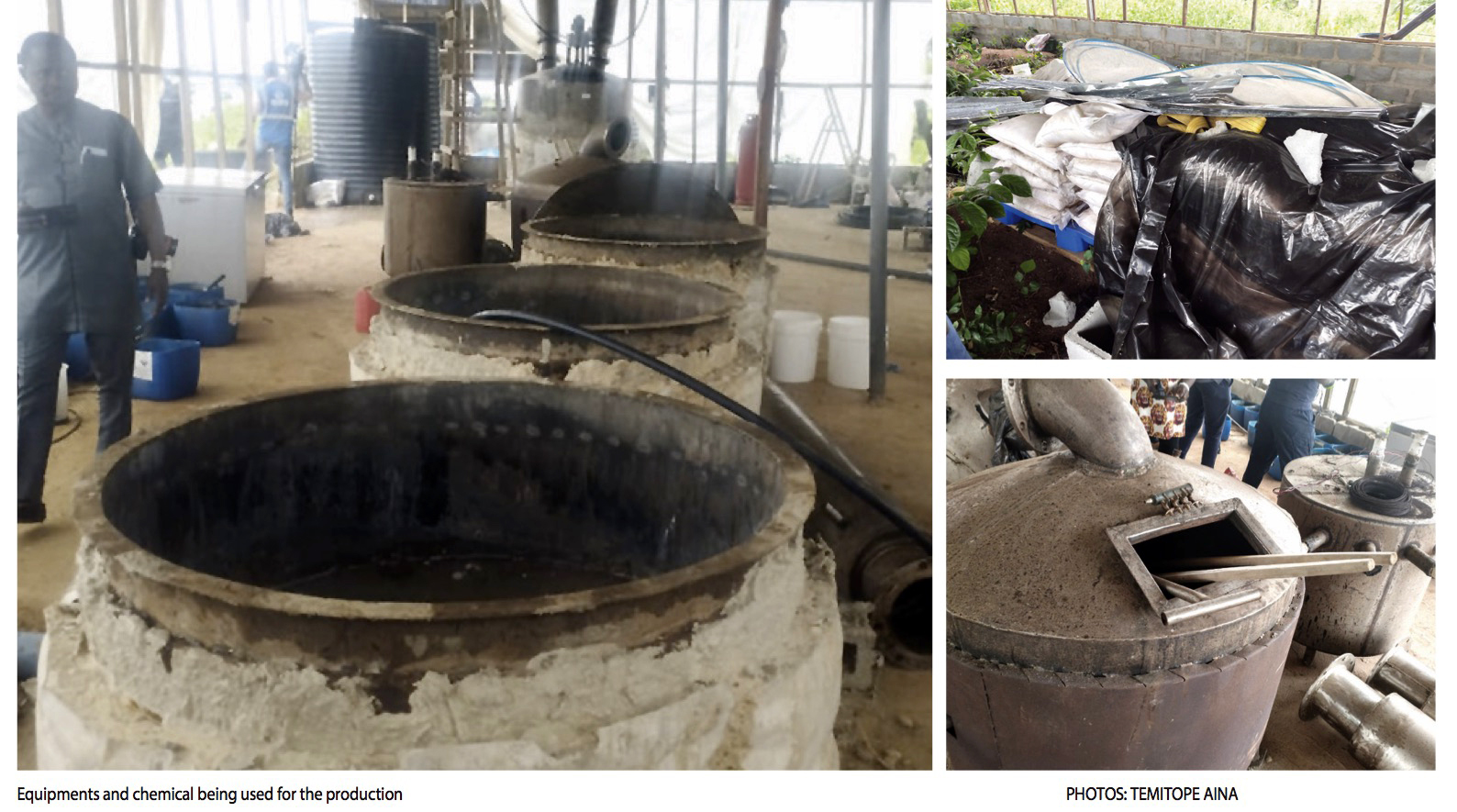
• From quiet hamlet in Ogun to crime epicentre that hid N480bn meth factory
For generations, Abidagba, a remote forest settlement in Odolagaye, Ijebu East Local Government Area of Ogun State, existed in quiet obscurity.
Nestled behind thick vegetation, winding untarred roads and expansive farmlands, the community was known only to farmers, timber merchants and a handful of neighbouring villages.
Far removed from the bustle of Nigeria’s major cities, life in Abidagba revolved around agriculture.
Residents cultivated cassava, maize and other food crops, while the surrounding forest provided timber and other means of livelihood. It was a community where little changed from one season to another.
Then, almost overnight, Abidagba became known across Nigeria and beyond. In May 2026, operatives of the National Drug Law Enforcement Agency (NDLEA) uncovered what has been described as the largest clandestine methamphetamine laboratory ever discovered in the country, hidden deep inside the community’s dense forest.
The operation exposed a transnational criminal syndicate involving Nigerian and Mexican collaborators.
Authorities recovered more than 2.4 tonnes of methamphetamine and precursor chemicals valued at over N480 billion in the international illicit market and arrested 10 suspects, including three Mexican nationals and the alleged cartel leader.
The discovery instantly transformed an obscure rural settlement into the centrepiece of one of Nigeria’s biggest anti-narcotics operations.
Yet beyond the dramatic headlines lies a deeper story, one about neglect, weak rural governance, organised crime and the vulnerability of isolated communities.
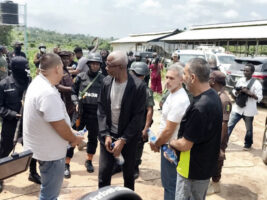
On July 22, Daily Sun joined Justice Musa Kakaki of the Federal High Court, Lagos, alongside prosecutors, defence lawyers and NDLEA officials during a judicial inspection of the alleged crime scene, known legally as a locus in quo.
The journey itself revealed why Abidagba had become an attractive hideout. After travelling through rough rural roads, movement into the forest depended almost entirely on commercial motorcycles.
There were no highways, no security checkpoints and very little indication of sustained government presence.
For first-time visitors, the isolation is striking. The community bears many of the characteristics common to neglected rural settlements across Nigeria, poor infrastructure, limited access to social amenities, weak telecommunications and minimal security patrols.
Ironically, these same conditions may have made the area attractive to international drug cartels.
Security experts have repeatedly warned that criminal organisations increasingly seek out remote forests where movement attracts little attention, land is inexpensive and difficult terrain discourages routine surveillance by law enforcement agencies.
According to the NDLEA, clandestine methamphetamine laboratories concealed within forests are becoming an emerging security threat as international drug syndicates partner with local criminal networks to establish industrial-scale production facilities disguised as farms or legitimate rural enterprises.
For years, Nigeria was largely viewed as a transit point for illicit narcotics moving between continents. The Abidagba discovery challenges that perception.
Investigators allege that the syndicate was not merely transporting drugs through Nigeria but manufacturing methamphetamine locally using sophisticated industrial equipment, imported precursor chemicals and foreign technical expertise.
According to the NDLEA, Mexican methamphetamine specialists worked alongside Nigerian collaborators in operating the facility, highlighting the growing internationalisation of organised crime in West Africa.
The discovery also raises uncomfortable questions. How long had the laboratory been operating unnoticed?
How were tonnes of industrial equipment and dangerous chemicals transported into such a remote forest?
Who supplied the precursor chemicals? And perhaps most importantly, what intelligence failures allowed such a sophisticated operation to flourish undetected?
While investigations continue, the answers may reveal important lessons about organised crime and Nigeria’s security architecture.
Among those most shocked by the discovery were commercial motorcyclists who provide the primary means of transportation within the community.
Speaking with Daily Sun, several riders insisted they had no knowledge that one of the world’s largest methamphetamine laboratories was hidden inside the surrounding forest.
They explained that during the construction of the facility, labourers were brought in entirely from outside the community, leaving locals with little understanding of what was being built.
According to them, visitors heading to the facility often stopped several kilometres away before disappearing into the forest on foot or through restricted access routes.
Those who visited regularly, including foreigners, usually arrived in private vehicles accompanied by armed security escorts, limiting interaction with residents.
“We never imagined anything like this could be happening here,” one motorcyclist said.
Another added that many residents initially dismissed reports of the laboratory as rumours until news coverage confirmed the operation.
Their accounts illustrate how organised criminal networks often isolate their activities from host communities, deliberately limiting local knowledge while exploiting geographical remoteness.
NDLEA spokesman, Femi Babafemi, said the breakthrough followed months of intelligence gathering by the agency’s elite Special Operations Unit.
On May 16, operatives simultaneously launched coordinated raids in Ogun and Lagos states.
The principal target was a remote farm inside Abidagba forest, allegedly being used as the operational headquarters of the Anochili Innocent Drug Trafficking Organisation.
“Through a clinical, simultaneous operation executed by the elite operatives of our Special Operations Unit, we successfully dismantled a sophisticated transnational methamphetamine production syndicate jointly operated by a Nigerian drug cartel and their Mexican counterparts.
Other News
“This network did not merely traffic drugs; it was actively manufacturing industrial-scale quantities of highly dangerous illicit substances on Nigerian soil,” Babafemi said.
While one tactical team stormed the forest laboratory, another simultaneously raided a residence in Lakowe, Lekki, where the alleged kingpin, Anochili Innocent, was arrested.
At the forest laboratory, operatives apprehended three Mexican nationals, Martinez Felix Nemecto, Jesus López Valles and Torrero Juan Carlos, alongside four Nigerian collaborators.
Subsequent operations led to additional arrests in Lagos, bringing the total number of suspects in custody to 10.
The scale of the recovery stunned investigators. According to Babafemi, NDLEA operatives recovered approximately 2,419.48 kilogrammes of finished and liquid methamphetamine, precursor chemicals and industrial solvents valued at more than $362 million, estimated at over N480 billion.
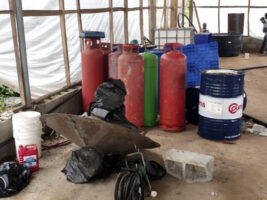
The agency also seized industrial processing equipment, chemical storage facilities and vehicles allegedly used in operating the laboratory.
Officials described the discovery as one of the most significant breakthroughs ever recorded in Nigeria’s fight against illicit drug production.
Beyond the monetary value, authorities warned that the quantity of chemicals recovered represented an enormous public health and environmental threat.
Methamphetamine production involves highly toxic and volatile substances capable of causing severe environmental contamination, posing significant risks to surrounding communities.
The NDLEA believes international criminal organisations are increasingly attempting to establish production hubs within Nigeria, particularly in the South-West, by exploiting isolated forests where law enforcement visibility remains low.
The magnitude of the case prompted an unusual judicial procedure. Rather than relying solely on evidence presented inside the courtroom, Justice Musa Kakaki led lawyers and investigators to inspect the alleged crime scene firsthand.
The defendants are currently standing trial on an 11-count charge bordering on the illegal establishment of a super-clandestine methamphetamine laboratory and the production of 2,419.48 kilogrammes of methamphetamine allegedly valued at about N480 billion.
All have pleaded not guilty and remain in custody at the Lagos Correctional Centre.
During the inspection, the prosecution’s first witness and clandestine laboratory expert, Ajilema Anebi, explained the functions of different sections of the facility.
He identified reactors, chemical storage points, processing areas and equipment used in manufacturing methamphetamine for export.
The prosecution subsequently sought to tender several recovered materials as exhibits.
However, defence counsel, Benson Ndakara, objected, arguing that although chemicals and production equipment had been shown, the prosecution had yet to specifically identify the finished methamphetamine allegedly linked to the defendants.
Head of the NDLEA prosecution team, Adekunle Adebajo, later explained that the court’s visit was intended to enable the judge to personally examine the alleged crime scene and the exhibits upon which the prosecution intends to rely.
The court is expected to rule on the admissibility of the disputed exhibits as proceedings continue.
Beyond the criminal trial lies a larger national concern. The Abidagba case demonstrates how organised crime increasingly thrives where governance is weakest.
Many isolated rural communities remain disconnected from effective policing, modern infrastructure and meaningful economic opportunities. Such conditions create fertile ground for criminal enterprises seeking secrecy and operational freedom.
Security analysts argue that lasting national security cannot depend solely on intelligence operations and armed raids.
It also requires investments in rural roads, telecommunications, community policing, education, healthcare and sustainable economic development.
Communities that feel connected to government institutions are generally more capable of detecting suspicious activities and cooperating with security agencies.
Where legitimate opportunities are scarce, criminal organisations often exploit poverty, unemployment and weak state presence to establish local networks.
Abidagba is, therefore, not simply a crime story. It is also a development story.
Months after the dramatic operation, life in Abidagba continues much as it always has. Farmers still head to their fields before sunrise.
Children continue attending school.
Families continue struggling with inadequate infrastructure and limited economic opportunities.
Yet the community now carries an unwanted identity. Residents who neither participated in nor benefited from the activities of the alleged drug cartel fear their hometown may forever be associated with organised crime.
Many hope government attention will extend beyond security operations to meaningful development.
Improved roads, electricity, healthcare facilities, telecommunications and stronger community policing could transform communities like Abidagba from vulnerable hideouts into thriving rural economies.
The dismantling of the alleged methamphetamine factory stands as one of the NDLEA’s most significant operational successes. It demonstrates the value of intelligence-led policing and inter-agency cooperation in combating organised crime.
But it also exposes deeper structural weaknesses that demand urgent national attention.
If one of the world’s largest clandestine methamphetamine laboratories could operate inside a Nigerian forest for an extended period, similar vulnerabilities may exist elsewhere across the country.
The fight against illicit drug trafficking, therefore, cannot end with arrests, seizures and criminal prosecutions.
It must include stronger rural governance, environmental monitoring, community vigilance and sustained investment in neglected communities.
Ultimately, Abidagba’s story is no longer merely about a forest in Ogun State. It is a cautionary tale about the dangers of neglect, the reach of transnational organised crime and the urgent need to secure Nigeria’s forgotten communities before criminal networks do.
For a settlement that once lived in quiet anonymity, Abidagba has become an enduring reminder that where the state’s presence is weakest, organised crime often finds its strongest foothold and that protecting Nigeria’s future will require safeguarding even its most remote frontiers.