Follow Us on Google
How abuse of power is crowding Nigeria’s prisons
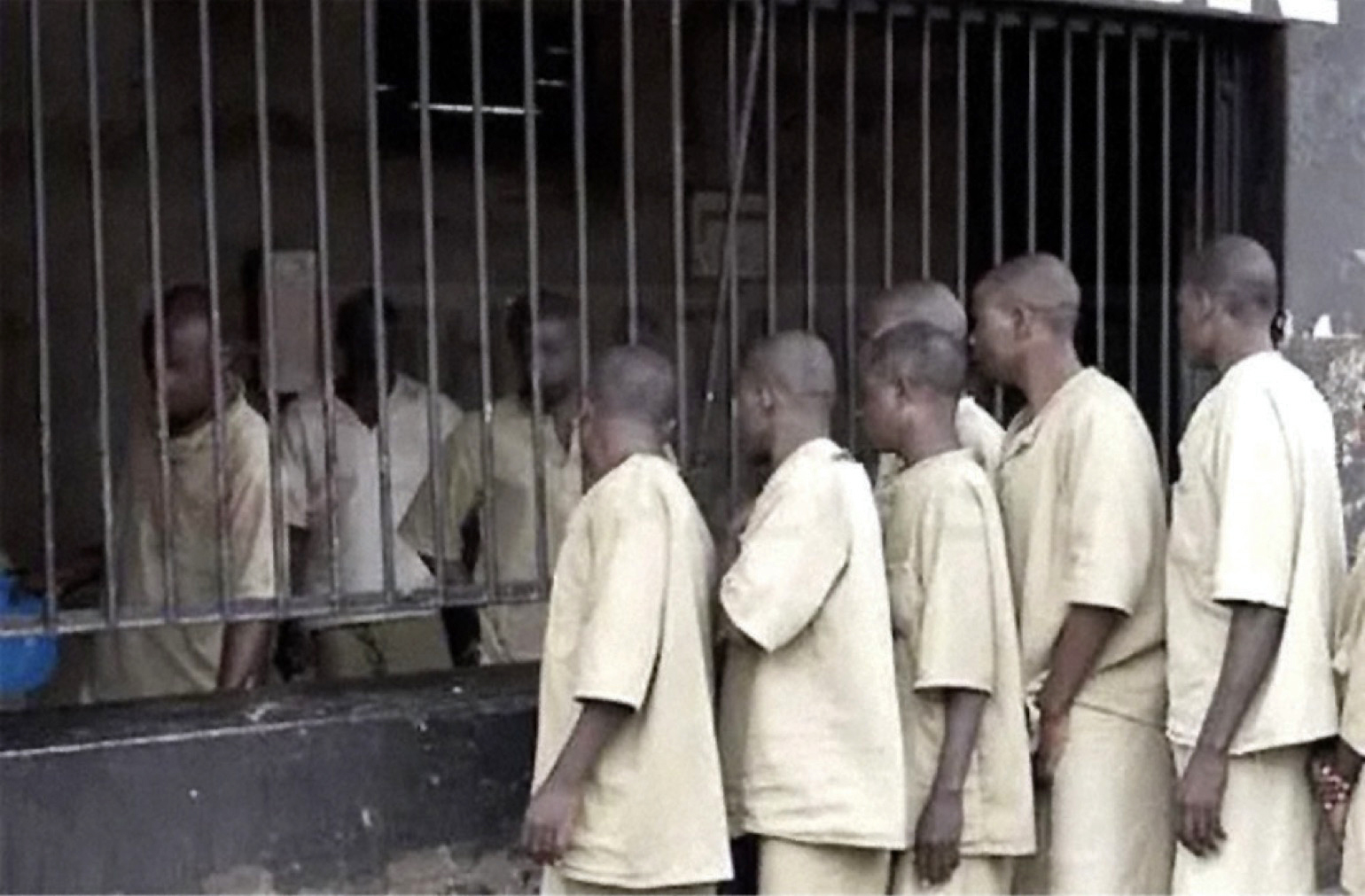
Nigeria’s overcrowded prisons are often portrayed as evidence of rising criminality. But behind the high walls and locked gates of the country’s correctional centres lies a far more disturbing reality.
A large proportion of those occupying the cells have never been convicted of any crime.
For many of them, imprisonment is not the result of a guilty verdict but of a criminal justice system increasingly criticised for arbitrary arrests, prolonged pretrial detention, impossible bail conditions, delayed trials and abuse of state power.
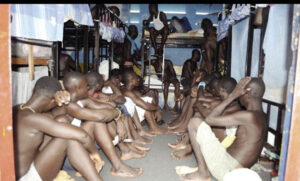
The growing congestion in Nigeria’s correctional facilities has become less a reflection of crime than of systemic failures that punish citizens long before any court determines their guilt.
The issue recently returned to national attention following activist Omoyele Sowore’s account of his detention at the Kuje Correctional Centre, Abuja.

His experience exposed a justice system where detention has become routine while justice crawls at a painfully slow pace.
According to Sowore, Kuje Correctional Centre houses about 1,115 inmates, of whom 817 are awaiting trial. The figures offer a snapshot of a nationwide crisis in which correctional facilities have become holding centres for thousands of Nigerians trapped in endless legal processes.
Among the inmates he reportedly met was Haruna Garba Gololo, who remained in custody despite being granted bail because he could not satisfy stringent bail conditions.
Another inmate, David Nwokorie, allegedly spent months behind bars following a dispute involving the daughter of a retired Deputy Inspector General of Police. Although eventually granted bail, the conditions were reportedly beyond the financial reach of an ordinary citizen.
Their stories mirror the experiences of thousands of awaiting-trial inmates across Nigeria, many of whom remain behind bars not because they have been found guilty but because they are poor, lack influential connections or cannot navigate an overburdened justice system.
Ironically, while the Federal Government has acknowledged that roughly 60 to 70 per cent of inmates in Nigerian correctional facilities are awaiting trial, the underlying causes of the crisis remain largely unresolved.
For many detainees, the ordeal begins long before they enter a courtroom.
Human rights organisations have consistently documented cases of arbitrary arrests, unlawful detention, torture, extortion, denial of access to lawyers and relatives and the fabrication of evidence by some law enforcement officers.
Many suspects spend weeks or even months in police custody before appearing before a judge. Others are hurriedly arraigned on weak or questionable charges simply to obtain remand orders that legitimise continued detention.
Once remanded, they become part of an expanding population of awaiting-trial inmates whose cases often drag on for years.
Executive Director of the Rule of Law and Accountability Advocacy Centre (RULAAC), Okechukwu Nwanguma, believes the country’s prison congestion is fundamentally a product of abuse of power rather than an increase in crime.
According to him, arbitrary arrests, prolonged pretrial detention, politically motivated prosecutions and unrealistic bail conditions have turned correctional centres into warehouses for people whose guilt has never been established.
He said Sowore’s account from Kuje Correctional Centre revealed the human face of a justice system that frequently punishes citizens before conviction.
Nwanguma described it as ironic that government officials publicly express concern over the large population of awaiting-trial inmates while critics of government allegedly continue to face prolonged detention under questionable circumstances.
He argued that pretrial detention, which should ordinarily be an exceptional legal measure, has increasingly become punishment in itself.
Quoting Kuje’s statistics, Nwanguma noted that out of 1,115 inmates, 817 were awaiting trial, while dozens were battling tuberculosis, highlighting both the humanitarian and public health implications of prison congestion.
According to him, RULAAC’s research across several states has consistently uncovered widespread abuse by law enforcement agencies, including arbitrary arrests, torture, extortion, fabricated evidence and prolonged detention.
“This is how police abuse feeds prison congestion. This is how political repression fills correctional centres. This is how poverty becomes criminalised,” he said.
He argued that while wealthy or politically connected suspects often secure quick bail and competent legal representation, ordinary Nigerians remain trapped in detention regardless of whether they are guilty or innocent.
The consequences, he warned, extend beyond prison walls. Families lose breadwinners, businesses collapse, children abandon school and many detainees eventually regain their freedom physically broken, psychologically traumatised and economically devastated.
For Nwanguma, the crisis represents not merely a correctional challenge but a fundamental assault on constitutional guarantees of personal liberty and the presumption of innocence.
He called for sweeping reforms, including greater accountability for unlawful arrests, evidence-based investigations, realistic bail conditions, expanded legal aid services and stronger safeguards against the use of criminal prosecution to intimidate political opponents or settle personal scores.
“The measure of a democracy is not how it treats the influential but how it protects the rights of the ordinary citizen,” he said.
Another perspective comes from Uju Agomoh, Secretary of the Independent Investigative Panel on Alleged Corruption and Violations against the Nigerian Correctional Service, who believes chronic underfunding has created fertile ground for corruption and human rights abuses inside custodial centres.
Speaking during a national television programme, Agomoh said the panel’s investigation of 86 correctional facilities across 22 states found widespread resource shortages.
According to her, many custodial centres lacked basic operational funds to transport inmates to court, fuel official vehicles or even power generators.
Such shortages, she argued, often force prison officials into illegal survival mechanisms.
“If you don’t have adequate funds to take inmates to court or run your facilities, you’re probably going to sell bed spaces or privileges just to keep the place running,” she said.
She described the problem as systemic and warned that meaningful reforms would require sustained commitment from all stakeholders, including the Attorney -General, correctional authorities and oversight institutions.
Other News
Agomoh, who also heads the Prisoners Rehabilitation and Welfare Action (PRAWA), believes Nigeria’s correctional crisis is worsened by the excessive use of imprisonment for offences that could be handled through alternative sanctions.
She argued that while the Federal Government’s recent payment of fines leading to the release of about 4,000 inmates was commendable, it merely treated the symptoms rather than the disease.
“The minister is completely correct and something has to be done about this,” she said.
According to Agomoh, imprisoning offenders who pose little or no threat to society places unnecessary pressure on correctional facilities while exposing minor offenders to hardened criminals and organised criminal networks.
Instead, she advocates greater implementation of non-custodial measures already provided under the Nigerian Correctional Service Act, 2019, including community service, probation, parole and restorative justice.
Community service, she noted, enables offenders to contribute positively to society rather than remain in custody at taxpayers’ expense, while probation addresses behavioural issues through supervision and rehabilitation.
She also stressed that rehabilitation must go beyond classroom education to include psychological support, economic empowerment and social reintegration.
Legal practitioner and public affairs analyst, Sonayon Hunjo agrees that prison congestion reflects deeper failures within Nigeria’s criminal justice architecture.
According to him, prolonged police investigations, repeated adjournments, indiscriminate remand orders, difficult bail conditions and inadequate legal representation have combined to produce an ever-growing population of awaiting-trial inmates.
He said addressing the crisis requires strict implementation of the Administration of Criminal Justice Act, faster criminal trials, improved case management, completion of investigations before arraignment, expanded legal aid services and greater use of non-custodial sentencing for minor offences.
Regular jail delivery exercises by Chief Judges and the decriminalisation of certain petty offences, he added, would further reduce pressure on correctional facilities.
Ultimately, Hunjo argued, prison congestion is not simply a correctional service problem but a symptom of wider institutional inefficiencies across policing, prosecution and the judiciary.
However, Federal Government said its ongoing reforms of the Nigerian Correctional Service (NCoS) are yielding positive results, with a sharp decline in the number of repeat offenders and renewed efforts to decongest correctional centres across the country.
Minister of Interior, Dr. Olubunmi Tunji-Ojo, disclosed this recently while receiving an investigative report on the Nigerian Correctional Service, saying the administration’s focus on rehabilitation, reformation and reintegration of inmates is beginning to transform the nation’s custodial system.
According to the minister, the number of former inmates returning to correctional facilities after release has dropped significantly over the past three years, reflecting the impact of government reforms.
He said recidivism declined from 11,616 cases in 2023 to 3,156 in 2024 before falling further to 1,382 in 2025.
“Recidivism was 11,616 in 2023 when we came in, dropped to 3,156 in 2024 and came down to 1,382 recidivists in 2025. It means that our reformation programmes are bearing fruit. We are no longer where we were. We are making progress,” Tunji-Ojo said.
The minister, however, stressed that the Federal Government would not be satisfied until the rate of repeat offending is completely eradicated.
“For us, not until recidivism gets to zero can we say we have succeeded,” he added.
As part of efforts to ease congestion in custodial facilities, Tunji-Ojo revealed that correctional centres recorded significant inmate movement in May 2026, with 15,632 persons admitted into custody while 14,190 inmates were released under various legal provisions during the same period.
He said the government would continue to strengthen measures that promote timely release of eligible inmates, rehabilitation and successful reintegration into society as part of its broader correctional reforms.
The minister also assured that the recommendations contained in the investigative report would be implemented without delay.
“This report will not gather dust on the shelves. We are going to be very aggressive in terms of implementation,” he said, announcing plans to establish a monitoring and evaluation committee to ensure compliance.
Tunji-Ojo further called for stronger collaboration between the Federal Government and state governments to tackle structural challenges affecting correctional facilities, particularly those that have become engulfed by rapid urban expansion.
He noted that many custodial centres originally built on the outskirts of towns are now located within densely populated communities, making their relocation and modernisation imperative.
The minister said the proposed collaboration would form part of broader efforts to build a modern, secure and efficient correctional system capable of supporting ongoing initiatives to decongest facilities while enhancing rehabilitation and public safety.
Recognising the urgency of the situation, the National Human Rights Commission (NHRC) has begun forging partnerships aimed at reducing unnecessary detention.
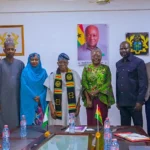
The Commission recently entered into a strategic collaboration with the Knights of St. Mulumba and the Papal Knights and Medalists of Nigeria to address prison congestion and protect the rights of persons deprived of liberty.
During discussions at the NHRC headquarters in Abuja, the religious organisations highlighted the growing number of people detained for minor offences or because they could not satisfy modest bail conditions.
Executive Secretary of the NHRC, Chief Tony Ojukwu (SAN), described cases of individuals remaining in detention over sums as little as ₦5,000 as a grave indictment of the country’s justice system.
According to him, every intervention that restores liberty also restores human dignity.
The partnership will focus on securing the release of inmates detained for minor, bailable offences while establishing halfway homes, vocational training programmes and reintegration support for former inmates.
It also includes specialised human rights training for correctional officers to strengthen compliance with constitutional safeguards, the Administration of Criminal Justice Act and international standards such as the United Nations’ Nelson Mandela Rules.
Head of the NHRC’s National Preventive Mechanism, Kabiru Elayo, warned that without structured reintegration programmes many former inmates eventually return to custody, perpetuating the cycle of incarceration.
The proposed collaboration, which will be implemented across the Commission’s offices nationwide, seeks to address both the immediate and structural drivers of prison congestion.
Yet many observers insist that lasting reform requires more than goodwill or isolated interventions.
It demands a justice system that values liberty, respects due process and ensures that detention remains the exception rather than the rule.
Until arbitrary arrests are curbed, investigations become professional, bail conditions become realistic and trials are concluded within reasonable timeframes, Nigeria’s correctional centres will continue to house thousands of citizens whose greatest offence may simply be poverty, powerlessness or being caught in a broken system.
For a country committed to democracy and the rule of law, the true measure of justice is not the number of prisons it builds or inmates it holds, but how effectively it protects the rights of those who have not yet been proven guilty.